You've got a canvas, and now you want to frame it. Framing a canvas isn't quite the same as framing a regular photo, and choosing the wrong approach can leave you with a frame that doesn't fit or hides part of the image.
This guide covers how to measure, which frame depth fits which canvas, three DIY framing methods, and the easiest option of all: ordering your canvas with a floating frame already attached.
Why Should You Frame Your Canvas?
A stretched canvas is ready to hang without a frame, so framing is a choice, not a must. It does two things:
Protects the edges. The sides of a canvas are the part most likely to get knocked or scuffed. A frame takes those knocks instead.
Changes the look. A frame gives the canvas a finished border and can tie it in with other framed pieces in the room.
Know Your Canvas Before You Start
The type of canvas you have determines how you frame it:
Unmounted canvas. This is canvas that isn’t attached to any frame or backing. It’s often called rolled canvas, because it usually ships rolled up. It needs to be stretched or mounted before it can be framed; see how to frame a rolled canvas print.
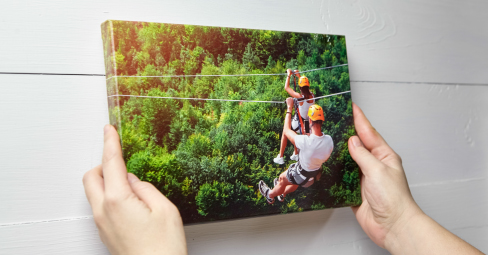
Gallery-wrapped canvas. This is the canvas print most people imagine, with the fabric pulled taut over wooden stretcher bars and stapled at the back. Often part of the image continues on the sides, so you’ll want a framing method that doesn’t cover them. All CanvasDiscount canvas prints are this type.
Canvas panels. This is canvas glued to a hard, thin board. Panels are usually less than 1/2 inch thick and fit most standard picture frames.
How to Measure a Canvas for Framing
Measure the width, height and depth of the canvas with a metal ruler. Then:
Frame opening: add 1/8 inch on each side, which means 1/4 inch to each dimension. For a 24x36 inch canvas, the frame opening should be 24 1/4 x 36 1/4 inches. The small gap lets the canvas drop in without forcing it.
Frame depth: the groove at the back of a frame that holds the artwork is called the rabbet. It should be deeper than your canvas is thick, or the canvas will stick out at the back.
Which frames fit a CanvasDiscount canvas?
Our canvas prints come in two frame depths, and that decides which off-the-shelf frames will work:
Our canvas
Canvas depth
Rabbet depth to look for
Typical fit
Classic
3/4" (2 cm)
at least 7/8"
Many "canvas frames" and deeper standard frames
XXL
1 1/2" (4 cm)
at least 1 5/8"
Deep floater frames or shadow-box frames only
If a frame's rabbet is a little shallow, offset clips (see Method 2) can still hold the canvas, with the back standing slightly proud of the frame.
Choosing Your Frame
Floating frames, also called shadow-gap frames, are the best choice for gallery-wrapped canvas prints. A gap is left between the canvas and the outer frame, so both the front and the sides of your canvas stay visible. Learn more in what is a floating frame.
Deep picture frames work for canvas panels and thinner canvases, as long as the rabbet is deeper than the canvas.
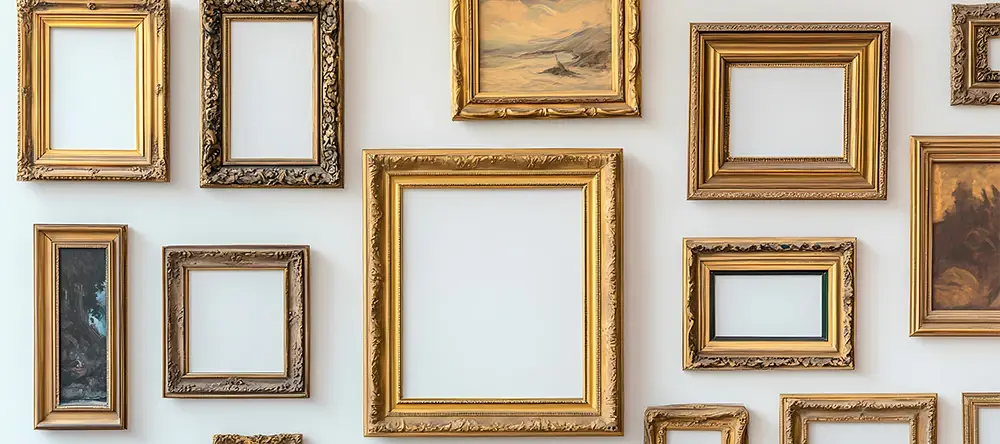
Standard picture frames can be adapted: remove the glass and backing, then hold the canvas in place with small brackets or clips. This works well with vintage frames.
Framed photo prints skip the canvas altogether. If you want a classic matted look behind glass, our framed photo prints arrive ready to hang.
The Easiest Option: Order Your Canvas With a Floating Frame
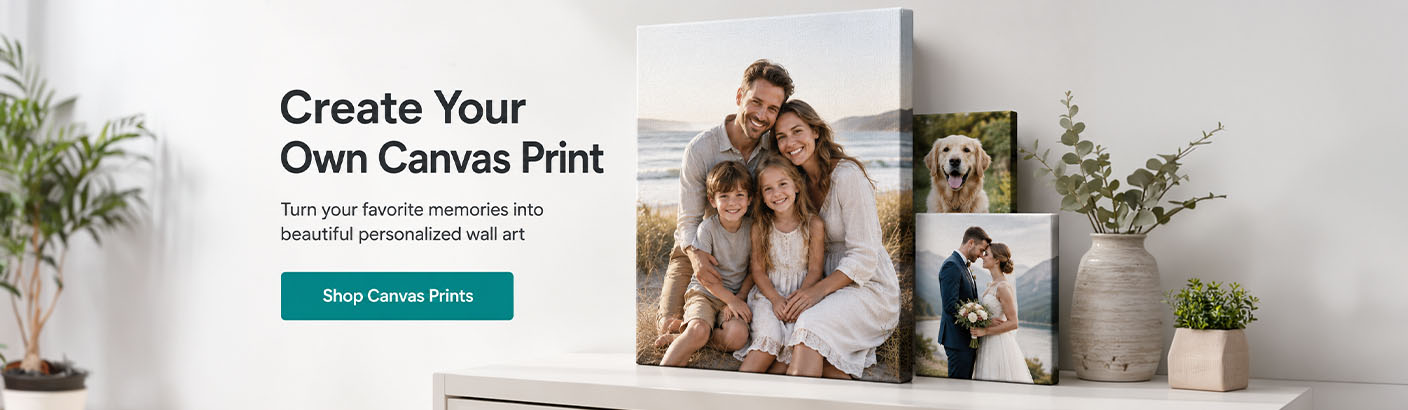
Every CanvasDiscount canvas print can be ordered as a framed canvas. The canvas is fitted into a slim floating frame, with a shadow gap around it, and arrives ready to hang. There’s nothing to measure, cut or assemble, and no risk of damaging the canvas on the way to a frame shop.
Five finishes: Vintage Silver, Black Matte, White, Walnut flair and Oak vintage flair.
Sizes: from 8x8 inches up to 30x40 inches, in square and rectangular formats.
Materials: the floating frames are made from recycled ocean plastic.
Preview: the online design tool shows your photo in each frame before you order, so you can compare finishes.
As a rule of thumb, a black or silver frame suits black-and-white and modern photos, while the wood-effect finishes suit warm tones and traditional rooms. Framing at the same time as you order also saves a trip to a framer later.
Tools and Materials for DIY Framing
If you'd rather frame a canvas you already own, this is what you need:
For measuring and cutting:
Metal ruler (more accurate than a tape measure)
A miter saw, or a miter box with a hand saw, for clean 45° corners
Pencil to mark cuts
For assembly:
Wood glue and finishing nails or brad nails
Corner clamps
A basic drill and bits
For finishing:
Sandpaper and wood filler
Stain or paint of your choice
To mount:
Offset clips or small L-brackets
D-rings and picture wire for hanging
Short screws (check the length so they can’t come through the front)
How to Make a Frame for a Canvas
Method 1: Make Your Own Wooden Frame
Measure your canvas and add 1/8 inch on each side (1/4 inch per dimension).
Cut four pieces of molding at 45° angles. For a 24x36 inch canvas, cut two pieces at 24 1/4 inches and two at 36 1/4 inches, measured along the inside (short) edge of the miter, which is the edge that forms the opening.
Glue each corner, clamp, and secure with finishing nails. On a large frame, work on two corners at a time.
Add thin support strips inside each corner, flush with the back edge of the frame, to give you something solid to screw into.
Fill the nail holes, sand, and paint or stain.
Drop the canvas in and drive short screws through the support strips into the stretcher bars. Don't overtighten.
Method 2: The Offset Clip Shortcut
If you've found a ready-made frame that fits, offset clips are the quickest way to mount the canvas.
Center the canvas in the frame opening so the gaps are even on all sides.
Measure the step between the back of the canvas and the back of the frame, and buy clips with a matching offset.
Screw the clips into the frame, and if necessary into the stretcher bars. Use screws sized for your frame: too big and they split it, too small and they pull out.
Method 3: Adapting Regular Picture Frames
Thrift stores and estate sales are full of interesting frames.
Remove the glass, backing and any old hardware.
Fill any gap between the canvas and the frame with cardboard shims or wooden strips.
Secure with small brackets or clips along the back edges, where they won't show.
How to Prepare Unmounted Canvas for Framing
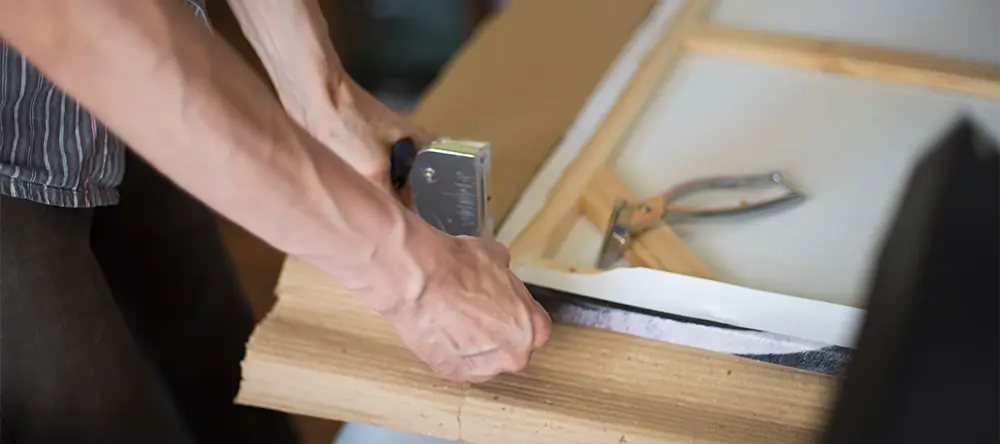
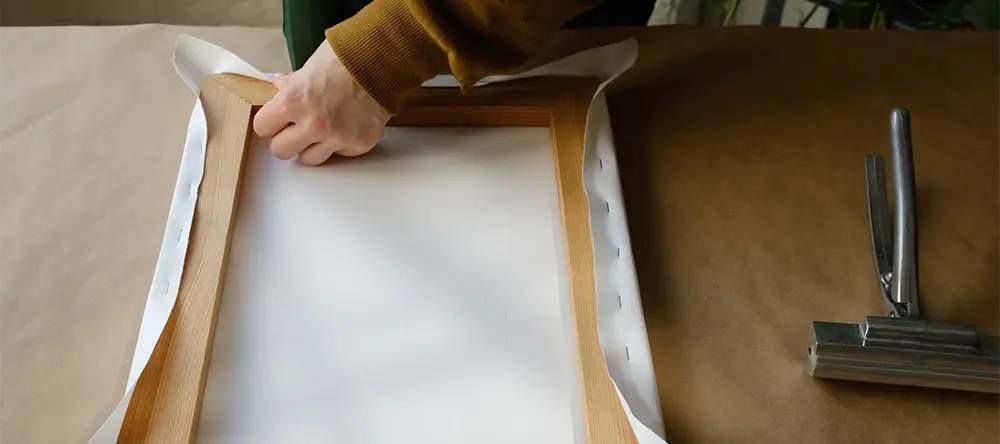
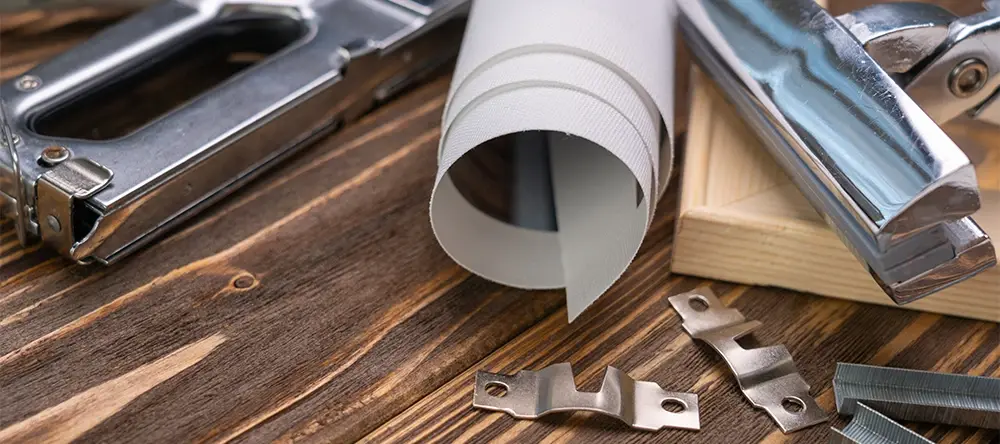
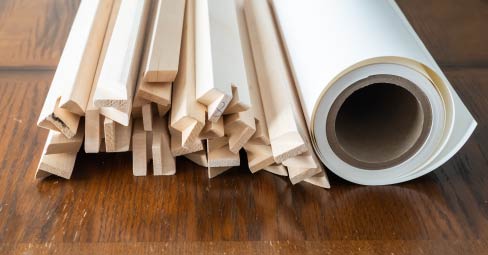
Gallery wrap. Assemble wooden stretcher bars into a rectangle, wrap the canvas around the edges and staple it at the back. Work from the center of each side outward, keeping the tension even. The canvas should feel firm, like a drum.
Canvas panel. Mounting the canvas on a flat board gives a perfectly flat result. Use foam board and an acid-free glue, smooth out bubbles with a roller, then frame it like a photo.
A local frame shop is worth the cost for an original painting, an unusually large or odd-shaped canvas, or a frame style no one sells ready-made. For a photo canvas in a standard size, ordering it with a floating frame is usually the simpler route.
Finishing Touches
Add felt bumpers to the back corners to protect your wall and let air circulate.
Use hanging hardware rated for the combined weight of canvas and frame. Our guide on how to hang a canvas covers wall types and fixings.
FAQs About Framing Canvas
Does a canvas print need a frame?
No. A gallery-wrapped canvas is stretched over its own wooden frame and is ready to hang as it is. A floating frame is an optional extra for a more finished look.
Can I add a floating frame to a canvas I've already ordered?
The simplest way is to choose the framed canvas option when you order, so the canvas arrives already in its frame. For a canvas you already own, a floating frame from a frame shop with the right rabbet depth (see the table above) will work.
Can I use a regular picture frame to display a canvas?
Yes. Remove the glass and backing, fill any gaps with shims, and secure the canvas with small clips or brackets. This works best with canvas panels and Classic-depth canvases.
The offer has expired. You will be redirected to a new deal in 5 sec
Our 110% Lowest Price Guarantee
We’re committed to providing the ultimate customer experience – and we know that means offering the best prices in the market. If you happen to find a lower price online, we’ll beat it by 10%! The product should be the same size and the price valid on the day you send it to us. Canvas prints should come already stretched onto the frame.
Simply email us with a link to the competing product. We’ll review the information and if everything checks out we'll send you a 10% discount voucher code.