Custom Photo Puzzle: How to Make an 88-Piece Keepsake Gift
 by Ashley Carter– 7 years of experience in photo gifts and home deco
 11 Minutes
A couple of hours at the kitchen table, a photo split into 88 pieces, a cup of coffee alongside — and suddenly an ordinary Saturday afternoon turns into a quiet trip back through your favorite memories. That's exactly the experience you give someone when you make a custom photo puzzle. It isn't just a gift you unwrap. It's one you piece together for an hour, share with whoever's in the room, and then proudly show off when the last piece clicks in.
With a personalized photo puzzle, you turn a single image into a hands-on memory. Pick the right photo, follow a clean ordering flow, and you've made a gift that doubles as a shared activity. This guide walks through every decision worth thinking about — and which ones don't actually matter as much as people expect.
In this guide, you'll learn:
- Which Photos Work Best for a Custom Photo Puzzle?
- Is the 88-Piece Format Right for Your Recipient?
- What Resolution Does Your Photo Need?
- How to Make Your Photo Puzzle in 4 Steps
- Occasions and Gift Ideas: When a Photo Puzzle Hits the Mark
- Common Mistakes When Making a Custom Photo Puzzle
At a glance: When you make a custom photo puzzle, the photo choice is the most important call. Image sharpness, a clear main subject, and enough background variation to keep individual pieces distinguishable — these matter more than anything else. The 88-piece format (9.5x7.5 inches finished) takes 30 to 60 minutes to assemble and works well for ages 8 and up, couples, and families. Picking the right photo and previewing carefully before ordering makes the difference between a forgettable gift and one that gets framed on the wall afterwards.
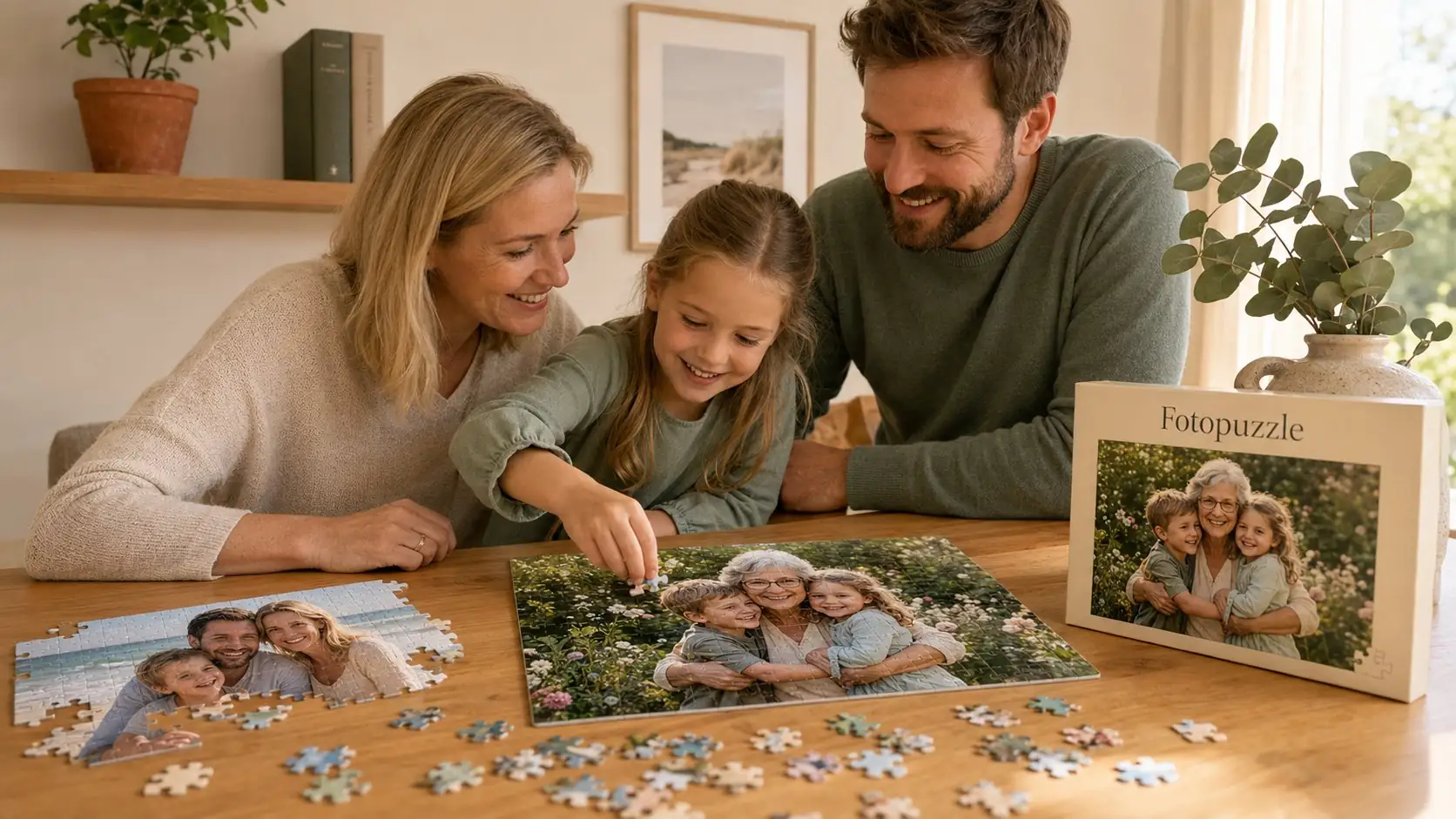
Which Photos Work Best for a Custom Photo Puzzle?
Before you start designing, you need a photo that still makes sense when it's cut into 88 small pieces. Three subject types consistently work best in practice.
Family portraits with clear faces
A photo with every face clearly visible, ideally from a wedding, family vacation, or special occasion. The key thing: faces should take up a reasonable share of the frame. If faces are tiny in the original, too much detail gets lost when the image is split into puzzle pieces.
Landscape shots with depth and variation
Mountain panoramas, beach scenes with varied tones, city skylines with clear architectural lines. These work especially well at 88 pieces because different image areas allow different puzzling strategies — sky, water, and architecture each become their own sub-problem during assembly.
Iconic favorite places
The restaurant where you had your first date, the hotel from your honeymoon, the beach where you spent last summer. These shots really land when the main subject sits clearly at the center of the frame and there's still enough surrounding detail to support the smaller pieces.
What doesn't work well: photos with large single-color areas (too many near-identical pieces), shots with motion blur (cut edges become unusable), or tight crops that compress the important parts of the image into a handful of pieces and leave the finished puzzle feeling flat.
For more emotional gift inspiration, our photo gift ideas hub has a wider selection.
Tip: Current smartphone photos generally have enough resolution for the 88-piece format. Very old shots — scanned paper prints from your parents' albums, for example — need a resolution check first, and the editor will automatically flag low-resolution images.
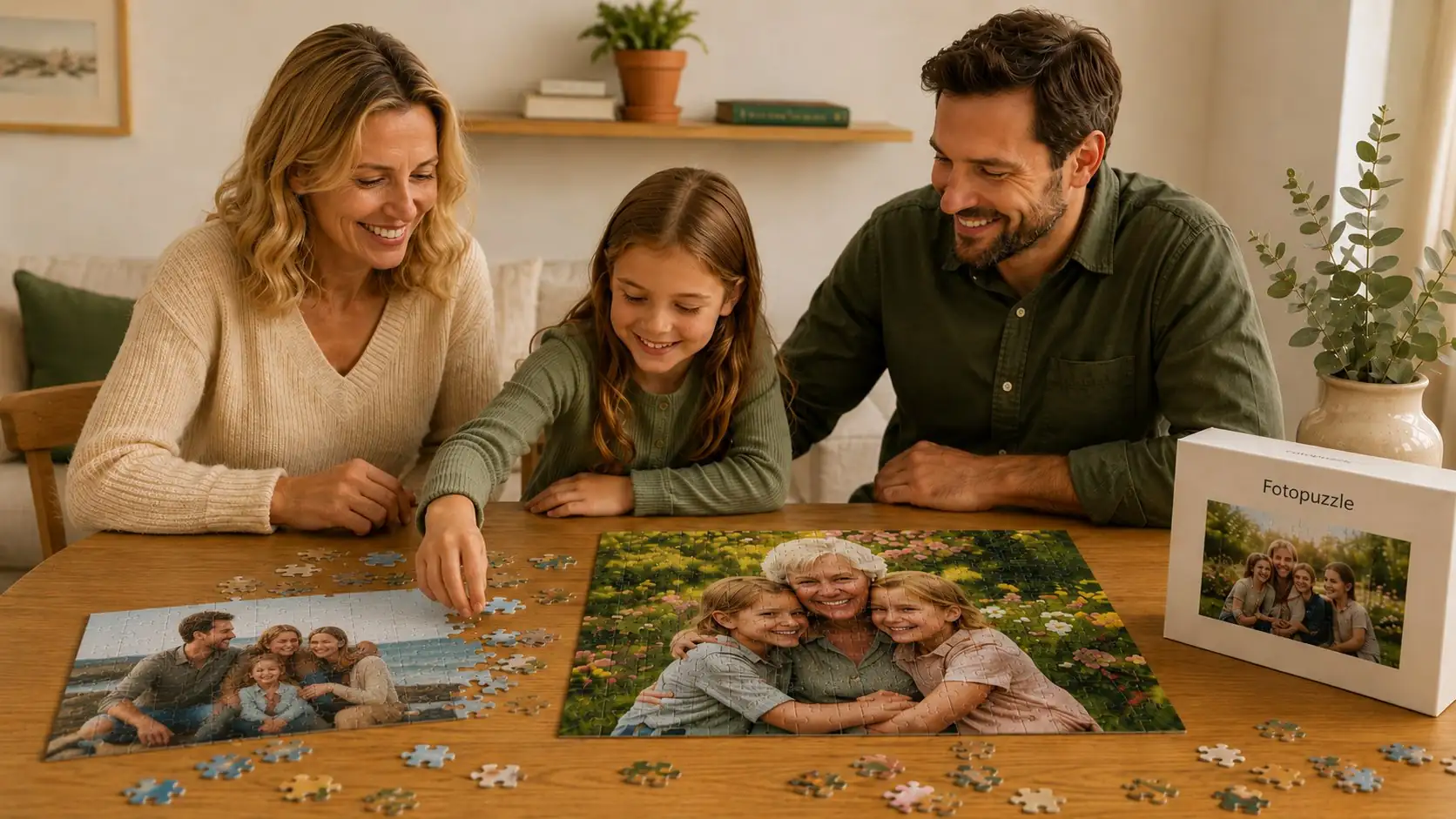
The photo choice is the decision that matters most. The rest of this guide walks through who the 88-piece format suits, what resolution you need, and the typical traps people fall into when they're rushing.

Is the 88-Piece Format Right for Your Recipient?
Direct answer: for most gift situations, yes. The 88-piece format is the sweet spot — challenging enough to feel like a real puzzle, easy enough that a recipient can finish it in a single sitting, and physically large enough (9.5 by 7.5 inches finished) to display on a table or frame afterwards. It works for ages 8 and up, which covers almost every adult gift scenario and most school-age children.
| Recipient | How 88 pieces fits | Estimated build time |
|---|---|---|
| School-age children (8 to 12) | Right at their skill ceiling — challenging but achievable | 45 to 90 minutes |
| Couples (date night) | A perfect single-evening activity | 30 to 60 minutes |
| Adults as a thoughtful gift | Meaningful but doesn't demand a weekend commitment | 30 to 60 minutes |
| Families with school-age kids | Everyone can join in without anyone getting bored | 30 to 45 minutes (with multiple hands) |
| Toddlers under 6 | Too many pieces — consider a different gift type | Not recommended |
| Expert puzzlers | Will finish in 20 minutes — better as a keepsake than a challenge | ~20 minutes |
Our recommendation: If your recipient is an expert puzzler who routinely does 1000+ piece puzzles, frame the gift differently. The 88-piece custom puzzle becomes a keepsake — something they assemble once for the experience of seeing their own photo emerge — not a challenge. Pair it with a personalized note about the photo's significance, and the gift lands.
Finished size and what to expect
The completed 88-piece puzzle measures 9.5 by 7.5 inches — just smaller than a sheet of letter paper, or about the size of a paperback book cover. Big enough to display nicely on a tabletop, easel, or in a frame after assembly. The piece size hits a comfortable middle: small enough to feel like a real puzzle, large enough that no one's squinting or fumbling.
If you want to preserve the finished puzzle as wall art, puzzle glue and a simple frame turn it into a permanent display. Many recipients assemble, frame, then keep it on the wall as a quiet reminder of the moment in the photo.
What Resolution Does Your Photo Need?
A minimum of 1000 pixels on the long edge, ideally 1500 to 2000 pixels for crisp detail. The 88-piece format is forgiving, but going lower than 1000 pixels means each puzzle piece prints softly and the finished image looks fuzzy up close.
Current smartphone photos (12 MP and above) deliver more than enough resolution for the 88-piece format. An iPhone 13 or newer at standard 12 MP settings gives you 4032 x 3024 pixels — four times what you need.
Important: Always use the original file, not a version that's been forwarded via iMessage, WhatsApp, or social media. Those apps compress the resolution and sharpness suffers dramatically. You'll find the original in your phone's Photos app or in iCloud.
Smartphone photos: what works, what doesn't?
Practically every current iPhone and Android phone delivers photos with enough resolution for a custom photo puzzle. The reality: the main problem isn't sensor resolution but capture sharpness. In low light, fast motion, or with heavy zoom, a photo can come out soft despite high megapixel counts.
Tip: Before you upload, zoom in to 100% on your phone. If eyes and main subject are still sharp, the photo will work as a puzzle. If everything looks washed out, pick a different shot.
For more on image preparation for printing in general, our photo print resolution guide covers the underlying principles — they apply to puzzles in much the same way.
How to Make Your Photo Puzzle in 4 Steps
Follow this sequence and you'll land a result that feels considered, not rushed.
Step 1: Choose and check your photo. Pick the sharpest photo you can find. Use the original from your phone gallery, not a copy that's been through iMessage, WhatsApp, or social media. Minimum 1000 pixels on the long edge, ideally more. Main subject centered, no busy background, no tight crop at the edges.
Step 2: Confirm the 88-piece format works for your recipient. The 88-piece format takes about 30 to 60 minutes to assemble and works for ages 8 and up. It's a sweet spot for kids ready for their first real puzzle, couples wanting a quick shared activity, and adults who want a meaningful gift without committing a full weekend.
Step 3: Adjust the crop and layout. Upload your photo in the designer, fit it to the 9.5x7.5 inch format, and check that faces and key details don't fall at the cut lines. Zoom and fine-tune as needed. The preview shows the puzzle lines over your image before you order.
Step 4: Preview and order. Double-check the design, add a gift message if you want, and complete checkout. Ship to the recipient directly or to yourself for in-person handover.
Tip: Sleep on the layout overnight and look at it again in the morning. What looked perfect at the end of a long design session often reads differently the next day — and that's exactly when the final adjustments make the biggest difference.
Occasions and Gift Ideas: When a Photo Puzzle Hits the Mark
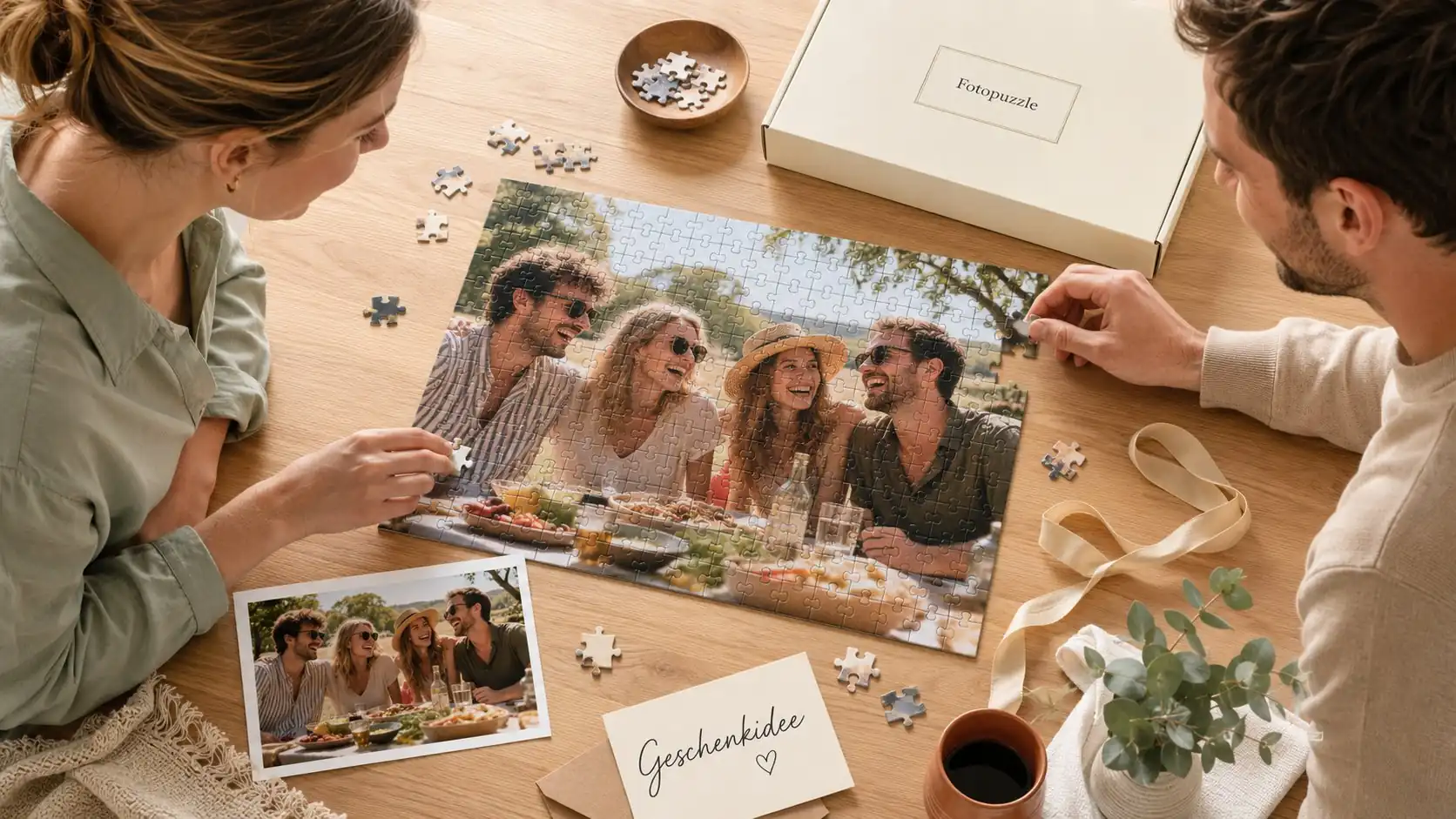
A custom photo puzzle is more than a gift — it's a shared experience. These occasions work especially well for the 88-piece format:
- Anniversary or wedding gift. The wedding photo as an 88-piece puzzle. The recipients assemble the image of their own wedding day — and each piece brings more memory back into the room. Frame it afterwards as a permanent keepsake.
- Milestone birthday (40, 50, 60). A family photo or favorite travel shot. The puzzle becomes a centerpiece for the gathering — everyone takes a turn, the recipient feels seen.
- Grandparents' gift. A photo of grandchildren in the 88-piece format. Especially powerful when the family lives far away — the puzzle keeps the visual connection alive on the wall after assembly.
- Valentine's Day. A shared travel photo for a single-evening activity together at the dining table. Short build time, high memory value.
- Children's birthdays (ages 8+). A photo of the child themselves. Children build their own image — strong identification, achievable challenge, quick success.
- Father's Day, Mother's Day. A photo of the kids that captures who they are right now — frozen in time, but rebuildable across many afternoons over the years.
- Memorial or remembrance puzzle. A quiet portrait of someone who's no longer here. A meditative act of remembering — not a typical "gift," but deeply moving for the right recipient.
Our recommendation: To round out the photo puzzle into a gift set, pair it with a custom photo mug or a photo pillow using the same image. The result is a coherent gift package built around one memory.
Common Mistakes When Making a Custom Photo Puzzle
Despite all the preparation, there are a few traps almost everyone falls into the first time:
- Wrong photo orientation. A portrait photo on a landscape-format puzzle gets cropped top and bottom — the main subject is lost. The 9.5x7.5 inch landscape format works best with landscape-oriented photos. Check the aspect ratio in the designer before checkout.
- Background too busy. If the photo shows a wild party scene or a packed marketplace, nothing comes through clearly when it's split into pieces. Cleaner backgrounds work better.
- Motion blur missed. What looks small and sharp on a phone screen can look washed out when printed at 9.5x7.5 inches. Always zoom to 100% before uploading.
- Crop too tight. If heads or main objects sit right at the photo edge, they get partially clipped in the puzzle pieces. Leave at least 5 to 10% safety margin to the frame edge.
- Choosing a photo with strong solid-color areas. A sky-heavy landscape or a photo with a plain wall behind the subject creates large regions of nearly identical pieces — frustrating to assemble. Photos with varied detail across the whole frame work much better.
- Forgetting to preview. The puzzle line preview shows exactly where the cuts will fall. If your subject's eyes or mouth land on a cut line, you can shift the crop before ordering.
Final Thoughts: When Is a Custom Photo Puzzle Worth It?
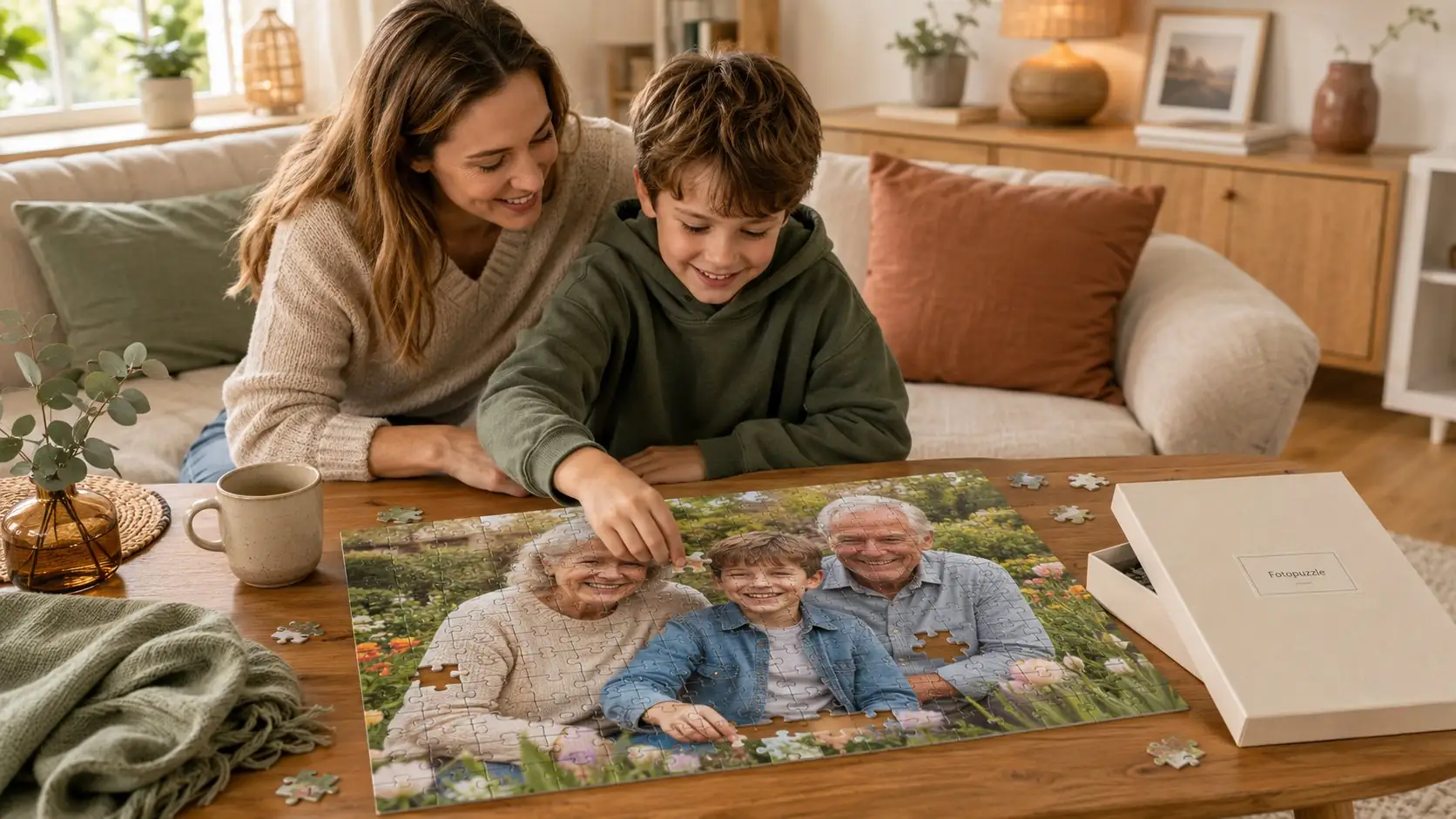
A custom photo puzzle is especially worth it when the recipient has a quiet evening to spare and enjoys working with their hands. It's not a gift for a quick handover at the door — it's one that gets unboxed slowly, built over an hour, and shown off proudly when the last piece slots in. For parents, grandparents, or anyone who appreciates a calm Sunday afternoon, the 88-piece format hits the mark almost every time.
On the photo: clear, sharp, with a defined main subject and enough background detail. Current smartphone shots are plenty for the 88-piece format. Pick the right photo, check it critically before you upload, and you don't just give a gift — you give a quiet stretch of time together.
The key takeaway: Picture quality matters more than anything else. Sharp focus, clear main subject, enough background detail — get those right, and the 88-piece format does the rest.
FAQ: Custom Photo Puzzle
-
For most gift situations, yes. 88 pieces takes about 30 to 60 minutes to assemble, which is the sweet spot for ages 8 and up, couples wanting a shared evening, or adults who want a meaningful keepsake without a multi-day commitment. The finished puzzle measures 9.5 by 7.5 inches and looks great on a tabletop or framed on the wall.
-
Three subject types work especially well: family portraits with clearly visible faces, landscape shots with depth and varied detail, and iconic favorite-place pictures with a strong central subject. The key requirements: main subject centered, background not too busy, sharp focus and high resolution.
-
At least 1000 pixels on the long edge for the 88-piece format, ideally 1500 to 2000 pixels for crisp detail. Modern smartphones (12 MP and above) easily satisfy this requirement. Higher resolution gives sharper puzzle pieces and clearer details across every cut.
-
Yes, current smartphone shots work great. Important: use the original file, not a version that's been sent via iMessage, WhatsApp, or social media. Those apps compress the resolution and the sharpness drops noticeably.
-
Production runs 24 hours in the U.S. facility. Standard shipping delivers within 3 to 5 business days. Express shipping is available at checkout for 1 to 2 day delivery if you're up against a deadline.
