Wedding Photo Book Guide: 10 Album Ideas, Layout Tips and Design Advice
 by Ashley Carter– 7 years of experience in photo gifts and home deco
 7 Minutes
Your photographer delivered 800 stunning images three months ago. They're sitting in a cloud folder you've opened twice. Sound familiar? You're not alone. Most couples receive their wedding photos and then never do anything with them. A wedding album changes that. It turns a digital archive into something you'll actually pick up, page through on anniversaries, and pass down to your children one day.
But creating a wedding album is often the part that stalls. Which photos make the cut? How should you arrange them? What format suits your style? With a few smart wedding album ideas and some basic design principles, anyone can build a photo book that does justice to the biggest day of their life.
From creative concepts and layout strategies to practical decisions about format, page count, and cover design – it's all here. Whether you're starting from scratch or looking for fresh wedding photo book ideas to elevate your project, you'll find actionable advice that takes the guesswork out of the process.
In this article, you'll discover:
- Which wedding album ideas work best for different couple styles and budgets?
- How do you choose the right format, paper, and binding for your album?
- What makes a wedding album layout read like a story instead of a slideshow?
- How many photos should you include, and how do you narrow down hundreds of images?
- What should the cover of your wedding album look like?
- Which mistakes do most couples make, and how can you avoid them?
At a Glance: The best wedding albums follow a clear narrative arc, use 50 to 100 carefully curated photos, and balance full-page hero shots with smaller candid groupings. Below you'll find 10 creative wedding album ideas, practical layout tips, format comparisons, and common mistakes to avoid so your finished album holds up for decades.
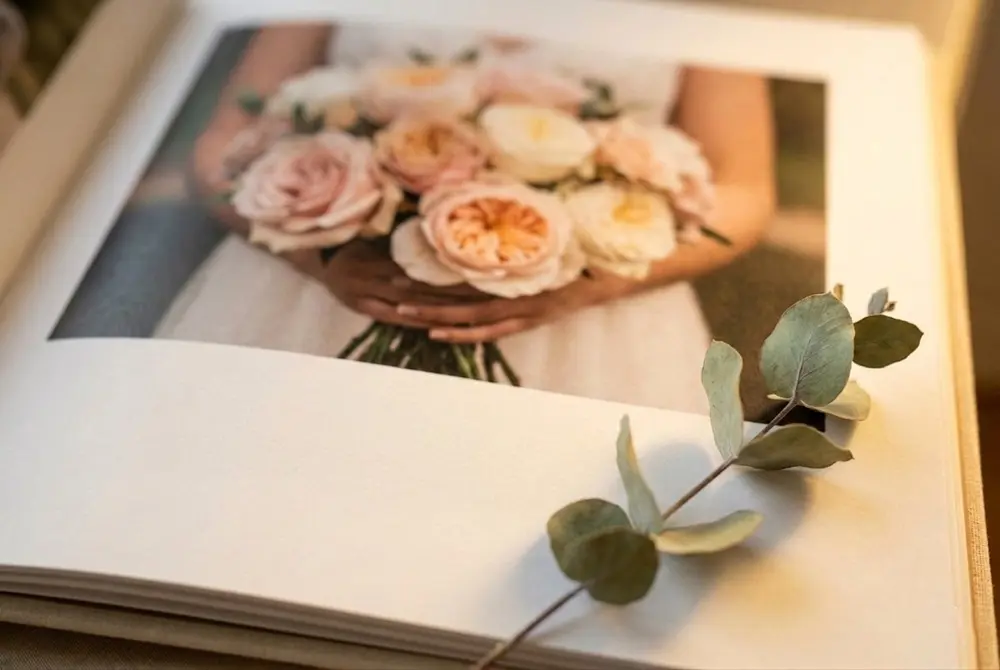
10 Wedding Album Ideas for Every Style of Couple
No single right way to build a wedding album exists. What works depends on your day, your personality, and the photos your photographer captured. Here are ten concepts that span a wide range of wedding styles, from intimate elopements to grand celebrations.

1. The Cinematic Day-of Album
Think of your wedding like a film and let the album follow the same structure. Open with establishing shots of the venue, the weather, and the details you spent months planning: the invitation suite, the floral arrangements, the place settings. Build toward the emotional peak of the ceremony, then let the reception photos bring energy and joy. Close with the sparkler exit or a quiet portrait of the two of you at the end of the night. Photographers who deliver a strong mix of wide-angle and close-up shots give you ideal material for this cinematic structure.
2. The Getting-Ready Album
Some of your most powerful moments happen before the ceremony even starts. The nervous laughter while buttoning the dress. The father wiping his eyes after seeing his daughter for the first time. The groomsmen joking to calm the groom's nerves. A getting-ready-focused album puts these intimate, behind-the-scenes moments front and center. Pair it with a separate reception album, and you have two volumes that tell the complete story.
3. The Two-Volume Set
If your photographer delivered an especially large collection, split your wedding photo book into two volumes: one for the ceremony and one for the reception. The ceremony volume captures the solemnity, the vows, and the formal portraits. The reception volume showcases the party: the first dance, the toasts, the dance floor chaos, and the late-night food truck. Each volume can be a compact 20 pages, keeping both tight and purposeful rather than overwhelming.
4. The Detail-Focused Album
Couples who invested heavily in décor, florals, stationery, and venue styling will love this one. Dedicate full spreads to the elements you designed: the centerpieces, the cake, the custom cocktail menu, the ceremony arch. Intersperse these with portraits and candid moments so the album reads less like a catalog and more like a love letter to the aesthetic you created together.
5. The Candid Moments Album
Skip the posed portraits entirely and build your album exclusively from unscripted moments. The ring bearer yawning during the ceremony. Your college roommate ugly-crying during the maid-of-honor speech. Grandma tearing up the dance floor at midnight. These are the images you'll laugh and cry over for decades. Candid albums have an energy that posed photography simply cannot match.
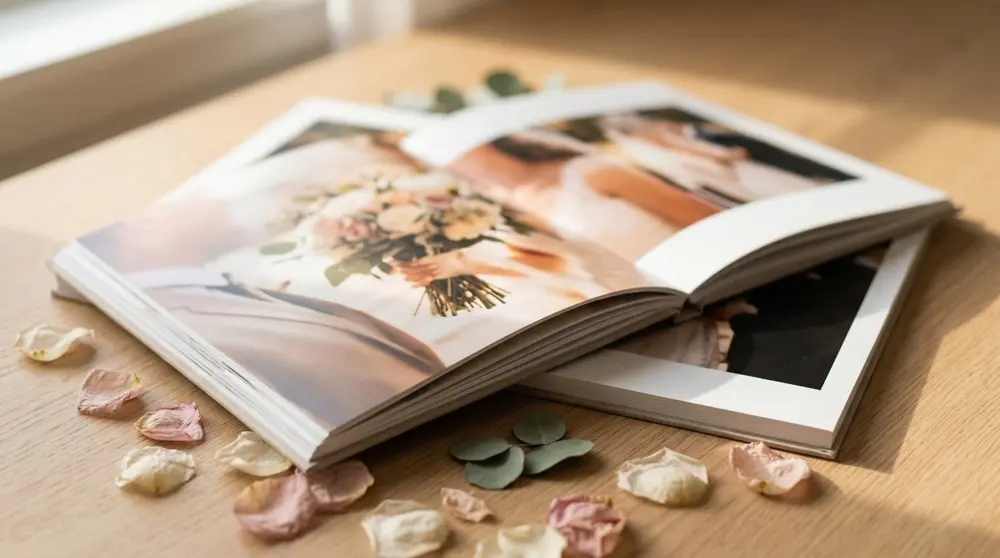
6. The Love Story Album
Start with your engagement photos and end with your wedding day. Couples who had a professional engagement session have ideal material for this concept. Open with those early, carefree shots, then transition to the wedding preparation, the ceremony, and the celebration. Seeing casual engagement photos side by side with formal wedding images shows how your relationship has evolved – and turns the album into a narrative of your journey together.
7. The Parent's Keepsake Album
Create a smaller, curated version of your wedding album as a gift for each set of parents. Focus on the moments that matter most to them: the processional, the parent dances, the family portraits, and any emotional candid shots featuring them. A compact photo book in a square format makes an ideal gift that parents will display proudly on their coffee table for years.
8. The Minimalist Album
Less is more. Choose your 30 strongest images and give each one room to breathe. Use full-page spreads with generous white space, no captions, no embellishments. Let the photos speak entirely for themselves. Layflat formats are ideal here – panoramic shots stretch across both pages without interruption. Minimalist albums age exceptionally well because they avoid trendy design choices that date quickly.
9. The Honeymoon Combo Album
Why stop at the wedding? Extend your album to include your honeymoon. The transition from wedding to travel creates a satisfying emotional arc: the intensity of the celebration gives way to the relaxation and adventure of your first trip as a married couple. Add a title page between the two sections to mark the shift. Among the wedding photo book ideas on this list, the honeymoon combo captures the widest emotional range – from ceremony tears to beach sunsets.
10. The Anniversary Edition Album
Wait a year. Seriously. Some couples find that the emotional distance of twelve months gives them a clearer perspective on which photos truly matter. You'll also have the benefit of seeing how your photographer's style has aged. An anniversary edition album can include photos from the wedding, the honeymoon, and even your first year of marriage. It makes a wonderful first-anniversary tradition and ensures the project actually gets done rather than lingering on a to-do list for years.
Wedding Album Design: Choosing the Right Format
Format affects everything: how your photos look on the page, the weight and texture of the album in your hands, and how well it holds up over time. Before you start dragging photos into a layout, make three key decisions: orientation, paper type, and cover style.
| Feature | Landscape | Portrait | Square |
|---|---|---|---|
| Best for | Venue panoramas, wide ceremony shots, group portraits | Close-up portraits, detail shots, vertical compositions | Mixed orientations, versatile layouts, modern aesthetic |
| Spread feel | Cinematic, dramatic | Elegant, traditional | Clean, contemporary |
| Layflat advantage | Full panoramic spreads with no center gap | Tall single-page hero shots | Equal space for horizontal and vertical images |
| Recommended size | 11 x 8 in or larger | 8 x 11 in or larger | 10 x 10 in or 12 x 12 in |
| Display style | Coffee table showpiece | Bookshelf classic | Works anywhere |
Paper Type Matters
For wedding albums, the paper you choose has a direct impact on how your photos look and feel. Digital printing on thick matte paper delivers rich, true-to-life colors with no glare, making it ideal for albums you'll flip through under living room lighting. Photographic printing on real photo paper produces a sharper, more vivid result with deeper blacks and more vibrant colors. If you want a layflat binding where two-page spreads lie perfectly flat, photographic paper is usually the better choice. It's also available in glossy or matte finishes, so you can control how light interacts with the images.
Cover Options
A hardcover is the standard for wedding albums because it protects the pages and carries real weight when you pick it up. Softcover suits smaller keepsake albums, like the parent's gift version, but it won't hold up as well over decades of handling. Ring-bound covers offer easy page turning but lack the premium quality most couples want for their primary wedding album. For a classic finish, choose a hardcover in a neutral color like white, black, or ivory and keep the design simple.
Wedding Album Layout: How to Arrange Your Pages
What separates a stunning wedding album from a mediocre one rarely comes down to photo quality. It comes down to layout. A thoughtful wedding album layout transforms a collection of images into a story with pacing, rhythm, and emotional peaks.
Follow the Timeline
Chronological order is your strongest starting point. Most wedding album professionals recommend this sequence: preparation and getting ready, the ceremony, formal portraits and couple shots, cocktail hour and guest candids, reception highlights including the first dance and toasts, and finally the party and exit. Why does this structure work so well? It mirrors how you experienced the day. Quiet preparation building to joyful celebration creates a satisfying narrative that lands when you turn the last page.
Vary Your Spread Sizes
Don't put the same number of photos on every page. Compelling albums alternate between full-page hero images and multi-photo spreads. Use a single dramatic photo for your most powerful moments: the first kiss, the first dance, the sunset portrait. Group smaller candid shots together on adjacent pages to create energy and contrast. That rhythm keeps the viewer engaged and gives your strongest images the space they deserve.
Leave White Space
Resist the urge to fill every inch of every page. White space (or negative space) around your photos gives them room to breathe and draws the eye to what matters. An album crammed with edge-to-edge images on every spread looks cluttered and exhausting. Well-spaced layouts, by contrast, look elegant and intentional. As a rule of thumb, let at least 20 percent of each spread remain empty.
Tip: Print a test page before committing to your full layout. What looks great on a screen can look very different when printed. Colors, contrast, and cropping all shift slightly between digital and physical formats.
How Many Photos Should a Wedding Album Have?
Couples ask this question more than any other, and the answer is simpler than you think. Most professional wedding albums contain between 50 and 100 photos. That might sound like a small fraction of the 500 to 1,000 images your photographer delivered, but curation is what separates a great album from a digital dump.
| Album Size | Page Count | Recommended Photos | Best For |
|---|---|---|---|
| Compact | 20 pages | 40–60 | Parent keepsake, minimalist style |
| Standard | 30 pages | 60–90 | Most weddings, balanced coverage |
| Extended | 40+ pages | 80–120 | Large weddings, cinematic approach |
How to Narrow Down Your Selection
Start by creating three folders: "must include," "maybe," and "skip." Your "must include" folder should contain no more than 30 to 40 images. These are the non-negotiable moments: the first look, the vow exchange, the rings, the first kiss, the first dance, and any candid shots that make your heart skip. Your "maybe" folder holds supporting images that add context but aren't essential on their own. Go through this folder ruthlessly. Ask yourself: does this photo tell me something the adjacent images don't? If the answer is no, it's a duplicate in spirit, even if it's a different shot.
Some specific guidelines to help: include no more than two to three photos per moment (you don't need six angles of the bouquet toss), keep family formals to one strong group shot per combination, and be especially selective with dance floor photos since they tend to look repetitive in print.
Once you have your selection locked in, our guide on how to make a photo book online walks you through the full creation process from uploading images to placing your order.
Designing the Perfect Wedding Album Cover
Your album cover is the first thing people see and the last thing they remember. It sets the tone for everything inside. It also needs to age well because this is something you'll display in your home for decades.
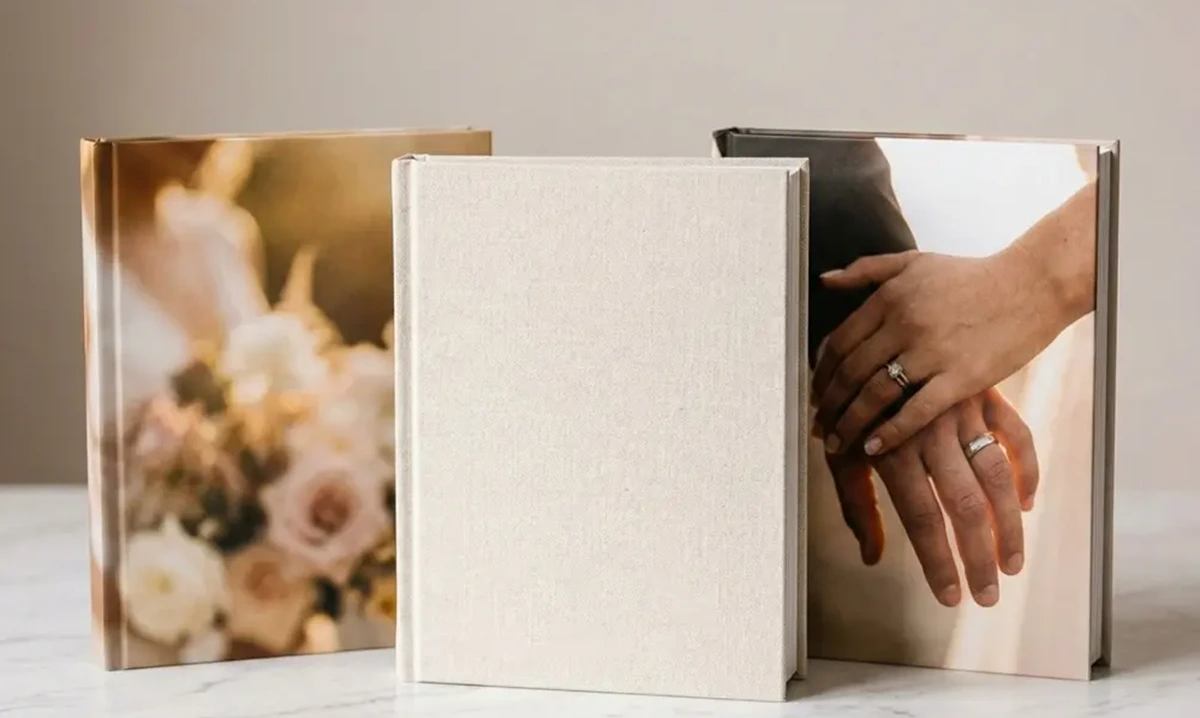
Photo Cover vs. Text-Only Cover
A photo cover makes an immediate impact. Choose a single standout image – typically a portrait of the two of you or a dramatic wide shot of your venue – and let it fill the entire front panel. Pick an image with clean composition that doesn't rely on small details that might get lost in a reduced size. A text-only cover, on the other hand, is more understated. Your names, wedding date, and perhaps a subtle monogram on a solid background create a classic look that won't age. Many couples prefer this option because it lets the interior photos speak for themselves.
Cover Material and Color
White and ivory hardcovers remain the go-to choice for wedding albums because they complement almost any interior design style. Black adds a modern, editorial edge that pairs well with dramatic black-and-white photography. Faux-leather finishes in brown or tan offer warmth and texture. Whatever you choose, avoid trendy colors or patterns that might look dated within a few years. Your wedding album cover should be as enduring as the day it represents.
Tip: If you're creating a parent's keepsake version, match the cover style of the main album to create a cohesive set. That small touch makes the gift land even harder.
Wedding Photo Book Mistakes to Avoid
Beautiful photos alone won't save a poorly designed wedding album. Several common mistakes can undermine your wedding album design. Here's what to watch out for.
Overcrowding pages. More photos per page does not mean a better album. It means a cluttered one. Flip through any album where every spread is packed with eight or nine images and you'll notice the same thing: nothing stands out because everything competes for attention. Give your best photos full pages and limit multi-image spreads to four or five carefully arranged shots.
Waiting too long. Here's the real number one wedding album mistake – and it isn't a design issue. It's procrastination. The longer you wait, the less likely the album gets made at all. Set a deadline for yourself within six months of receiving your photos. Many online photo book makers offer simple drag-and-drop design tools that make the process faster than you expect.
Including every photo. Your photographer gave you 800 images because that's how photography works, not because all 800 belong in your album. A wedding album is a curated highlight reel, not a complete archive. Be disciplined about eliminating near-duplicates and shots that don't add anything new to the story.
Ignoring page flow. Random photo placement with no thought to sequence or pacing turns an album into a jumbled slideshow. Every spread should have a reason to exist. If you can't explain why two images are on the same page, they probably shouldn't be.
Choosing style over substance. Trendy filters, heavy vignetting, and elaborate borders might look appealing now but will age poorly. Stick to clean layouts with minimal embellishment. Your photos are the stars – let them carry the design.
Forgetting captions. You'll remember every detail of your wedding right now. In ten years, you won't remember the name of the song you danced to at midnight or which uncle gave that hilarious toast. Short captions with names, moments, and dates add enormous long-term value to your album.
Turn Your Wedding Album Into Wall Art
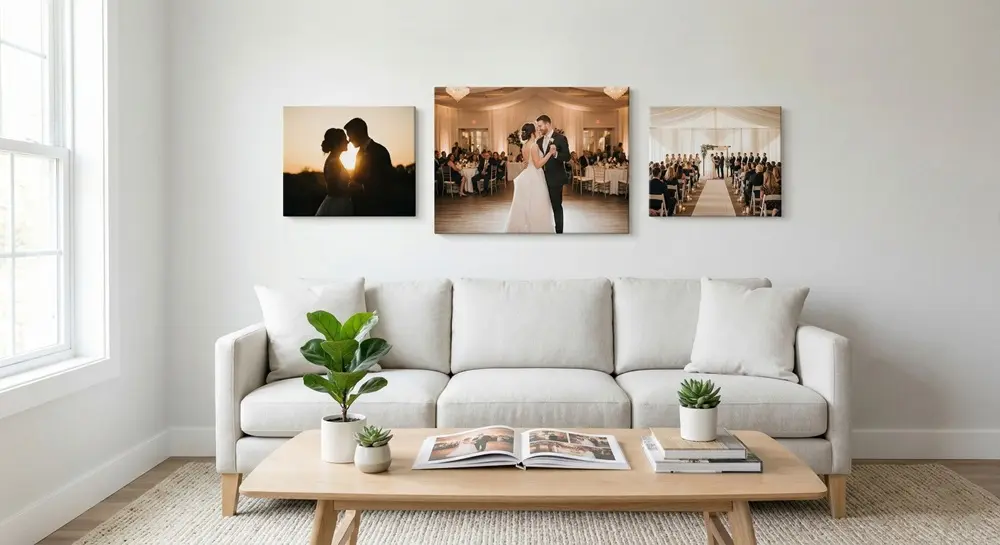
Your wedding album captures the full story, but your very best shots deserve to be seen every day. Consider turning two or three hero images into canvas prints for your living room or bedroom. A single large canvas of your first dance or sunset portrait becomes a daily reminder of your celebration – something you will see and appreciate long after the album goes back on the shelf.
Choose images with clean compositions and strong natural light – these translate best to large-format prints. Ceremony wide shots, golden-hour portraits, and close-ups of hands or rings all work well at scale. For placement, a single oversized print above a sofa or bed makes the strongest statement, while a canvas wall display of three to five smaller prints along a hallway creates a gallery effect your guests will notice every time they visit.
Frequently Asked Questions About Wedding Albums
-
Most wedding albums contain 50 to 100 photos across 20 to 40 pages. A 20-page album works well with 40 to 60 images, while a 40-page album can hold 80 to 120 if you mix full-page spreads with smaller groupings. Focus on your strongest images rather than trying to include everything your photographer delivered.
-
A large landscape or square format works best for most wedding albums. Landscape formats are ideal for wide ceremony and venue shots, while square formats suit a mix of portrait and landscape photos equally well. Choose a layflat binding so two-page spreads lie completely flat with no image lost to the spine.
-
A chronological layout is the most natural choice because it follows the emotional arc of your day, from getting ready through the ceremony and reception to the last dance. Thematic layouts work better for couples who want to highlight specific moments like details, portraits, or candid guest reactions as standalone sections.
-
Aim to start within three to six months after receiving your final edited photos. The memories are still fresh enough to write meaningful captions, and you avoid the common trap of putting the project off indefinitely. Setting a firm deadline helps. Many couples find that the design process is faster than they expected once they actually sit down and begin.
-
The most popular options are a single standout photo from the day, the couple's names and wedding date in elegant text, or a clean design with no photo at all. Hardcover finishes in white, black, or ivory are the most classic choices. Avoid trendy patterns or bold colors that may feel dated after a few years.