Canvas Prints vs Metal Prints vs Acrylic Prints: 2026 Comparison Guide
 by Michael Turner
 7 minutes
You have a photo worth printing. Maybe it is a family portrait, a travel landscape, or a shot so good it belongs on a wall. The question is not whether to print it. The question is what to print it on. Canvas prints vs metal prints vs acrylic prints is the comparison that determines how your photo looks, feels, and lasts for years. Each material produces a completely different result from the same image, and choosing the wrong one means your favorite photo ends up looking good when it could have looked extraordinary. This guide breaks down every meaningful difference, side by side, so you can match the right print medium to your photo, your room, and your style without guessing.
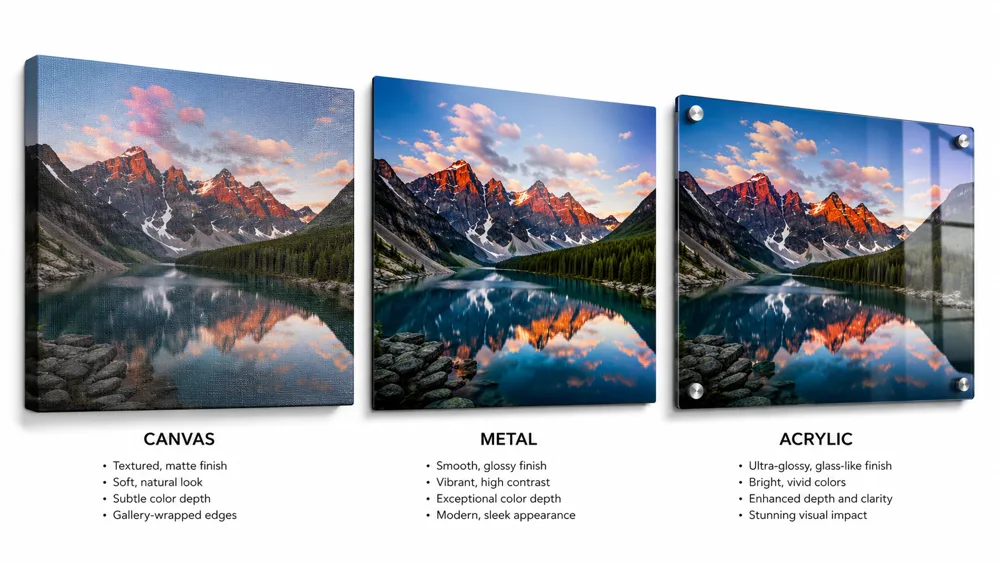
Quick Comparison: Canvas vs Metal vs Acrylic at a Glance
| Feature | Canvas Print | Metal Print | Acrylic Print |
|---|---|---|---|
| Surface Finish | Matte, textured fabric | Brushed aluminum, semi-gloss | Glass-like, high-gloss |
| Color Vibrancy | Warm and softened | Sharp and vivid | Ultra-vivid, saturated |
| Best Photo Types | Portraits, family photos, warm landscapes | Cityscapes, architecture, black and white | Vivid landscapes, close-ups, bold colors |
| Look and Feel | Classic, painterly, warm | Modern, industrial, sleek | Gallery, luxurious, contemporary |
| Weight | Light | Light to medium | Heavy |
| Durability | Good (avoid moisture) | Excellent (water-resistant) | Excellent (scratch-resistant) |
| Glare | None | Minimal | Some (manageable with placement) |
| Frame Required | No (gallery-wrapped) | No (float mount included) | No (frameless design) |
| Price Point | $ | $$ | $$$ |
| Best Rooms | Living room, bedroom, hallway | Office, kitchen, garage, bathroom | Living room, lobby, feature wall |
Canvas Prints: The Classic That Earned Its Reputation
Canvas prints are the most popular wall art format in the world, and they hold that position for good reason. The photo is printed on woven polyester canvas and stretched over a wooden frame, producing a result that looks and feels like a painting. The texture of the canvas fabric softens the image slightly, removing the clinical sharpness of a digital photo and replacing it with warmth. This is why canvas prints excel with portraits, family photos, and natural landscapes: the material adds an emotional quality that flat surfaces cannot match.

Canvas is also the lightest of the three options, which makes it the easiest to hang. A single nail is usually sufficient, even for larger sizes. The gallery-wrapped edges mean no frame is needed, though adding one is an option for a more traditional look. Canvas prints produce zero glare regardless of lighting conditions, which makes them forgiving in rooms with lots of natural light or direct spotlights.
The trade-off is color intensity. Canvas absorbs ink into its fibers rather than reflecting light off its surface, which means colors appear slightly warmer and softer than the original file. For most photos, this is actually a benefit: it gives the image a natural, organic feel. But for photos where razor-sharp color accuracy matters, like neon cityscapes, bold graphic art, or underwater photography, canvas may not be the optimal choice. For a detailed look at canvas options and pricing, see our guide on the best canvas prints for tight budgets.

Metal Prints: The Modern Edge
Metal prints use a process called dye sublimation to infuse your photo directly into a sheet of aluminum. The result is a sleek, frameless piece of wall art with a brushed metallic surface that gives images a contemporary, almost futuristic quality. Colors on metal are sharper and more vivid than on canvas because the aluminum surface reflects light rather than absorbing it. Details appear crisper, contrast is higher, and the overall effect is one of precision and clarity.
The material itself is extremely durable. Metal prints are water-resistant, scratch-resistant, and fade-resistant, which makes them uniquely suited for rooms that canvas would struggle in: kitchens, bathrooms, garages, covered outdoor areas, and anywhere humidity is a factor. They clean easily with a damp cloth, which matters in high-traffic areas.
Metal prints typically mount with a float system that holds the panel slightly off the wall, creating a shadow gap that adds depth and a floating effect. This modern mounting style suits minimalist and industrial interiors particularly well. The downside is that the metallic surface can create a slight color shift in photos with very warm tones: skin tones can sometimes appear cooler than expected. For portraits and warm family photos, this is worth testing before committing to a large size.
Acrylic Prints: The Gallery Statement
Acrylic prints produce the most visually striking result of all three formats. The photo is printed and then mounted behind a sheet of polished acrylic (similar to glass but lighter and more durable), which creates extraordinary depth and color saturation. Colors appear to glow from within the surface. Blacks are deeper, whites are brighter, and the overall contrast is significantly higher than either canvas or metal. For a complete breakdown, read our guide on what is an acrylic print.
The glass-like surface gives acrylic prints a premium, gallery-quality presentation that makes any photo look like it belongs in a professional exhibition. This is the format most commonly used in galleries, hotel lobbies, and design studios for exactly that reason. Vibrant landscapes, ocean scenes, close-up photography, and any image with bold, saturated colors benefit enormously from the acrylic treatment.
The trade-offs are weight and glare. Acrylic prints are heavier than canvas or metal, especially at larger sizes, and they require sturdy mounting hardware. The glossy surface can also catch light in certain angles, creating reflections that compete with the image. Placement matters: avoid hanging directly opposite a window or strong light source. Despite these considerations, acrylic consistently delivers the most visually dramatic result per square inch of any print medium available.
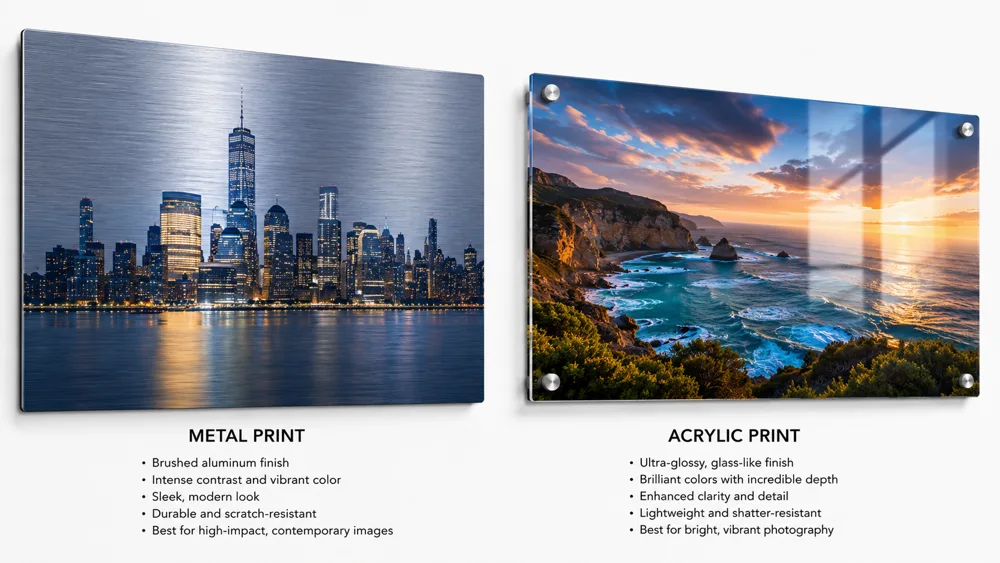
Head-to-Head: Which Beats Which?
Canvas Print vs Acrylic Print
The acrylic print vs canvas print comparison comes down to atmosphere versus impact. Canvas creates a warm, approachable, painterly look that makes family photos feel like art. Acrylic creates a vivid, high-contrast, gallery-quality statement that makes any photo look premium. If the room needs warmth and softness, canvas wins. If the goal is to make guests stop in their tracks and ask "where did you get that?", acrylic wins.
Canvas Print vs Metal Print
Canvas is traditional, textured, and warm. Metal is modern, sleek, and sharp. For living rooms, bedrooms, and spaces where comfort is the priority, canvas is the better fit. For home offices, kitchens, modern apartments, and spaces with a minimalist or industrial aesthetic, metal delivers the cleaner look. Metal also wins in durability: it handles moisture, temperature changes, and physical contact better than canvas.
Metal Print vs Acrylic Print
Both metal and acrylic produce vivid, high-contrast results, but they feel different. Metal has a brushed, industrial quality with a subtle metallic undertone that shows through lighter areas of the image. Acrylic is smooth, deep, and luminous, with no metallic influence on the colors. For pure color accuracy and depth, acrylic is the stronger choice. For modern texture and practical durability (especially in kitchens and bathrooms), metal has the edge.
Which Print Is Right for You?
Choose Canvas If...
Your photo is a family portrait or candid moment. You want a warm, painterly feel. The room has natural or mixed lighting. You prefer a classic, timeless look. Budget is a consideration. You need a lightweight print that is easy to hang.
Choose Metal If...
Your photo has strong lines, architecture, or graphic elements. You want a modern, industrial aesthetic. The room is a kitchen, bathroom, or high-humidity space. You value maximum durability. You like the floating mount look.
Choose Acrylic If...
Your photo has vivid colors, bold contrast, or dramatic lighting. You want a gallery-quality, luxury finish. The print will be a feature piece on a main wall. You want the most visually striking result possible. Placement avoids direct opposing light.
Best Print Material by Photo Type
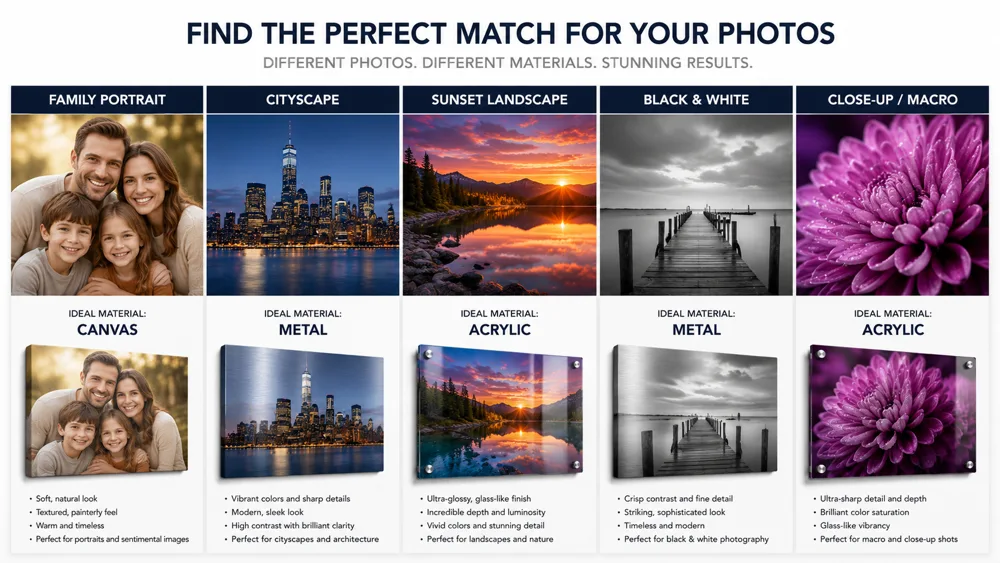
| Photo Type | Best Material | Why |
|---|---|---|
| Family portraits | Canvas | Warm texture flatters skin tones and adds emotional depth |
| Cityscapes and architecture | Metal | Sharp lines and modern surfaces complement urban subjects |
| Vivid landscapes (sunsets, oceans) | Acrylic | Ultra-vivid colors and depth make nature scenes glow |
| Black and white photography | Metal | High contrast and metallic tones add drama to monochrome |
| Wedding and baby photos | Canvas | Soft, painterly quality enhances intimate, emotional moments |
| Abstract and graphic art | Acrylic | Bold colors and geometric forms pop behind the glossy surface |
| Sports and action shots | Metal | Sharpness and durability suit dynamic, high-energy images |
| Close-up and macro photography | Acrylic | Glass-like depth reveals fine detail invisible on other surfaces |
| Vintage and nostalgic photos | Canvas | Fabric texture and warm tones complement aged photo aesthetics |
Practical Considerations: Hanging, Weight, and Care
Hanging. Canvas prints are the easiest to hang: lightweight and forgiving, a single nail or adhesive hook handles most sizes. Metal prints use a float mount that requires screws or anchors but creates a stunning shadow effect. Acrylic prints are the heaviest and require proper wall anchors, especially at sizes above 20x30 inches. Always check the wall material (drywall, concrete, plaster) and use appropriate hardware for the print weight.
Cleaning. Canvas should be dusted gently with a dry microfiber cloth. Avoid water and cleaning products, which can damage the print surface. Metal prints handle a damp cloth with no issues, making them the easiest to maintain. Acrylic prints clean well with a soft, slightly damp cloth, but avoid abrasive materials that could scratch the surface. Use a dedicated acrylic cleaner for the best results.
Longevity. All three formats are designed to last for years without significant fading when displayed away from direct, prolonged sunlight. Metal is the most resistant to environmental factors (humidity, temperature changes, physical contact). Acrylic is highly scratch-resistant and UV-stable. Canvas is durable indoors but should be kept away from damp environments.
Conclusion
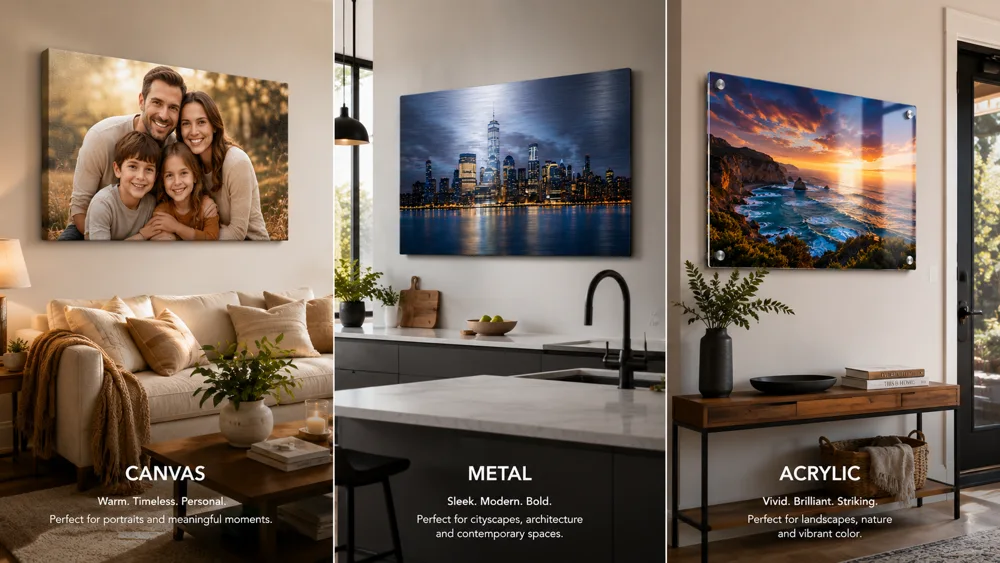
There is no single best print material for every photo. Canvas delivers warmth, texture, and a classic aesthetic that suits portraits and family photos beautifully. Metal brings modern sharpness, durability, and a sleek finish ideal for contemporary spaces and high-contrast images. Acrylic produces the most vivid, gallery-quality result with unmatched color depth and a premium feel. The right choice depends on the photo, the room, and the effect you want to create. Use the comparison tables above to match your image to its ideal surface, and give your best photos the presentation they deserve.

Frequently Asked Questions
Canvas prints use woven fabric stretched over a wooden frame, producing a warm, textured, painterly finish. Metal prints infuse the image into aluminum, creating a sleek, modern look with sharp colors. Acrylic prints mount the photo behind polished acrylic, delivering the most vivid colors and a glass-like, gallery-quality appearance.
Acrylic prints produce the most vivid and saturated colors. The polished acrylic surface amplifies contrast and creates a luminous depth effect that makes colors appear to glow. Metal prints rank second for vibrancy, while canvas produces warmer, softer tones.
Yes. Metal prints are water-resistant, humidity-resistant, and easy to clean with a damp cloth, making them the best choice for kitchens, bathrooms, and other high-moisture environments where canvas would be unsuitable.
Canvas is generally better for family photos and portraits. The textured fabric surface flatters skin tones and adds a warm, emotional quality. Acrylic works well for vibrant group photos but can make skin tones appear cooler and more clinical.
Acrylic prints have a glossy surface that can reflect light at certain angles. To minimize glare, avoid hanging directly opposite a window or strong light source. Canvas prints produce zero glare, and metal prints produce minimal glare.
