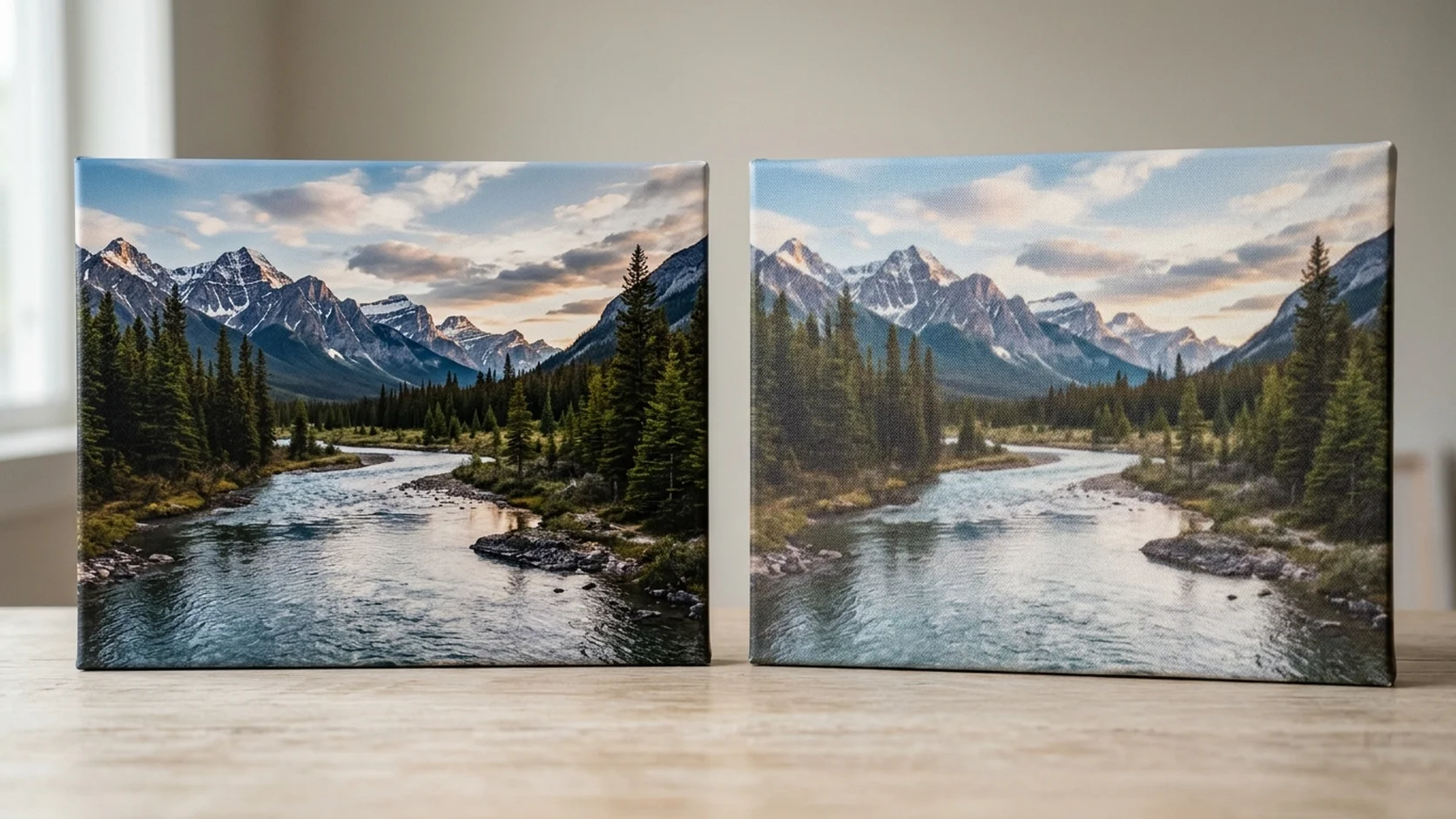
There is a reason two canvas prints of the same photo can look completely different. One arrives with vivid colors, tight stretching, and a surface that catches light like a painting. The other arrives with muted tones, sagging corners, and a finish that looks like it was printed on a bedsheet. The difference is not luck. It is the quality of the materials, the precision of the printing process, and the craftsmanship of the stretching and framing. A canvas print quality guide is something most people never think to search for until after they have been disappointed by a bad one. This guide explains the five factors that actually determine whether your canvas print looks like gallery art or a gas station souvenir, how to identify quality before you order, and what to look for when the canvas arrives at your door.
Whether you are ordering your first canvas print or comparing providers after a bad experience, understanding what separates a great canvas from a mediocre one gives you the knowledge to get a result worth hanging on your wall.
In a nutshell: Canvas print quality is determined by five factors: the canvas material (tight-weave poly-cotton, 360+ gsm), the ink system (archival pigment-based inks that resist fading for decades), the stretcher frame (kiln-dried solid wood that will not warp), color calibration (accurate reproduction of your original photo), and the protective finish (UV-resistant coating). Price alone does not predict quality. Knowing what to look for does.
Key Takeaways
- Canvas material matters more than you think. Premium poly-cotton or polyester canvas at 360+ gsm provides a smooth, consistent surface for ink. Cheap canvas is thin, loosely woven, and produces uneven prints with visible gaps.
- Archival pigment inks are non-negotiable. Pigment-based inks resist fading for 75+ years indoors. Dye-based inks look fine initially but can fade noticeably within 1 to 2 years, especially near windows.
- The stretcher frame determines longevity. Kiln-dried pine or basswood frames hold their shape for decades. Green or particle-board frames warp within months, causing the canvas to sag and wrinkle.
- Color calibration separates good from great. A calibrated printer reproduces your photo accurately. An uncalibrated one shifts skin tones orange, turns blues purple, and makes greens muddy.
- A protective coating adds years of life. UV-resistant laminate or varnish protects against fading, moisture, dust, and minor scratches. It is the difference between a canvas that looks new after five years and one that looks tired after one.
- Test the company, not just the price. Reviews, return policies, material descriptions, and preview tools tell you more about quality than the price tag does.
The Five Quality Factors That Determine Everything
Here is a breakdown of the products that deliver on all five quality indicators, perfect for turning your best photos into lasting wall art.
1. Canvas Material
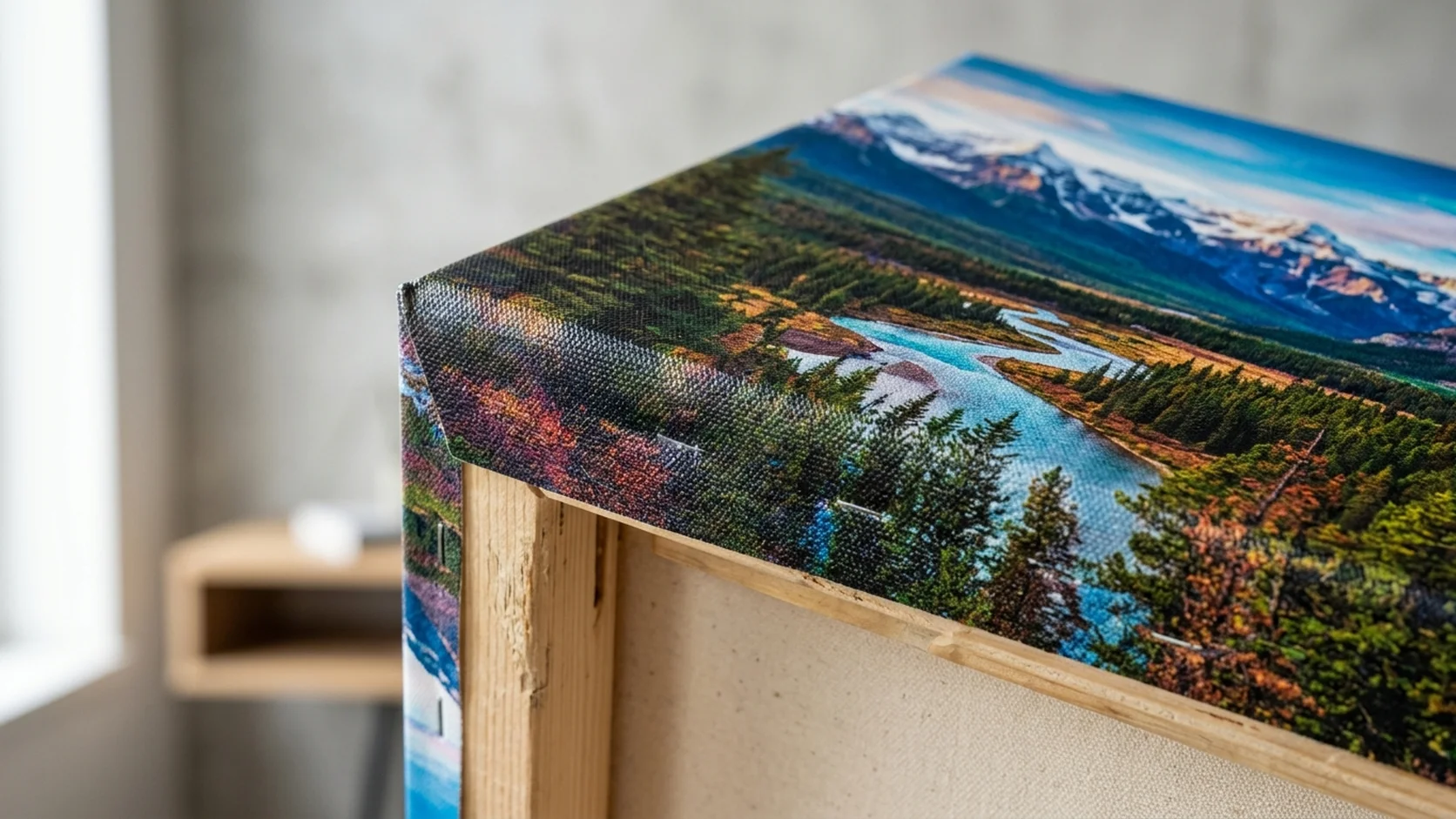
The canvas itself is the foundation. Quality canvas prints use a tightly woven poly-cotton blend or pure polyester fabric, typically rated at 360 gsm (grams per square meter) or higher. This weight produces a dense, smooth surface that holds ink evenly and provides the textured, painterly appearance that makes canvas art distinctive. The weave should be tight enough that individual threads are not visible at normal viewing distance.
Cheap canvas is thin (under 280 gsm), loosely woven, and uneven. When printed, the ink sits unevenly on the surface, producing blotchy colors and visible gaps where the weave shows through. The easiest way to assess canvas quality before ordering is to look for the gsm rating on the company's website. If they do not mention it, they are probably hoping you do not ask.
2. Ink System
The ink system is the single most important quality variable, and the one most consumers never think about. Professional canvas printers use archival-grade, pigment-based inks (sometimes called giclée inks) that resist fading for 75 years or more when displayed indoors away from direct sunlight. These inks produce rich, accurate colors that remain stable over decades.
Budget printers sometimes use dye-based inks, which are cheaper to produce and can look vibrant initially. The problem is longevity: dye-based inks break down faster when exposed to UV light, humidity, and even ambient room light. A canvas printed with dye inks can show noticeable fading within one to two years. If the company does not specify their ink type, ask. If they cannot answer clearly, consider that a red flag.
3. Stretcher Frame
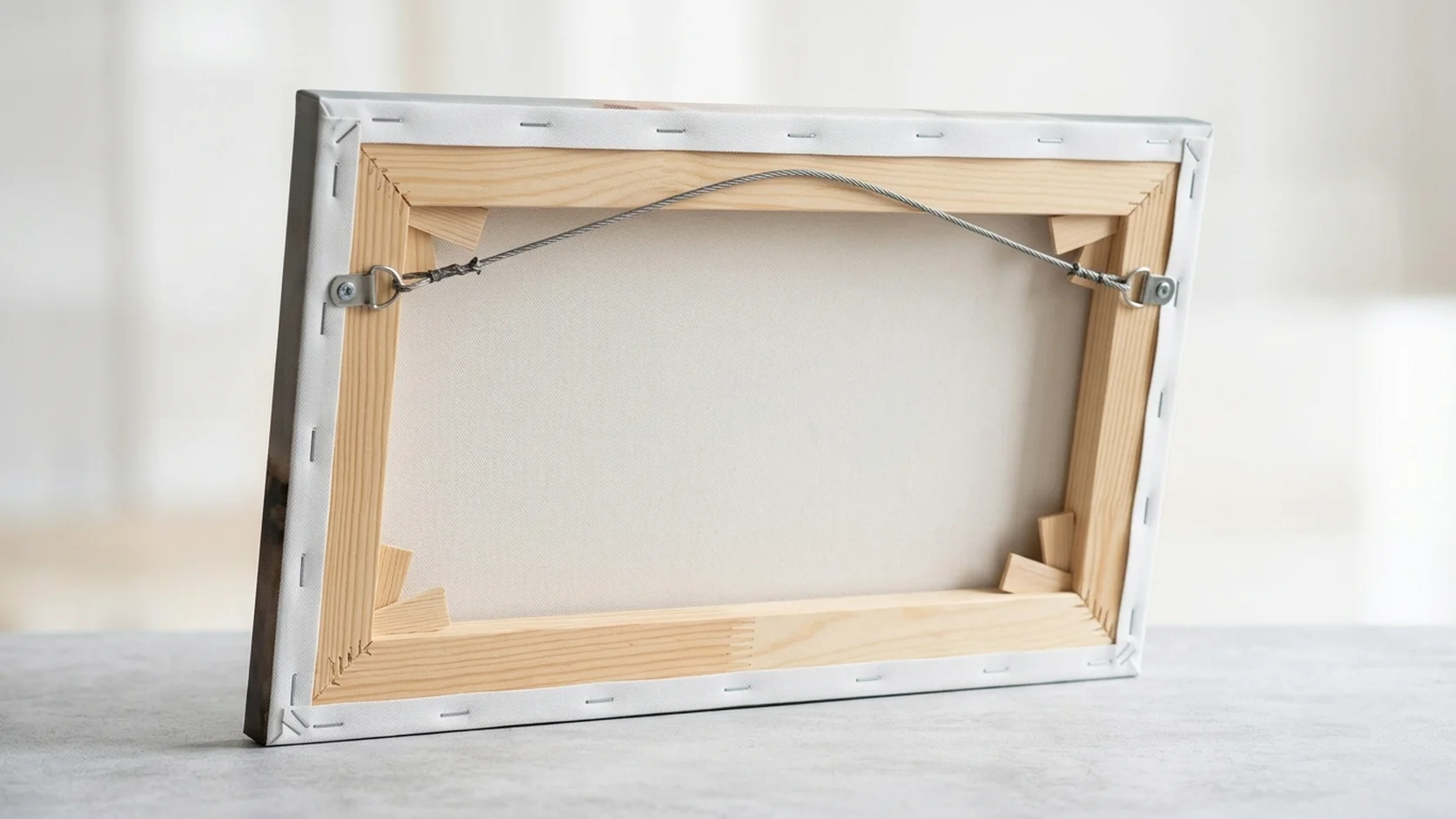
The stretcher frame is the wooden structure behind the canvas. It determines whether the canvas stays flat, taut, and square over time, or whether it warps, sags, and develops wavy distortions that ruin the image.
Quality stretcher frames use kiln-dried pine, fir, or basswood. Kiln-drying removes moisture from the wood, which prevents warping as the wood ages. The corners should be precisely joined and the frame should feel rigid when you press on it. Some premium frames include corner braces or cross-bars on larger sizes for additional structural support.
Budget frames use green (undried) wood or particle board. Green wood contains moisture that evaporates unevenly over months, causing the frame to bow and twist. Particle board is dimensionally stable but structurally weak: it cannot hold staples well, and the canvas may pull free from the frame over time. For a comprehensive look at what affects pricing across these factors, see our guide on the best canvas prints for tight budgets.
4. Color Calibration
Color calibration is the process of adjusting the printer so that what you see on screen is what you get on canvas. A well-calibrated printer reproduces skin tones accurately, keeps whites clean, maintains the subtlety of shadow detail, and renders colors that match the original file within a margin that the human eye cannot distinguish.
An uncalibrated printer produces unpredictable results. Skin tones shift orange or pink. Blues go purple. Greens look muddy. Shadows block up into featureless black. The photo might still look acceptable at first glance, but anyone comparing the print to the screen will see the difference immediately. Professional print companies calibrate their equipment regularly and often provide a color accuracy guarantee. This is one of the strongest indicators of a quality-focused operation.
5. Protective Finish
The final quality layer is the protective coating applied to the canvas surface after printing. UV-resistant laminate or varnish serves three purposes: it protects the ink from UV-induced fading, it repels dust and moisture, and it provides a consistent surface sheen (matte, satin, or gloss) that enhances the image and protects against minor scratches.
Not every canvas print includes a protective finish. Budget providers often skip this step to reduce costs. The result is a canvas that looks fine initially but degrades faster, especially in rooms with natural light. A quality provider includes UV protection as a standard feature, not an expensive add-on.
How to Identify Quality Before You Order
| Quality Indicator | What to Look For | Red Flag |
|---|
| Canvas material | Poly-cotton or polyester, 360+ gsm specified | No material details on the website |
| Ink type | Archival, pigment-based, or giclée inks mentioned | No ink information, or "vibrant" without specifics |
| Stretcher frame | Kiln-dried solid wood, corner braces on large sizes | No frame details, or lightweight/flimsy feel |
| Color accuracy | Color guarantee, calibrated equipment mentioned | No preview tool, no accuracy commitment |
| Protective finish | UV-resistant coating included as standard | Coating offered only as a paid upgrade |
| Preview tool | Real-time preview showing your image on canvas | No preview, or generic mockup only |
| Reviews | Thousands of verified reviews with photos | Few reviews, or only text testimonials |
| Return policy | Clear satisfaction guarantee or reprint policy | Vague or nonexistent return policy |

Quality by Canvas Size: Does Bigger Mean Worse?
A common concern is that larger canvas prints sacrifice quality. They do not, provided two conditions are met: the source photo has sufficient resolution (minimum 150 DPI at print size) and the printer uses the same materials and process at every size.
A 16x20 canvas printed with archival inks on premium canvas looks just as sharp and vivid as a 24x36 from the same printer. The quality difference between sizes only appears when the source photo does not have enough resolution for the larger format, in which case the image looks soft or pixelated regardless of the printing quality. For detailed size recommendations and resolution requirements by canvas size, see our canvas print size guide.
What Photos Produce the Best Canvas Prints?
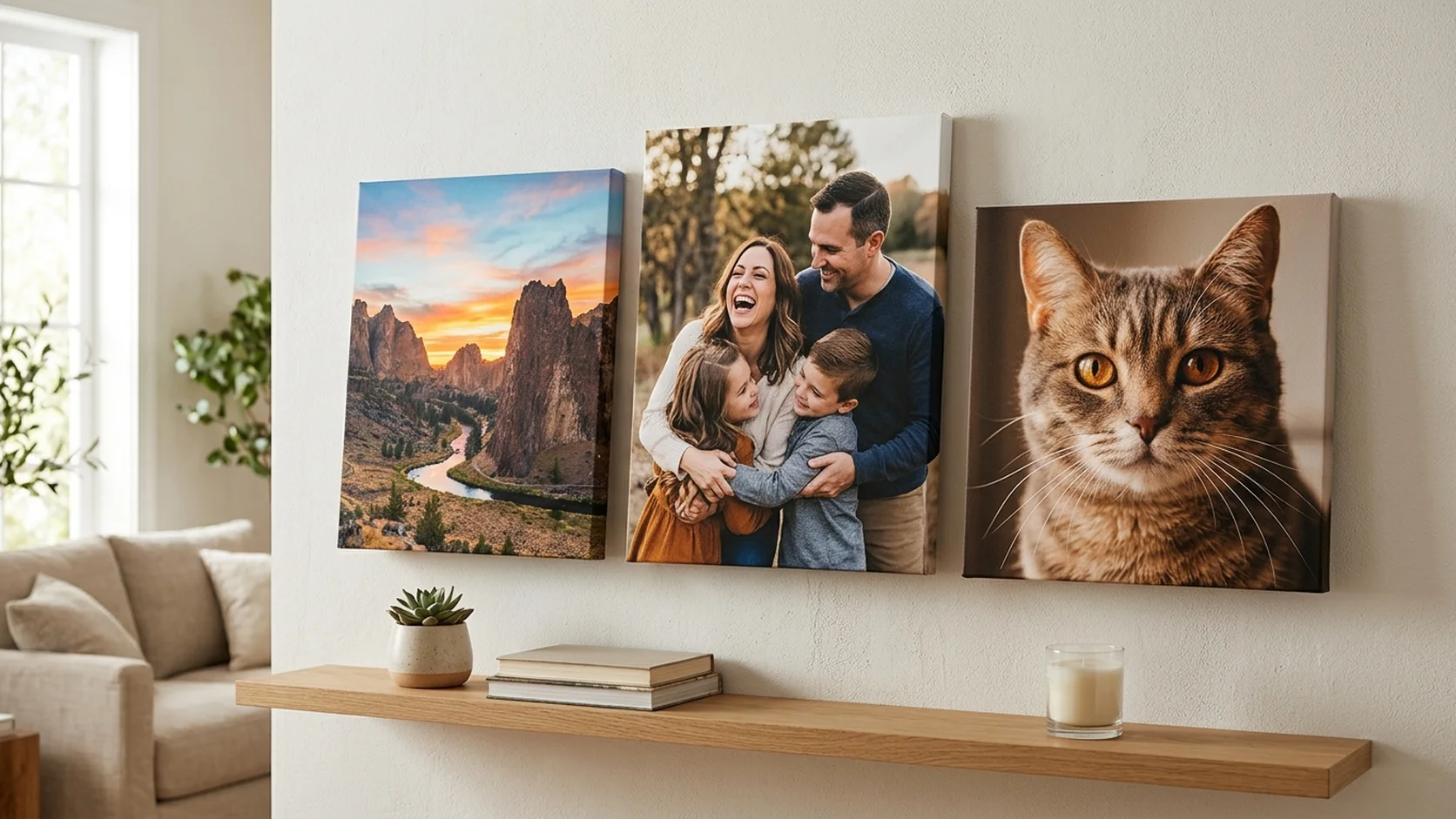
Even the best printer cannot fix a bad photo. Canvas quality starts with image quality. Photos taken in good natural light with vivid colors produce the best results at any size. Candid family moments, golden hour landscapes, pet portraits, and travel photography all translate beautifully to canvas because they have natural warmth and emotional depth that the canvas texture enhances.
Photos taken in low light, heavily filtered social media downloads, screenshots, and heavily cropped images produce the weakest results. The noise, compression artifacts, and low resolution that are invisible on a phone screen become visible when enlarged to canvas size. Always use the original file from your camera roll, and boost brightness and saturation slightly before uploading. Canvas absorbs ink into its fibers, so photos that look slightly brighter on screen tend to look perfect on canvas. For a complete walkthrough, see our guide on how to turn a photo into a canvas print.
How CanvasDiscount Delivers on Quality
Not every budget-friendly canvas print provider delivers the same quality. CanvasDiscount canvas prints use archival-quality pigment inks on premium woven canvas, stretched over kiln-dried wooden frames with gallery-wrapped edges. The online design tool shows a real-time preview of your image on the canvas, including the edge wrap, so you see exactly what the finished product looks like before ordering.
A satisfaction guarantee means that if the canvas does not meet your expectations, the company works with you to make it right. This level of commitment to the result is one of the clearest signals that a provider prioritizes quality over volume. For a comparison of canvas versus other premium materials, see our canvas vs metal vs acrylic comparison guide.

Frequently Asked Questions
What makes a canvas print high quality?
Five factors: premium canvas material (360+ gsm poly-cotton), archival pigment-based inks, kiln-dried wood stretcher frames, accurate color calibration, and a UV-resistant protective finish. All five must be present for a truly high-quality result.
How long do quality canvas prints last?
Canvas prints made with archival pigment inks and UV-resistant coatings can last 75 years or more indoors without significant fading. Canvas printed with dye-based inks may show fading within 1 to 2 years, especially near windows.
Are expensive canvas prints always better quality?
Not necessarily. Price reflects the company's brand and margins as much as material quality. Some budget providers deliver excellent quality because their operations are efficient. The key is checking the five quality indicators: canvas weight, ink type, frame material, color calibration, and protective finish.
What resolution do I need for a quality canvas print?
Minimum 150 DPI at print size. For a 16x20 canvas, that means at least 2400 x 3000 pixels. Most smartphone photos from the last 3 to 4 years exceed this. Always upload the original file, not a screenshot or social media download.
How can I tell if a canvas print company is good quality?
Check for detailed material descriptions (canvas gsm, ink type, frame wood), a real-time preview tool, thousands of verified customer reviews, a clear return or reprint policy, and UV protection included as standard. Companies that are vague about these details are usually cutting corners.
Does canvas print quality vary by size?
No. A quality printer uses the same materials and process at every size. The only variable is your source photo resolution: if the image does not have enough pixels for a large canvas, the print will look soft regardless of the printer's quality.