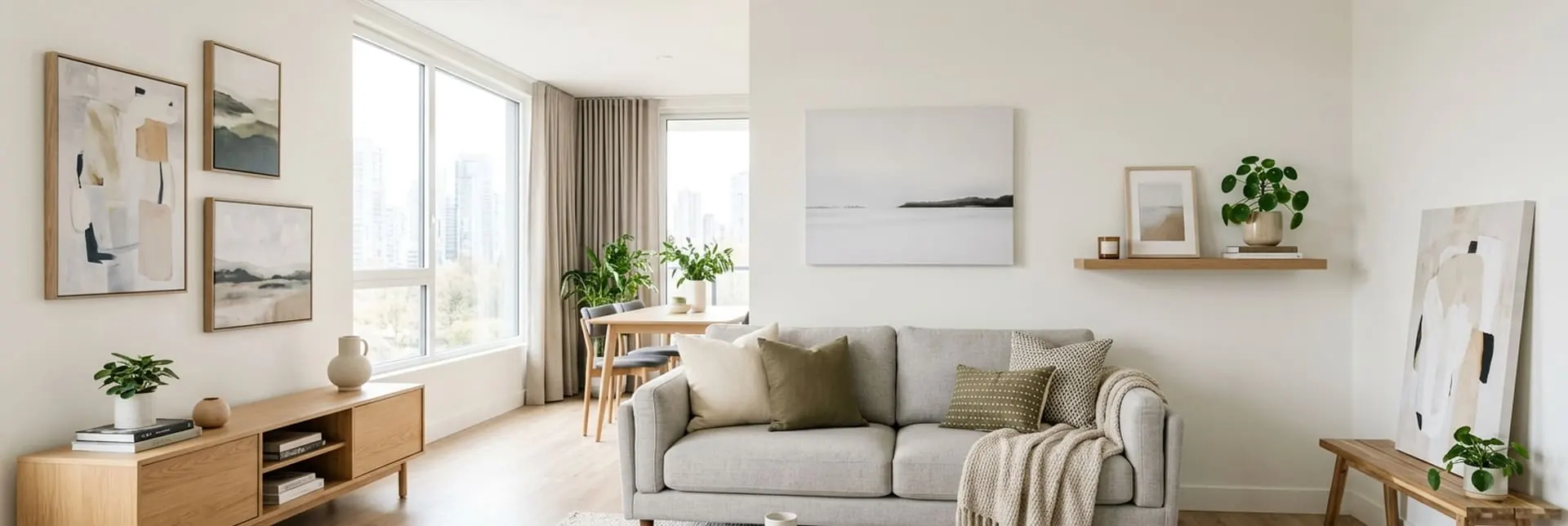
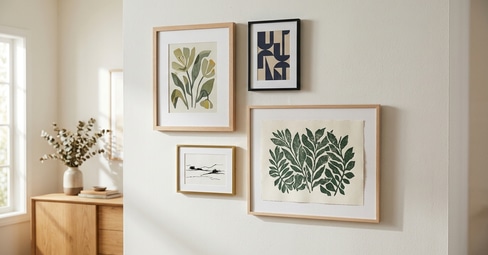
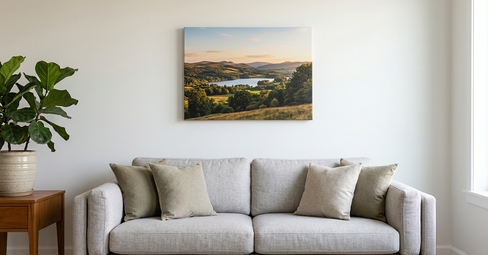
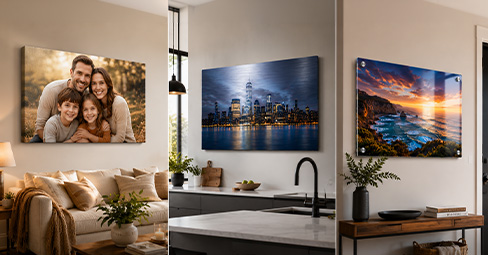
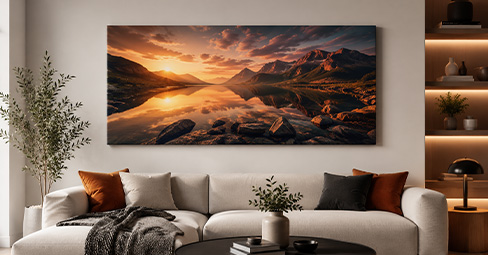
Renting means someone else owns your walls. It does not mean your walls have to stay bare. The fear of losing a security deposit over a few nail holes has convinced an entire generation of renters that wall art is not for them, that every apartment has to look like a waiting room until they finally buy a house. That fear is outdated. Modern canvas prints for renters can be hung, leaned, propped, and displayed in dozens of ways that leave zero damage and zero evidence that anything was ever there. Command strips, adhesive hooks, leaning shelves, photo tiles, and even gravity itself are all legitimate wall art strategies that landlords cannot object to and deposits cannot be docked for.
This guide covers every damage-free method for displaying canvas prints and photo wall art in a rental, organized from simplest to most creative, with honest assessments of what works, what does not, and which products are worth the investment.
In a nutshell: Canvas prints are the ideal wall art for renters because they are lightweight, require minimal mounting hardware, and can be displayed with adhesive strips, leaning techniques, or removable hooks that leave no holes or marks. The best renter-friendly options include adhesive photo tiles like MixPix, lightweight canvas on Command strips, leaning canvas on shelves, and gallery ledge displays.
Key Takeaways
- Canvas is renter-friendly by design. Unlike framed glass art, canvas prints are lightweight and can be held by adhesive strips rated for their weight. A 16x20 canvas typically weighs under 2 lbs, well within Command strip capacity.
- Adhesive strips are the go-to. 3M Command picture-hanging strips hold up to 16 lbs per set, remove cleanly from painted walls, and leave zero damage. They are the single most reliable damage-free hanging method.
- Leaning is a legitimate design choice. Propping canvas prints on shelves, mantels, dressers, and floor-standing ledges is a recognized interior design technique, not a lazy workaround.
- MixPix photo tiles need no tools at all. Adhesive photo tiles stick to the wall, rearrange freely, and peel off without marks. They are purpose-built for renters.
- Always test adhesive on your specific wall. Some textured, freshly painted, or porous walls reduce adhesive grip. Test in a hidden spot before committing to a full gallery wall.
- Lightweight formats win. Canvas, photo board prints, and poster prints are all lighter than glass-framed art, which makes every damage-free method more reliable.
Why Canvas Prints Are Perfect for Renters
The reason canvas prints work so well in rentals comes down to physics: they are light. A stretched canvas print on a wooden frame weighs a fraction of what the same image would weigh behind glass in a traditional frame. That low weight means adhesive strips, removable hooks, and even strong double-sided tape can hold them securely. It also means that if something does come loose, a falling canvas is not going to shatter on the floor or damage the baseboard beneath it.
Canvas also arrives ready to display. There is no additional frame to buy, no glass to clean, no hanging wire to fiddle with. The canvas print comes stretched over a wooden stretcher bar with hanging hardware already attached. For renters who want wall art without a project, this plug-and-play quality is a genuine advantage.
And if the day comes when you move out, removing a canvas that was hung with adhesive strips takes thirty seconds and leaves no trace. Try saying that about a gallery of framed prints held up by drywall anchors.

Damage-Free Hanging Methods Ranked
Not all damage-free methods are equally reliable. Here is an honest ranking based on hold strength, ease of use, and how cleanly they remove.
| Method | Best For | Max Weight | Removal |
|---|
| Command picture-hanging strips | Canvas prints up to 24x36 | Up to 16 lbs (paired) | Clean, no marks |
| Adhesive hooks (removable) | Framed prints, small canvas | Up to 8 lbs each | Clean if pulled correctly |
| MixPix / adhesive photo tiles | Small displays, rearrangeable | Built-in adhesive | Peel off, no damage |
| Picture ledge shelf | Leaning canvas, multi-print display | No limit (gravity) | Shelf needs mounting |
| Leaning on furniture | Large canvas on dressers, mantels | No limit | Zero wall contact |
| Velcro strips (industrial) | Heavy canvas, textured walls | Up to 10 lbs per strip | May pull paint on some surfaces |
| Magnetic hanging system | Poster prints, thin canvas | Up to 5 lbs | Small pin holes only |
Method 1: Command Picture-Hanging Strips
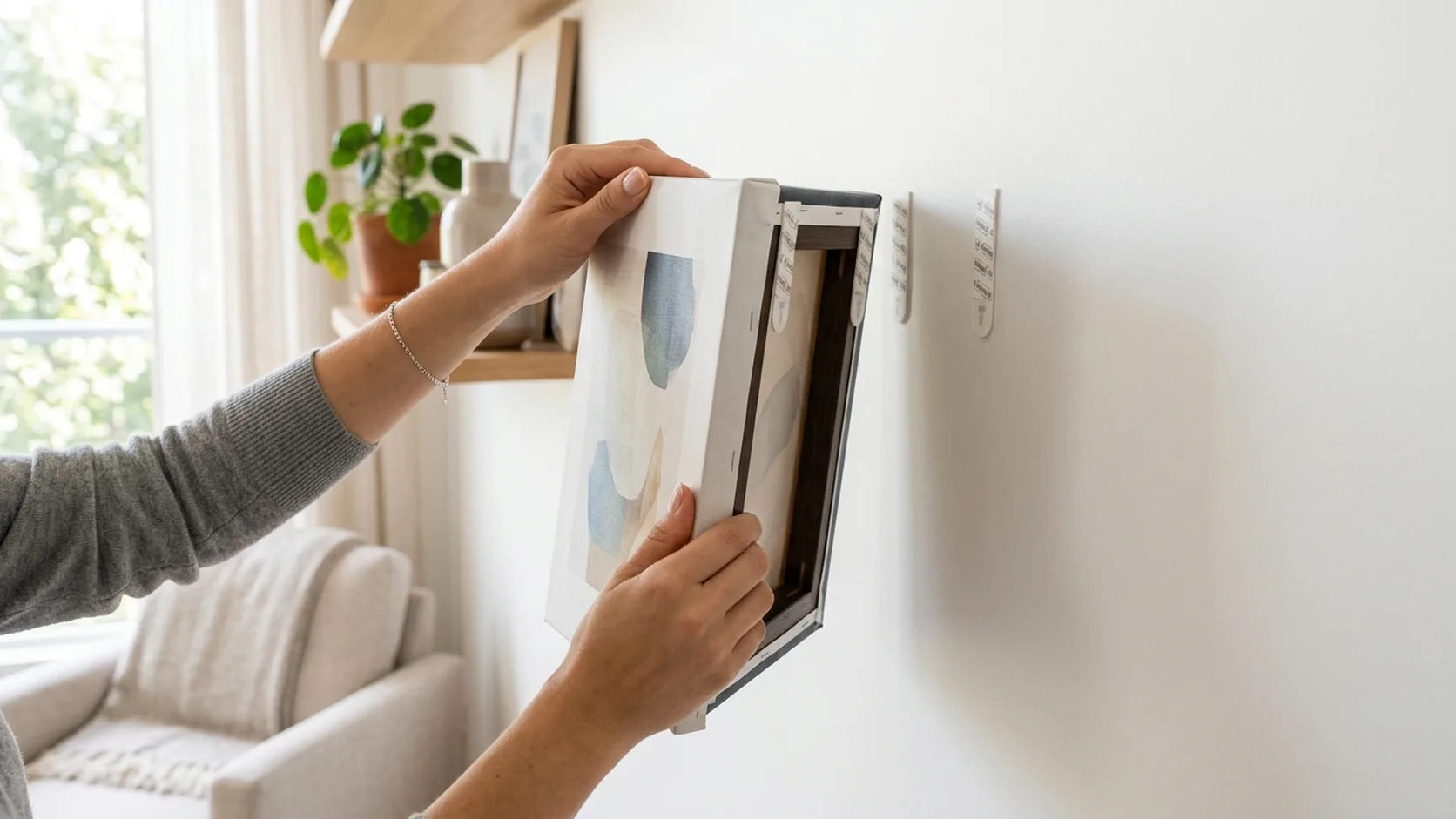
Command strips are the industry standard for renter-friendly hanging, and for good reason. They work on most smooth painted surfaces, hold significant weight when used correctly, and remove without leaving holes, residue, or paint damage. For canvas prints specifically, they are nearly perfect.
How to use them: Clean the wall and the back of the canvas frame with rubbing alcohol. Press one half of each strip pair onto the wall and the other half onto the frame. Press firmly for 30 seconds per strip. Wait one hour before hanging the canvas. Use the number of strip pairs recommended for the weight of your print.
Pro tip: Most people under-use Command strips. For a 16x20 canvas, use four strip pairs (one at each corner of the frame), not two. Over-engineering the hold costs an extra dollar and eliminates the 2am crash-and-wake scenario.
What to watch for: Command strips do not work well on textured walls (orange peel, knockdown, heavy stucco), freshly painted walls (wait 7 days), or wallpaper. If your rental has textured walls, skip to the leaning methods or use MixPix tiles instead.
Method 2: MixPix Adhesive Photo Tiles
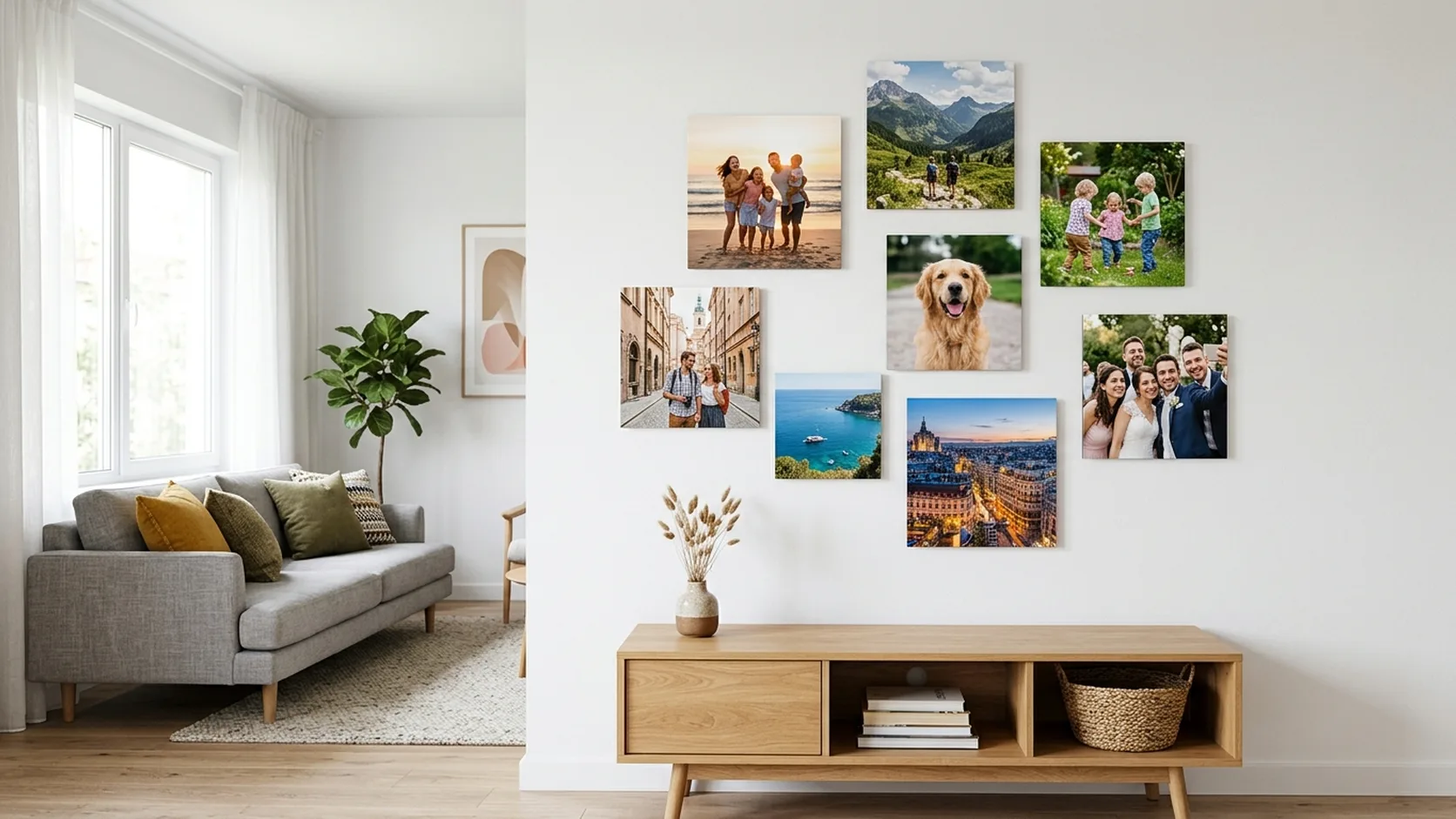
If you want zero risk and maximum flexibility, MixPix photo tiles were essentially designed for renters. Each tile is a self-contained photo print with built-in adhesive backing. Stick it to the wall, press for a few seconds, done. No hanging hardware, no strips, no hooks, no tools. When you move, peel them off. When you want to rearrange, peel and restick.
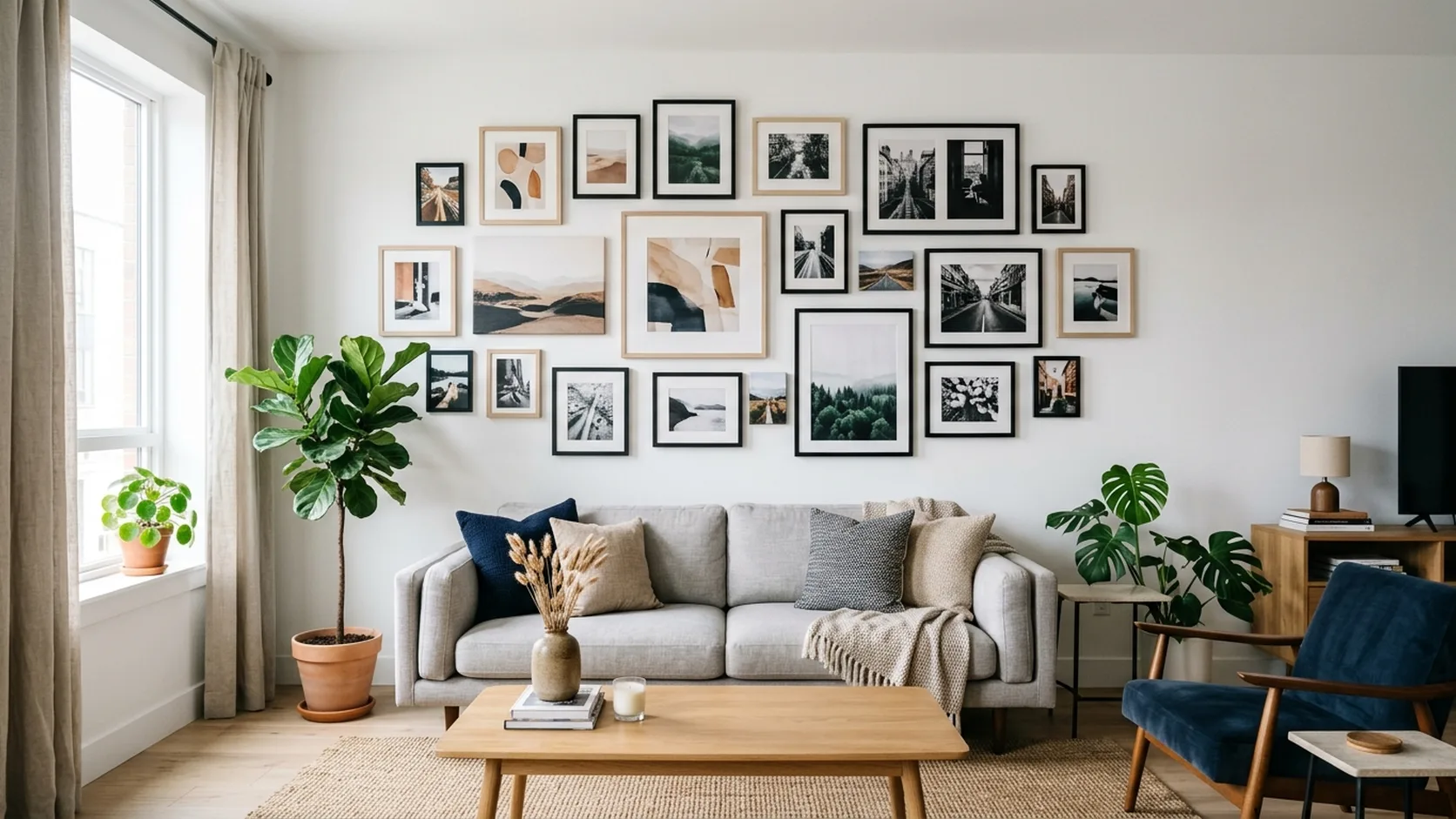
MixPix tiles work brilliantly as a modular gallery wall. Start with four or six, then add more over time. Move them between rooms. Rearrange them when the mood changes. The adhesive is designed to be repositionable without damaging paint, which makes them the only wall art product you can experiment with after it is on the wall.
Ready to shop the renter-friendly formats mentioned here?
Method 3: The Art of Leaning
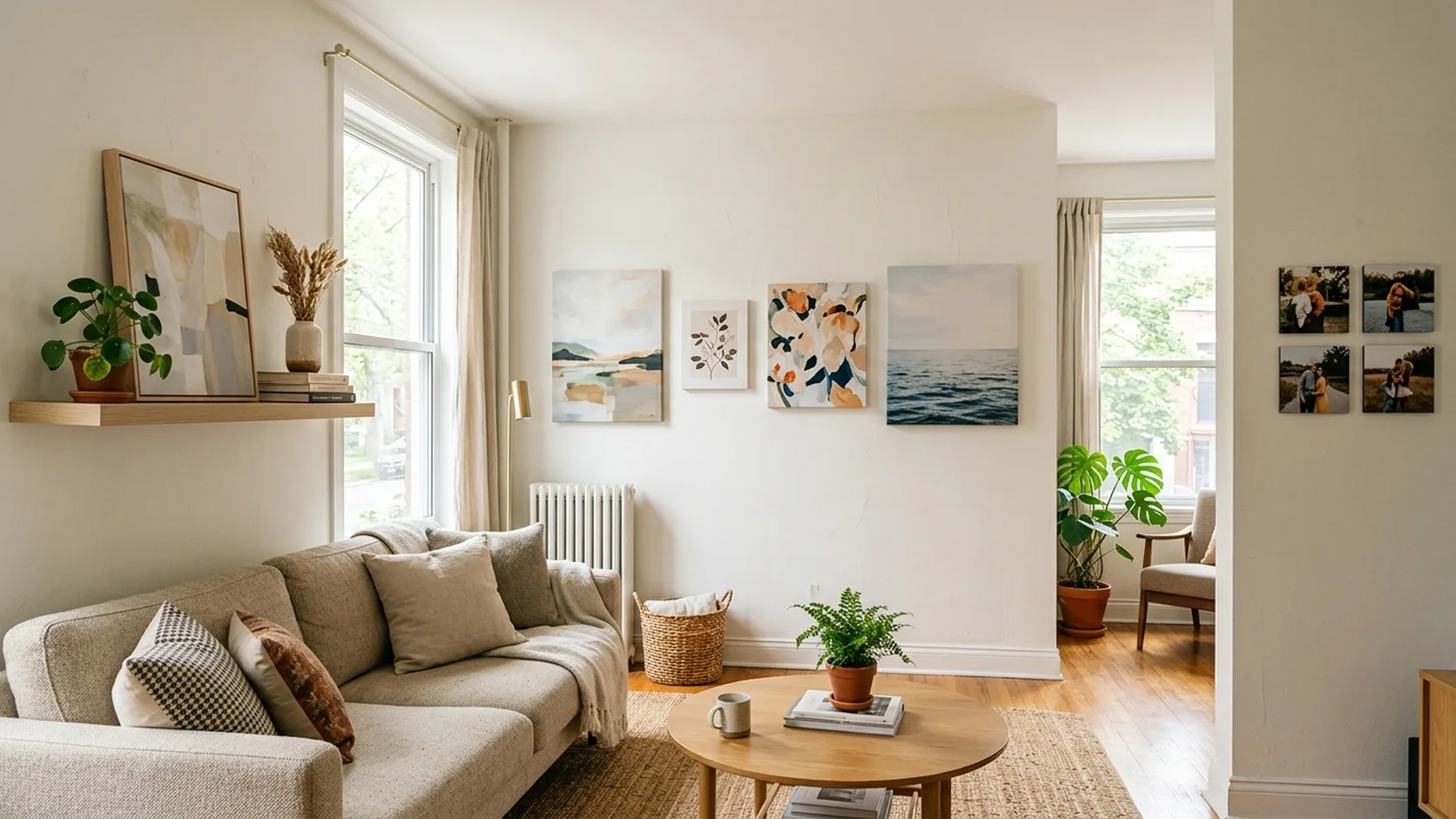
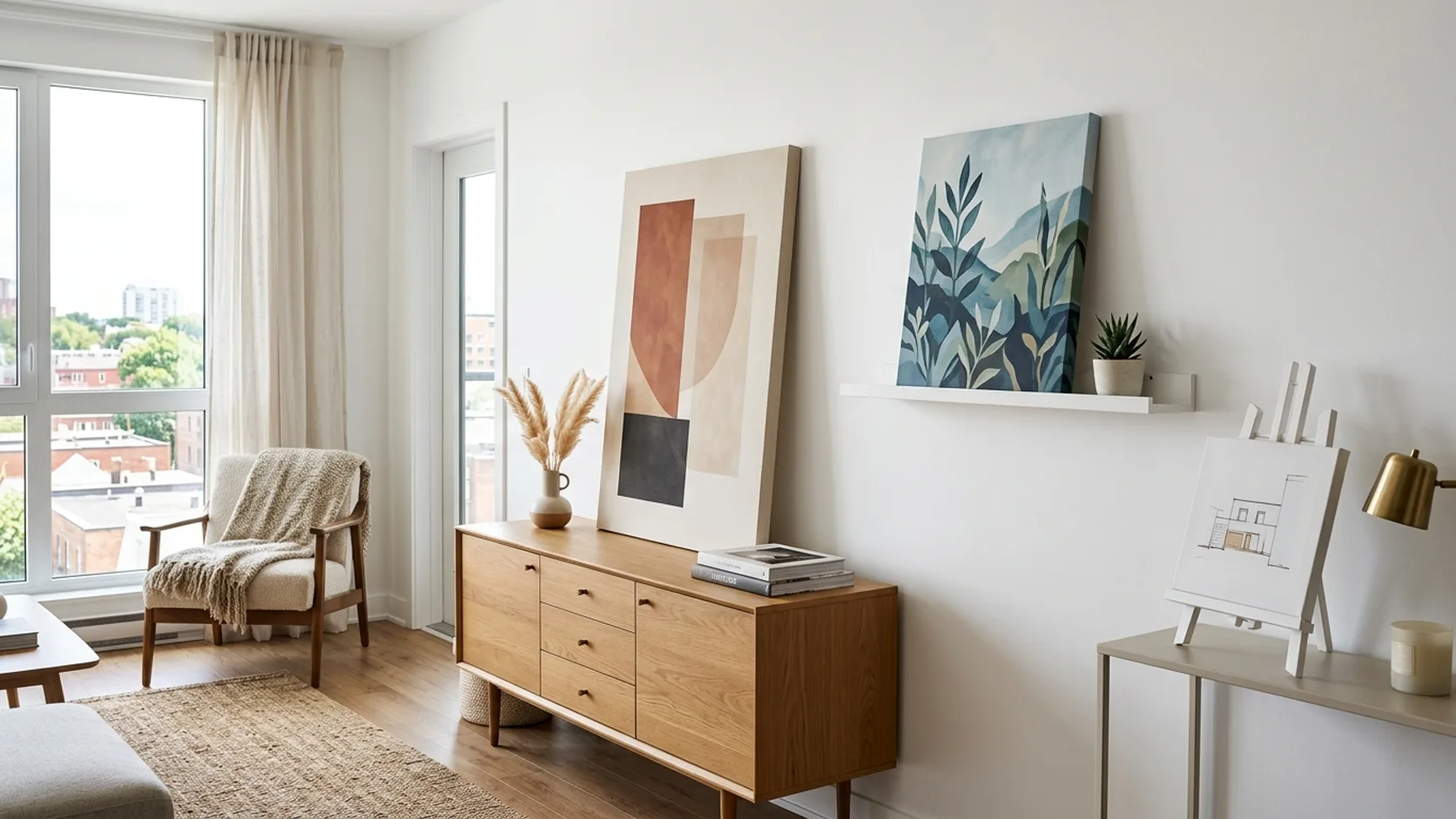
Leaning canvas prints against a wall is not a compromise. It is a deliberate interior design technique used in studios, showrooms, and high-end homes worldwide. A large canvas leaned against the wall on top of a dresser, mantel, console table, or directly on the floor creates a relaxed, curated look that many designers prefer over hung art.
On furniture: A 16x20 or 20x24 canvas leaning on a console table or dresser, propped against the wall at a slight angle, looks intentional and polished. Layer a smaller canvas or a photo board print in front for a styled, gallery-owner effect.
On the floor: Large format canvas prints (24x36 and above) can lean directly against a baseboard. This works best with oversized prints where the scale itself makes a statement. Place it in a corner, beside a bookcase, or flanking a doorway. A canvas leaning on the floor in a living room corner is an interior design move, not a sign that you could not find your hammer.
On a shelf or ledge: A picture ledge (a narrow shelf with a lip) gives you a dedicated leaning surface. This is the best of both worlds for renters: the shelf requires two small screws (or strong adhesive), but it holds multiple prints that can be swapped, rearranged, and layered without any additional wall damage. One shelf, unlimited art changes.
Method 4: More Renter-Friendly Display Ideas
Easel stand. A tabletop or floor-standing easel turns a canvas print into a movable art piece. Place it on a side table, in a reading nook, or next to the TV. It requires zero wall contact and it can move from room to room as the mood changes.
Plate stand or book stand. Small canvas prints (8x10 to 12x16) sit perfectly in plate stands or wooden book stands on shelves, desks, and mantels. This is the no-commitment display method: pick up the canvas, put it somewhere else, done.
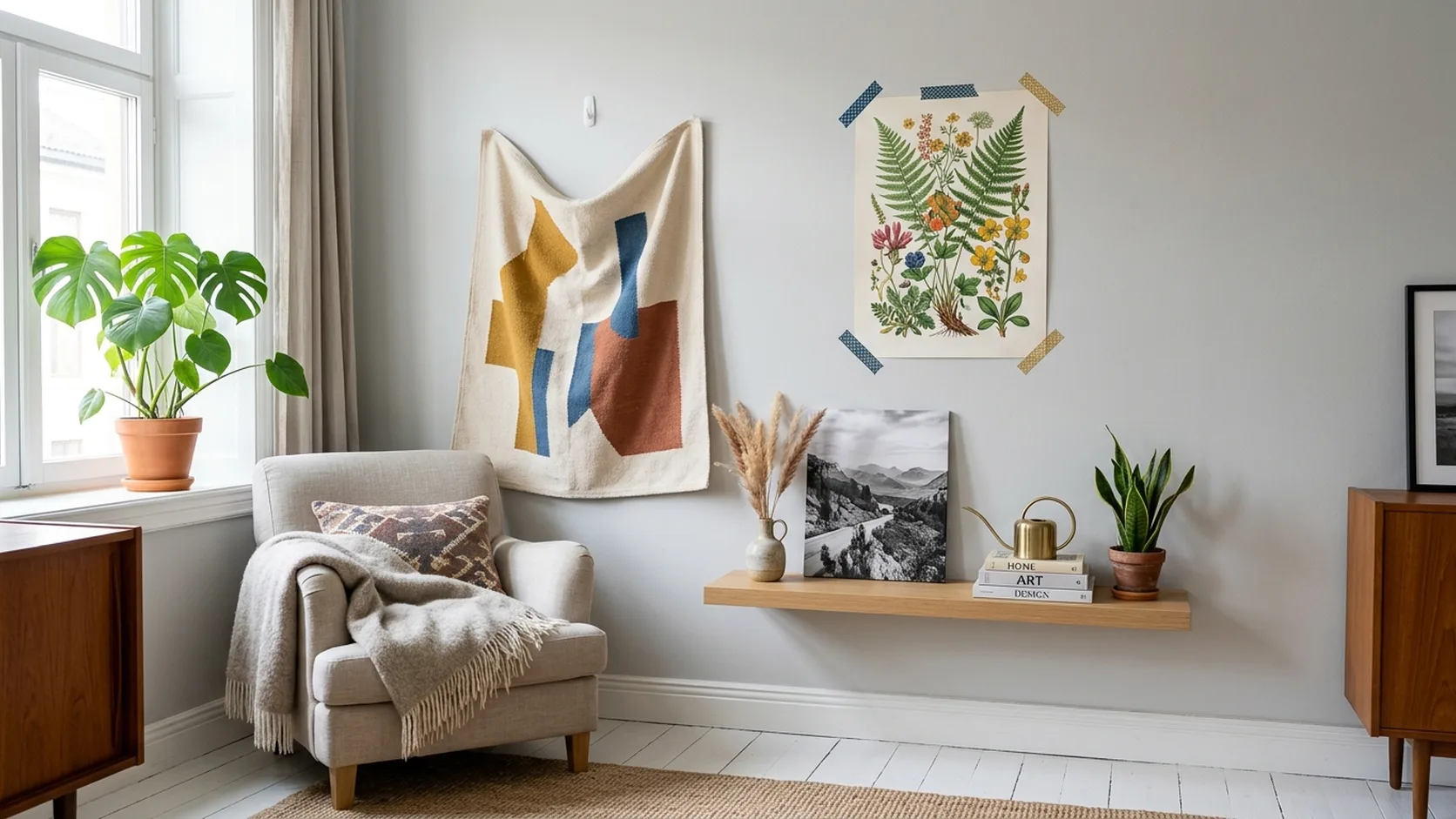
Washi tape framing. For poster prints and lighter pieces, washi tape (decorative masking tape) creates a colorful faux frame directly on the wall. It peels off cleanly and adds personality. Not strong enough for heavy canvas but works beautifully for custom poster prints and lightweight art.
Canvas wall hanging. A canvas wall hanging drapes from a single point rather than mounting flush against the wall. A single small nail or adhesive hook at the top holds the entire piece. The textile feel adds warmth to bedrooms and living rooms, and the single-point mounting minimizes wall contact.
Best Canvas Print Products for Renters
| Product | Why It Works for Renters | Best Display Method |
|---|
| Canvas Print (single) | Lightweight, gallery-wrapped, no frame needed | Command strips or lean on furniture |
| MixPix Photo Tiles | Built-in adhesive, repositionable, zero tools | Stick directly to wall, rearrange anytime |
| Photo Board Print | Ultra-lightweight, minimal mounting | Lean on shelf, adhesive hook, or Command strip |
| Canvas Wall Hanging | Single-point mounting, textile feel | One adhesive hook at the top |
| Collage Canvas | Multiple photos in one piece, one mounting point | Command strips (larger) or lean on furniture |
| Custom Poster Print | Lightest option, budget-friendly | Washi tape, poster putty, or lean in a frame |
How to Test Your Walls Before Committing
Not all rental walls are created equal, and the wall surface determines which damage-free method will work. Before you commit to a full gallery wall of Command-stripped canvases, run a quick test.
- Step 1: Apply a single Command strip or adhesive hook in an inconspicuous area, behind a door or inside a closet.
- Step 2: Wait 24 hours.
- Step 3: Hang something lightweight from it for a few days.
- Step 4: Remove the strip following the instructions (pull the tab straight down, slowly). Check the paint underneath.
If the strip held and the paint came away clean, you are good to go for the rest of the apartment. If the paint pulled or the strip fell, switch to leaning methods, MixPix tiles, or shelf-based displays. Five minutes of testing beats five hours of deposit negotiation.
For more ideas on arranging multiple prints, see our guide to creating a gallery wall. For canvas sizing help, check out our canvas print size guide.
Frequently Asked Questions
Can you hang canvas prints without nails?
Yes. Command picture-hanging strips, adhesive hooks, and Velcro strips all hold canvas prints securely without nails. For a standard 16x20 canvas (under 2 lbs), two to four Command strip pairs provide a reliable hold on smooth painted walls.
Do Command strips work for canvas prints?
Yes. Command strips are the most popular damage-free hanging method for canvas prints. Use the picture-hanging strip variety (not the poster strips) and follow the weight rating. Clean both surfaces with rubbing alcohol before applying for the strongest bond.
What is the best wall art for renters?
Canvas prints, adhesive photo tiles (like MixPix), photo board prints, and poster prints are the best options for renters. All are lightweight enough for damage-free hanging methods and none require drilling or heavy mounting hardware.
Will adhesive strips damage rental walls?
Quality adhesive strips like 3M Command strips are designed to remove without damage on smooth painted surfaces. They can pull paint on textured, freshly painted (under 7 days), or porous walls. Always test in a hidden spot first.
How do you display large canvas prints in a rental?
Large canvas prints (24x36 and above) can lean against the wall on the floor or on furniture. For wall mounting, use multiple Command strip pairs rated for the total weight. Picture ledge shelves are another excellent option for large prints.
Can you lean canvas prints on the floor?
Yes. Leaning large canvas prints on the floor against a wall is a recognized interior design technique. It works best with oversized prints in corners, beside furniture, or along a feature wall. The relaxed, gallery-style look is intentional, not a compromise.