Standard Photo Sizes: Every Print Size from Wallet to Poster
 by Ashley Carter– 7 years of experience in photo gifts and home decor
You just took the perfect family photo. Everyone's smiling, the light is gorgeous, and you can already picture it hanging above the living room couch. But then comes the tricky part: what size should you print it? Pick the wrong photo size, and your beautiful shot gets cropped awkwardly or looks stretched and blurry. Pick the right one, and it becomes a centerpiece that stops people in their tracks.
Understanding standard photo sizes isn't just a technical detail. It's the difference between a print that looks professional and one that disappoints. Whether you're ordering a tiny wallet size photo for your keychain, a classic 5x7 photo size for a birthday card, or a massive 24x36 poster for your living room, each size has a specific purpose, aspect ratio, and ideal resolution. Knowing these details upfront saves you time, money, and frustration.
This guide walks you through every common print size from the smallest wallet photo to large-format poster prints. You'll learn which picture sizes work best for different rooms, which standard photo frame sizes to match them with, and how to make sure your image resolution is sharp enough for any format you choose.
In this article, you'll discover:
- What are the most common standard photo sizes and when should you use each one?
- How big is a wallet size photo, and what are the exact wallet photo size dimensions?
- Which standard photo frame sizes match each print size perfectly?
- What's the difference between a 4x6 photo size and a 5x7 photo size in real-world use?
- How do you choose the right photo size for canvas prints, posters, and wall decor?
- What resolution does your image need for sharp results at every print size?
- How can you pick the perfect photo size for your space in just a few steps?
At a Glance: Standard photo sizes range from 2.5x3.5-inch wallet prints to 24x36-inch posters and beyond. The most popular sizes for everyday printing are 4x6, 5x7, and 8x10 inches. Matching your photo's aspect ratio to the print size prevents awkward cropping, and you'll need at least 300 DPI at your chosen size for sharp, professional results.
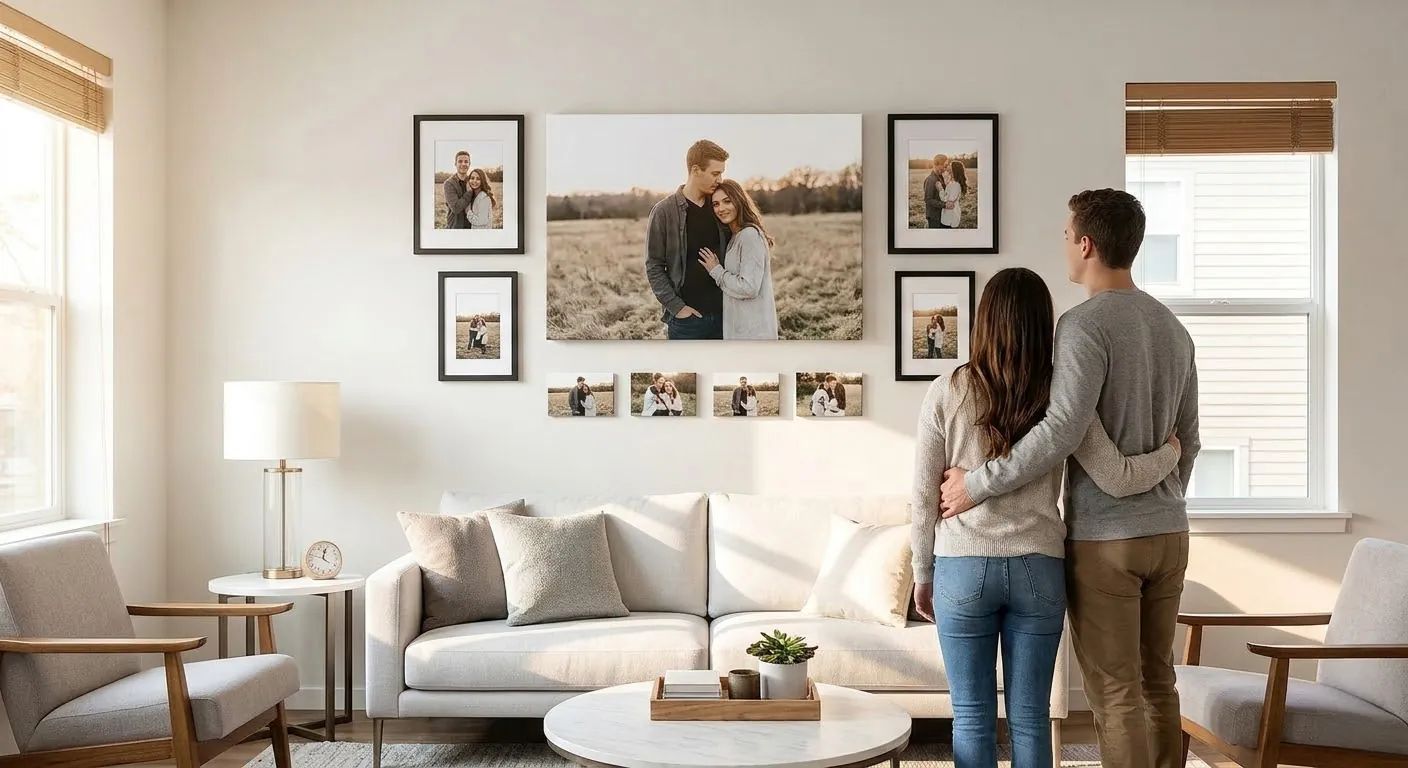
Standard Photo Sizes Explained: The Complete Size Chart
Every photo print starts with understanding the standard sizes available to you. These dimensions have been established over decades by the photography and printing industries, and they align with common frame sizes, album slots, and display needs. Knowing the full range of picture sizes helps you plan everything from a small desk display to a dramatic wall arrangement.
The 4x6 is the most popular standard photo size in the United States because it matches the 3:2 aspect ratio of most digital cameras and smartphones. But it's far from your only option. Here's a comprehensive breakdown of every standard print size you'll encounter.
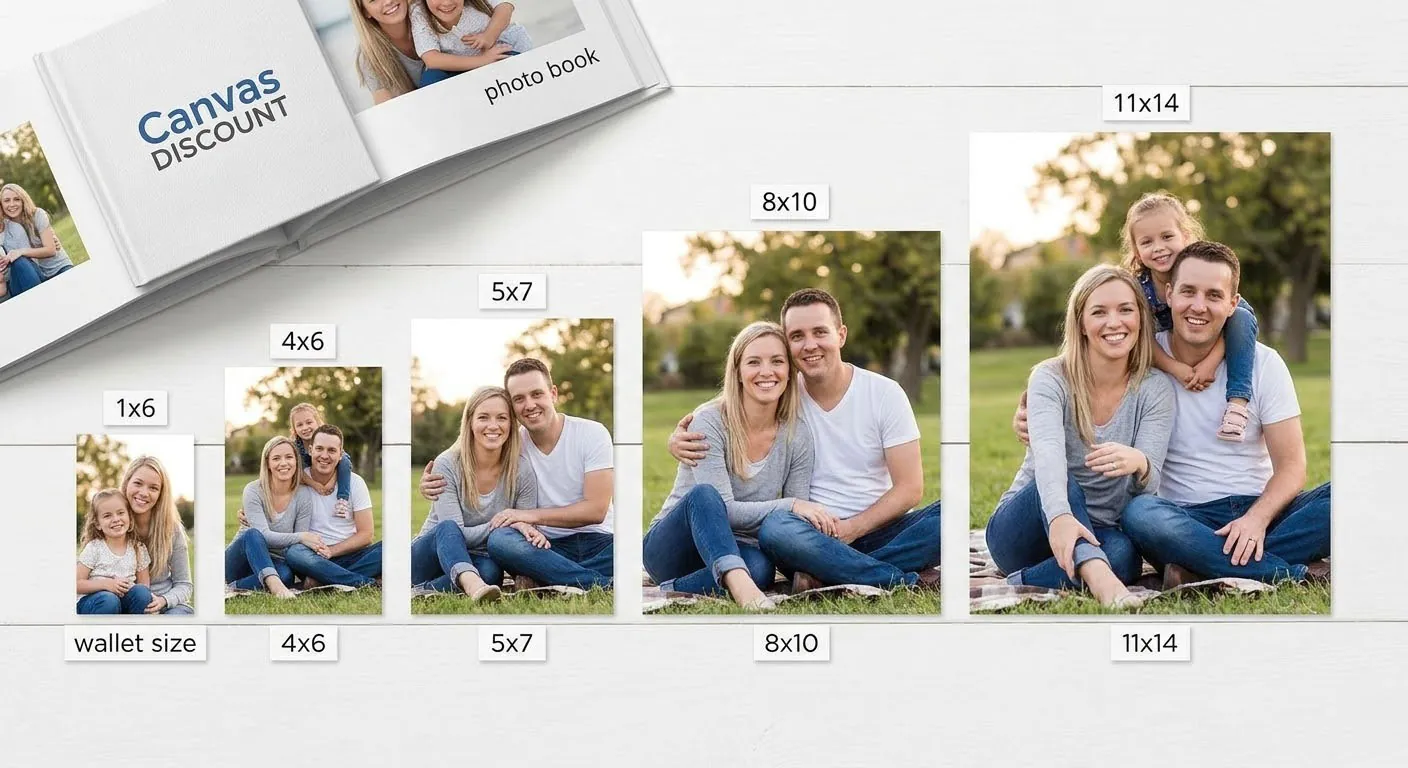
Small Photo Sizes: Wallet to 4x6
Small photo sizes are perfect for sharing, gifting, and tucking into everyday items. At 2.5 x 3.5 inches — roughly the size of a credit card — the wallet size photo fits easily in a purse, slips into a greeting card, or attaches to a custom photo keychain.
The 3.5x5 size is less common today but still appears in some older photo albums. The 4x6 is the workhorse of photo printing. It's affordable, fits standard photo frame sizes perfectly, and works beautifully for everyday snapshots, vacation photos, and casual displays.
| Size (inches) | Size (cm) | Aspect Ratio | Best Use |
|---|---|---|---|
| 2.5 x 3.5 (Wallet) | 6.4 x 8.9 | 5:7 | Wallets, keychains, ID photos |
| 3.5 x 5 | 8.9 x 12.7 | 5:7 | Small frames, albums |
| 4 x 6 | 10.2 x 15.2 | 3:2 | Everyday prints, photo albums, desk frames |
Tip: At this size, you can typically fit four wallet photos on a single 4x6 print sheet — a budget-friendly way to order multiple copies for family and friends.
Medium Photo Sizes: 5x7 to 8x10
Medium picture sizes hit the sweet spot between casual and formal. The 5x7 photo size is one of the most versatile options available. At 5 x 7 inches, it's large enough to show detail but small enough to fit on a bookshelf, mantle, or side table. Greeting cards, wedding invitations, and holiday photo cards frequently use this size.
The 8x10 is the classic portrait size. School photos, professional headshots, and family portraits almost always come in 8x10. It's large enough to serve as a standalone piece on a wall or desk, and standard picture frame sizes for 8x10 are available everywhere from Target to specialty frame shops.
| Size (inches) | Size (cm) | Aspect Ratio | Best Use |
|---|---|---|---|
| 5 x 7 | 12.7 x 17.8 | 5:7 | Cards, small wall art, gifts |
| 8 x 10 | 20.3 x 25.4 | 4:5 | Portraits, desk displays, small wall art |
| 8.5 x 11 | 21.6 x 27.9 | ~11:14 | Letter-size prints, documents |
Keep in mind that the 8x10 has a 4:5 aspect ratio, which differs from the 3:2 ratio of most camera sensors. This means slight cropping will occur. Always preview your crop before ordering to make sure nothing important gets cut off.
Large Photo Sizes: 11x14 to 16x20
When you want a photo to make a real statement, large picture sizes deliver. The 11x14 is a popular step up from 8x10 and works beautifully as a framed piece above a desk or in a hallway. You'll find 11x14 prints commonly used for wedding photos, landscape shots, and artistic portraits.
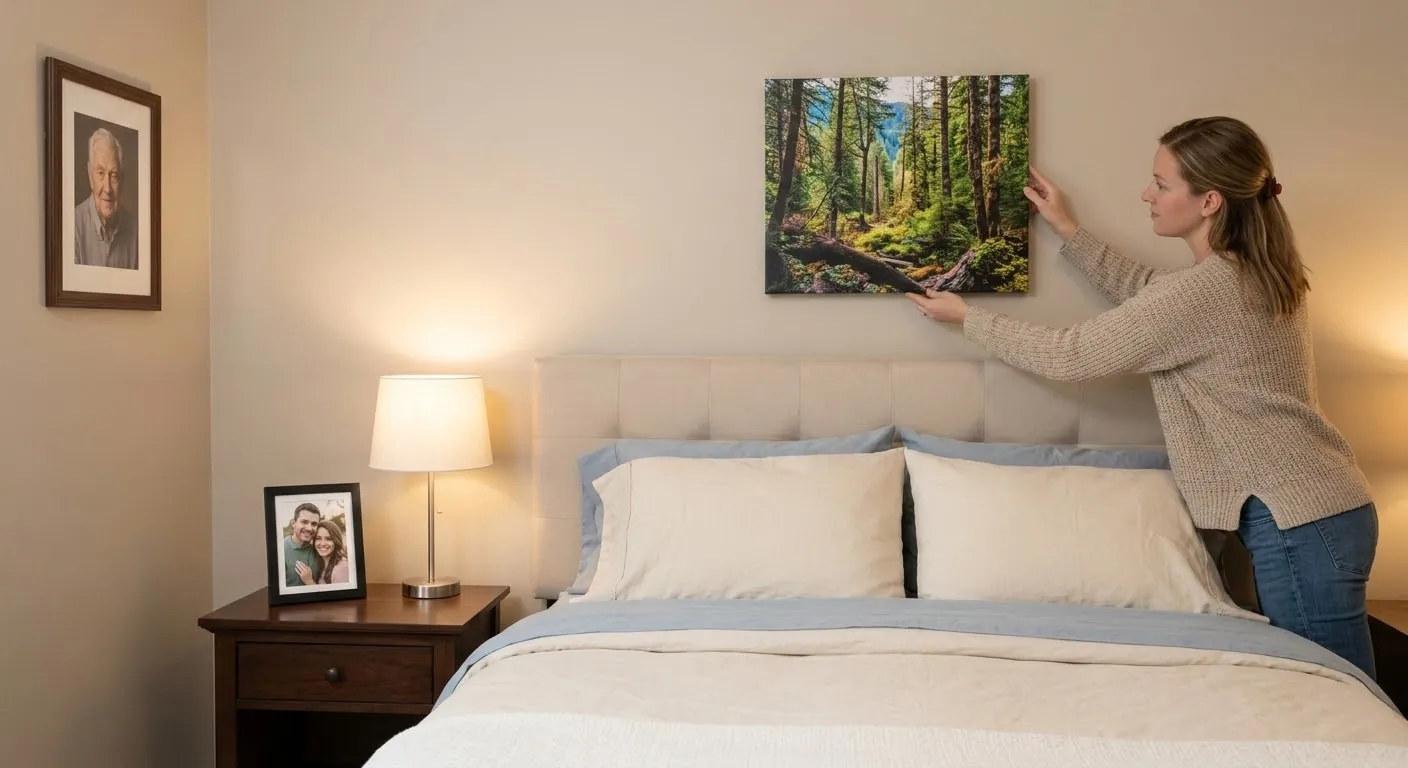
The 16x20 size is where your photos start to feel like genuine wall art. At this scale, details pop and colors become immersive. A 16x20 canvas print or framed photo print can anchor an entire room. This size works especially well above a sofa, bed headboard, or fireplace mantle.
| Size (inches) | Size (cm) | Aspect Ratio | Best Use |
|---|---|---|---|
| 11 x 14 | 27.9 x 35.6 | ~4:5 | Wall art, framed prints, galleries |
| 12 x 16 | 30.5 x 40.6 | 3:4 | Medium wall art, office decor |
| 16 x 20 | 40.6 x 50.8 | 4:5 | Statement wall art, above furniture |
For large prints, image resolution becomes critical. Your photo needs at least 3,300 x 4,200 pixels for a crisp 11x14 at 300 DPI, and 4,800 x 6,000 pixels for a sharp 16x20. Most modern smartphones capture images well above these thresholds, but it's always worth double-checking before ordering.
Canvas Print Sizes: What Works Best
Canvas prints follow the same inch-based dimensions as standard photo prints, but the medium has its own sweet spots. The most popular canvas print sizes in the US are 8x10, 11x14, 16x20, and 20x30. Because canvas wraps around a wooden stretcher bar, the image area visible from the front is slightly smaller than the printed size — typically reduced by 0.75 to 1.5 inches per side depending on the wrap depth you choose.
For gallery walls, 11x14 and 16x20 canvas prints combine well without overwhelming the space. For a single statement piece above a sofa or bed, 20x30 or 24x36 delivers the most impact. Unlike framed prints, canvas requires no additional hardware and arrives ready to hang — which makes getting the size right upfront especially important.
Picture Frame Sizes: How to Match Your Prints Perfectly
One of the most common frustrations with photo printing is ordering a beautiful print only to discover it doesn't fit any frame you own. Understanding which frame sizes match which prints eliminates this problem entirely. The good news is that the photo printing and frame industries have aligned on common dimensions, so most standard photo sizes have readily available frames.
Standard frame sizes in the United States follow the same dimensions as standard print sizes: 4x6, 5x7, 8x10, 11x14, and 16x20. These are the sizes you'll find at any home goods store. Less common frame sizes like 12x16 or odd European dimensions may require custom framing or online ordering.
Common Frame Sizes and What Fits Inside
Many frames include a mat (the cardboard border inside the frame), which means the visible area of your photo will be slightly smaller than the frame's listed size. For example, an 8x10 frame with a mat might display a 5x7 photo inside. This is actually a design advantage because matting adds a professional, gallery-quality look to any print.
Here's a quick reference for matching picture frame sizes to your prints:
| Frame Size | Photo Size (No Mat) | Photo Size (With Mat) | Where to Display |
|---|---|---|---|
| 5 x 7 | 5 x 7 | 3.5 x 5 or 4 x 6 | Bookshelf, desk, nightstand |
| 8 x 10 | 8 x 10 | 5 x 7 | Desk, mantle, small wall space |
| 11 x 14 | 11 x 14 | 8 x 10 | Hallway, office, gallery wall |
| 16 x 20 | 16 x 20 | 11 x 14 | Living room, bedroom, dining room |
| 20 x 24 | 20 x 24 | 16 x 20 | Above sofa, statement wall |
If you prefer a frameless look, canvas prints eliminate the need for frames entirely. The image wraps around a wooden stretcher bar, creating a clean, modern aesthetic that's ready to hang right out of the box.
Poster Sizes and Large Format Prints for Wall Art
When standard photo sizes aren't big enough, poster sizes take over. Poster printing opens up a world of dramatic, room-defining wall art that transforms blank walls into personal galleries. The most popular poster size in the United States is 24x36 inches, which is the same size as a standard movie poster.
Large format prints work beautifully for landscape photography, panoramic shots, abstract art, and family portraits where you want every detail visible from across the room. Canvas Discount offers custom poster prints in a range of sizes, giving you flexibility to match any wall space. If you want something even more eye-catching, metal photo prints add a sleek, contemporary feel to large-format images.
Turning one of your favorite photos into a wall-worthy poster is easier than most people think, but getting the composition, crop, and sizing right takes a little know-how. Our step-by-step guide How To Make A Poster From A Photo walks you through choosing the right image, preparing it for large-format print, and selecting the poster size that will look best in your space.
Standard Poster Sizes at a Glance
| Poster Size (inches) | Size (cm) | Best For |
|---|---|---|
| 18 x 24 | 45.7 x 61 | Small poster, dorm rooms, bathrooms |
| 20 x 30 | 50.8 x 76.2 | Medium wall art, offices |
| 24 x 36 | 61 x 91.4 | Classic poster size, living rooms |
| 27 x 40 | 68.6 x 101.6 | Movie poster size, entertainment rooms |
| 36 x 48 | 91.4 x 121.9 | Oversized statement piece |
A 24x36 poster demands high resolution. You'll need an image of at least 7,200 x 10,800 pixels for a sharp 300 DPI result. For poster prints viewed from several feet away, 150-200 DPI can still look excellent, which means a 3,600 x 5,400 pixel image works well for a 24x36 poster hung in a living room.

Passport and Specialty Photo Sizes You Should Know
Not every photo size is meant for your wall. Some standard photo sizes serve very specific, practical purposes. Passport photos, visa photos, and ID pictures all have strict dimension requirements that vary by country. Getting these wrong can delay your application, so precision matters.
US Passport Photo Requirements
The photograph required for passport applications in the United States must measure exactly 2 x 2 inches (51 x 51 mm). The passport photo dimensions are square, which is unusual compared to most standard photo sizes. Your head must measure between 1 and 1-3/8 inches from the bottom of your chin to the top of your head within the photo.
A digital passport photo submitted online must be between 600 x 600 pixels and 1200 x 1200 pixels, in JPEG format. The US Department of State is very particular about these passport size photo dimensions, including requirements for white backgrounds, neutral expressions, and no glasses.
Other Specialty Sizes
- Visa photos (most countries): 2 x 2 inches (same as US passport)
- UK/EU passport photos: 35 x 45 mm (approximately 1.4 x 1.8 inches)
- Square prints (Instagram-style): 4 x 4, 5 x 5, 8 x 8, or 12 x 12 inches
- Panoramic prints: 4 x 12, 8 x 24, or 12 x 36 inches
Square photo sizes have surged in popularity thanks to Instagram and social media. If you love the square format, MixPix photo tiles offer a fun, removable way to display square photos on your wall without any commitment. You can rearrange them whenever you want a fresh look.
How to Choose the Right Photo Size for Any Space: 6 Simple Steps
Picking the perfect print size doesn't have to feel overwhelming. Whether you're decorating a small bathroom or filling a large living room wall, these steps help you land on the right photo size every time.
Step 1: Measure Your Available Wall Space
Before you even think about photo sizes, grab a tape measure. Measure the width and height of the wall area where you want to hang your print. A good rule of thumb is that your artwork should cover 60-75% of the available wall width above a piece of furniture. For example, if your sofa is 84 inches wide, aim for a print or arrangement that spans 50-63 inches.
Tip: Use painter's tape to outline potential print sizes on your wall. This gives you a visual preview before you commit.
Step 2: Determine Viewing Distance
The distance between the viewer and the print affects which size looks best. Small photo sizes like 4x6 and 5x7 are meant to be viewed up close, on a desk or shelf. Medium sizes like 8x10 and 11x14 work from 3-5 feet away. Large prints (16x20 and above) and poster sizes are designed to be appreciated from 6-10 feet or more.
Step 3: Check Your Image Resolution
Open your photo on a computer and check its pixel dimensions. Divide each dimension by 300 to find the maximum print size at full sharpness. A 4000 x 3000 pixel photo, for example, prints beautifully up to about 13 x 10 inches at 300 DPI. For larger sizes, 150-200 DPI is acceptable for prints viewed from a distance.
Tip: Most modern smartphones capture images at 12-48 megapixels, which is more than enough for prints up to 16x20 and often sufficient for canvas prints at even larger sizes.
Step 4: Match the Aspect Ratio
Different photo sizes have different aspect ratios. If your camera shoots in 3:2 (the most common ratio), a 4x6 print fits perfectly without cropping. But an 8x10 print has a 4:5 ratio, so some cropping will occur. Always preview the crop to ensure important elements stay in frame.
| Camera Ratio | Perfect Print Sizes | Cropping Needed For |
|---|---|---|
| 3:2 (most DSLRs, smartphones) | 4x6, 8x12, 12x18, 16x24, 20x30 | 5x7, 8x10, 11x14, 16x20 |
| 4:3 (some smartphones, Micro 4/3) | 6x8, 9x12, 12x16 | 4x6, 5x7, 8x10 |
| 1:1 (square) | 4x4, 5x5, 8x8, 12x12 | All rectangular sizes |
| 16:9 (widescreen) | Panoramic sizes | Most standard sizes |
Step 5: Consider the Purpose and Setting
A wallet size photo for your grandmother's purse needs a very different approach than a 24x36 poster for your home office. Think about who will see the print, how close they'll be, and what emotional impact you want. Family portraits often look best at 8x10 or larger. Vacation snapshots shine at 4x6 or 5x7. Artistic or landscape shots deserve large-format treatment at 16x20 and above.
For a curated wall display combining multiple sizes, canvas wall displays offer pre-designed multi-panel arrangements that take the guesswork out of layout planning.
Step 6: Order a Test Print at a Smaller Size
If you're unsure how a photo will look printed, start with a smaller, less expensive size. Order a 4x6 or 5x7 first to check color accuracy, sharpness, and composition. Once you're happy with the result, scale up confidently. Canvas Discount's printing quality is backed by over 500,000 satisfied customers and a 4.8/5 star rating from more than 125,000 reviews, so you can trust that what you see in your preview will match the final product.
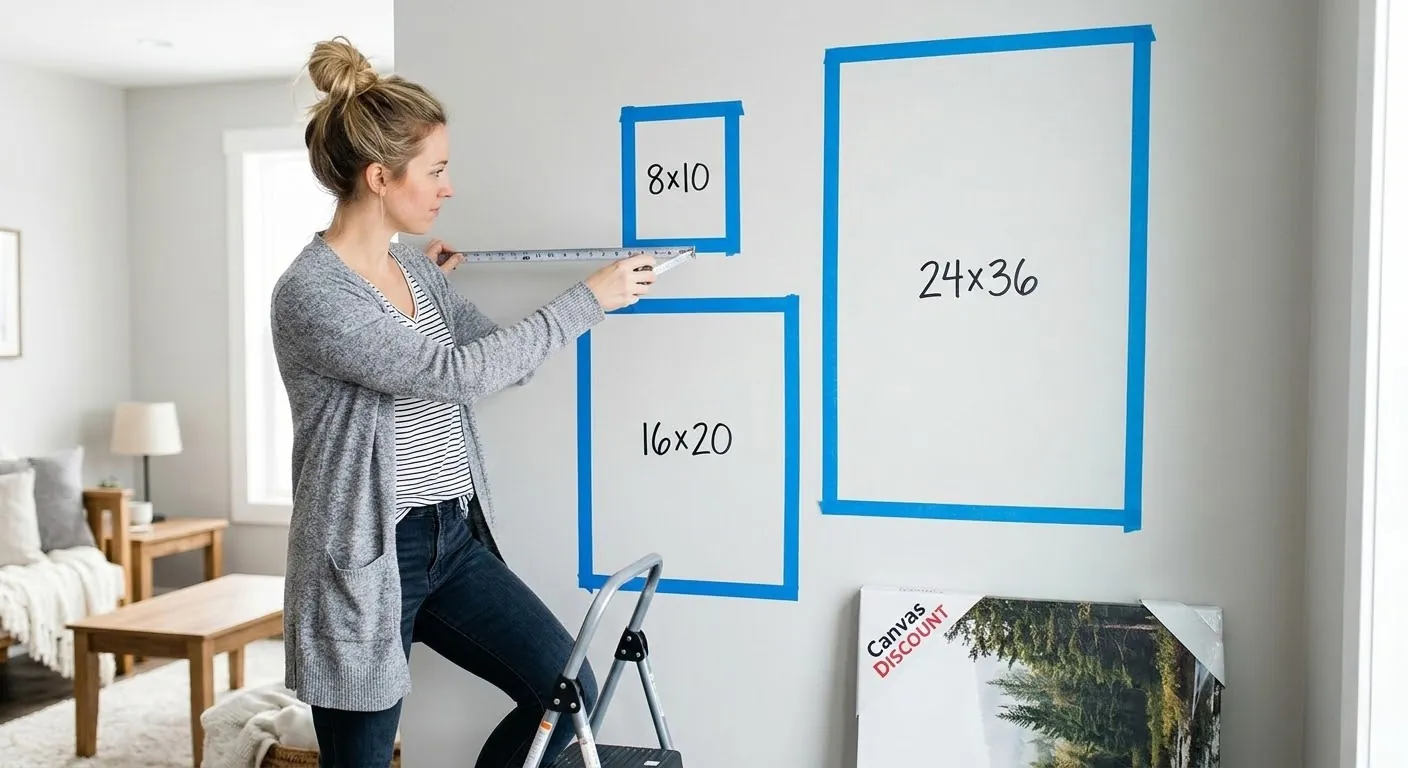
Photo Size Resolution Guide: How Sharp Will Your Print Look?
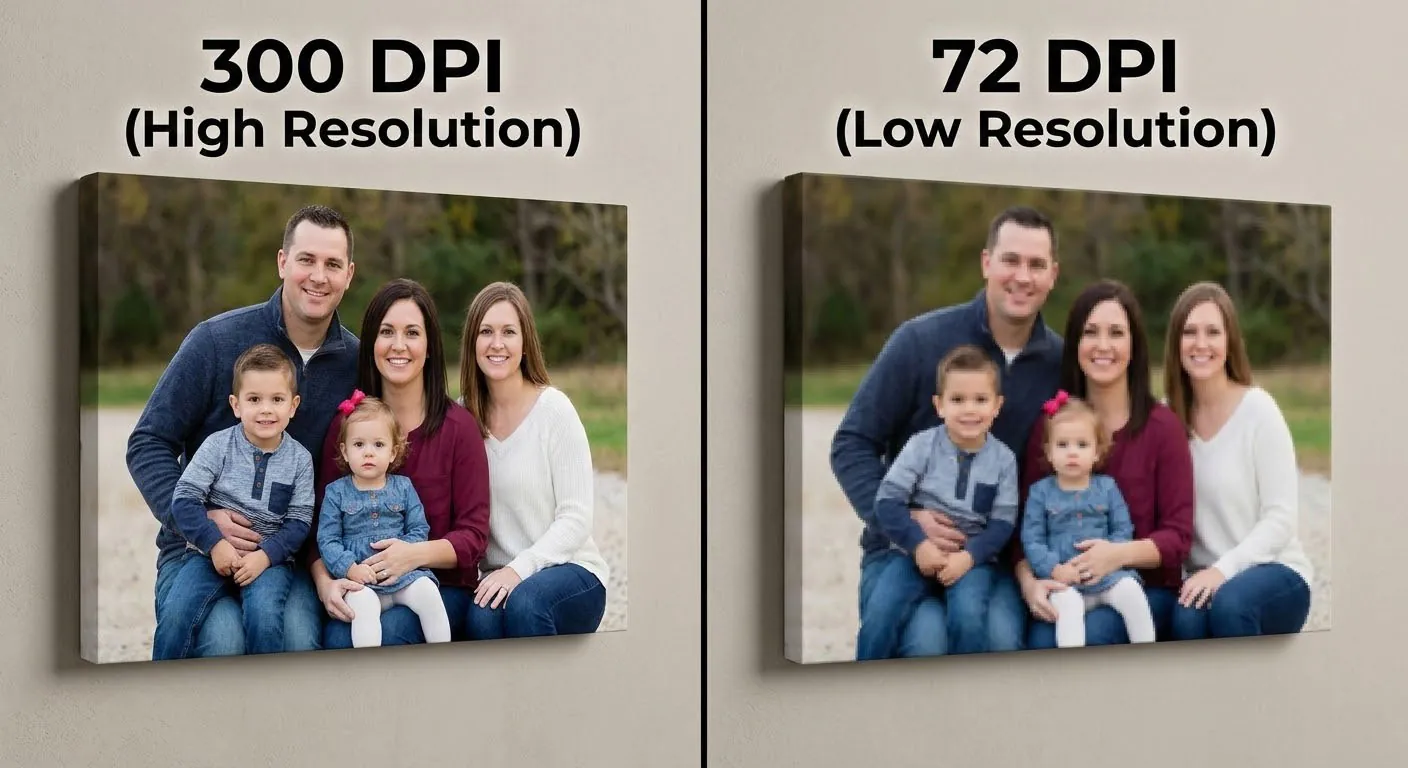
Resolution is the invisible factor that makes or breaks a photo print. You can choose the perfect standard photo size, but if your image doesn't have enough pixels, the result will look soft, pixelated, or blurry. Understanding the relationship between pixel count, DPI (dots per inch), and print size gives you complete control over your final product.
The gold standard for photo printing is 300 DPI. At this resolution, individual dots are invisible to the naked eye, producing a smooth, sharp image. For large prints viewed from a distance (like a 24x36 poster on a wall), 150-200 DPI delivers excellent results because your eyes naturally blend the dots from several feet away.
Minimum Resolution by Print Size
| Print Size | Minimum Pixels (300 DPI) | Minimum Pixels (150 DPI) | Megapixels Needed (300 DPI) |
|---|---|---|---|
| Wallet (2.5 x 3.5) | 750 x 1,050 | 375 x 525 | 0.8 MP |
| 4 x 6 | 1,200 x 1,800 | 600 x 900 | 2.2 MP |
| 5 x 7 | 1,500 x 2,100 | 750 x 1,050 | 3.2 MP |
| 8 x 10 | 2,400 x 3,000 | 1,200 x 1,500 | 7.2 MP |
| 11 x 14 | 3,300 x 4,200 | 1,650 x 2,100 | 13.9 MP |
| 16 x 20 | 4,800 x 6,000 | 2,400 x 3,000 | 28.8 MP |
| 24 x 36 | 7,200 x 10,800 | 3,600 x 5,400 | 77.8 MP |
Most smartphone cameras today capture 12-48 megapixels, which covers you comfortably for prints up to 16x20 at 300 DPI. For larger poster prints, the 150 DPI threshold is perfectly acceptable, and even a 12 MP phone camera can produce a stunning 24x36 poster print when viewed from normal distance.
If you plan to go even larger — or want to get the most out of a canvas print specifically — understanding resolution requirements for that medium is worth a dedicated read. Our guide What Is The Best Resolution For Canvas Prints explains exactly how many pixels you need at each canvas size, what happens when you stretch a low-res file, and how to get the sharpest possible print every time.
For the sharpest results on premium materials, consider acrylic photo prints. The glossy surface of acrylic enhances color vibrancy and perceived sharpness, making even moderately high-resolution images look spectacular. If you're curious about how different materials compare, our guide on acrylic print vs canvas print breaks down the pros and cons of each.
Conclusion
Choosing the right photo size doesn't need to be complicated. From the compact wallet size photo at 2.5 x 3.5 inches to dramatic 24x36 poster prints, every standard photo size serves a specific purpose. The key is matching your image's resolution to your chosen print size, selecting the right aspect ratio to avoid unwanted cropping, and considering where and how the print will be displayed.
Whether you're printing a 5x7 photo size for a holiday card, an 8x10 portrait for your desk, or a large-format canvas for your living room wall, Canvas Discount makes it easy to bring your favorite memories to life. With US-based production, a 4.8/5 star rating from over 125,000 reviews, and prices that won't stretch your budget, you can order with confidence. Start by uploading your favorite photo and see exactly how it'll look at any size before you commit.
Frequently Asked Questions About Photo Sizes
-
The most common standard photo size is 4x6 inches. This size matches the 3:2 aspect ratio used by most digital cameras and smartphones, which means your photos print without any cropping. It's also the most affordable print size and fits the widest range of standard photo frame sizes.
-
A wallet size photo measures 2.5 x 3.5 inches (6.4 x 8.9 cm). That's roughly the same size as a standard credit card, making it easy to carry in a wallet, purse, or small photo holder. You can typically print four wallet photos on a single 4x6 sheet.
-
The US passport photo must be exactly 2 x 2 inches (51 x 51 mm). Digital passport photo submissions must be between 600 x 600 and 1,200 x 1,200 pixels in JPEG format. The photo must have a white background, show a neutral facial expression, and meet specific head-size requirements set by the US Department of State.
-
A 4x6 photo size has a 3:2 aspect ratio, which matches most camera sensors for a perfect, no-crop print. A 5x7 photo size has a 5:7 aspect ratio, which is slightly taller and narrower. The 5x7 requires minor cropping from a standard camera image but offers a more substantial feel, making it popular for framed gifts and greeting cards.
-
For prints up to 16x20 inches viewed up close, aim for 300 DPI (dots per inch). That means a 16x20 print needs roughly 4,800 x 6,000 pixels. For larger poster sizes like 24x36 viewed from several feet away, 150-200 DPI produces excellent results. Most modern smartphones with 12+ megapixel cameras can handle prints up to 16x20 at full sharpness.
-
Yes, the most common standard photo sizes (4x6, 5x7, 8x10, 11x14, and 16x20) align directly with standard picture frame sizes available at most retailers. Many frames also include mats that let you display a smaller print inside a larger frame. For a frameless option, canvas prints come ready to hang without any additional framing.