Photo Print Sizes Standard US Guide: 4x6, 5x7, 8x10 and Beyond
 by Michael Turner
 7 minutes
You have a great photo and you want to print it. Simple enough, until you open an ordering page and see fifteen different size options staring back at you. 4x6, 5x7, 8x10, 11x14, 16x20, and a dozen more. Which one do you actually need? Which one fits that frame you bought? Which one will look right on the wall versus the desk versus the fridge? Choosing the wrong photo print size means cropped faces, wasted money, or a print that looks awkward in its intended spot. This guide covers every standard photo print size used in the United States, what each one is best for, how aspect ratios affect your image, and how to match the right size to the right purpose every time.
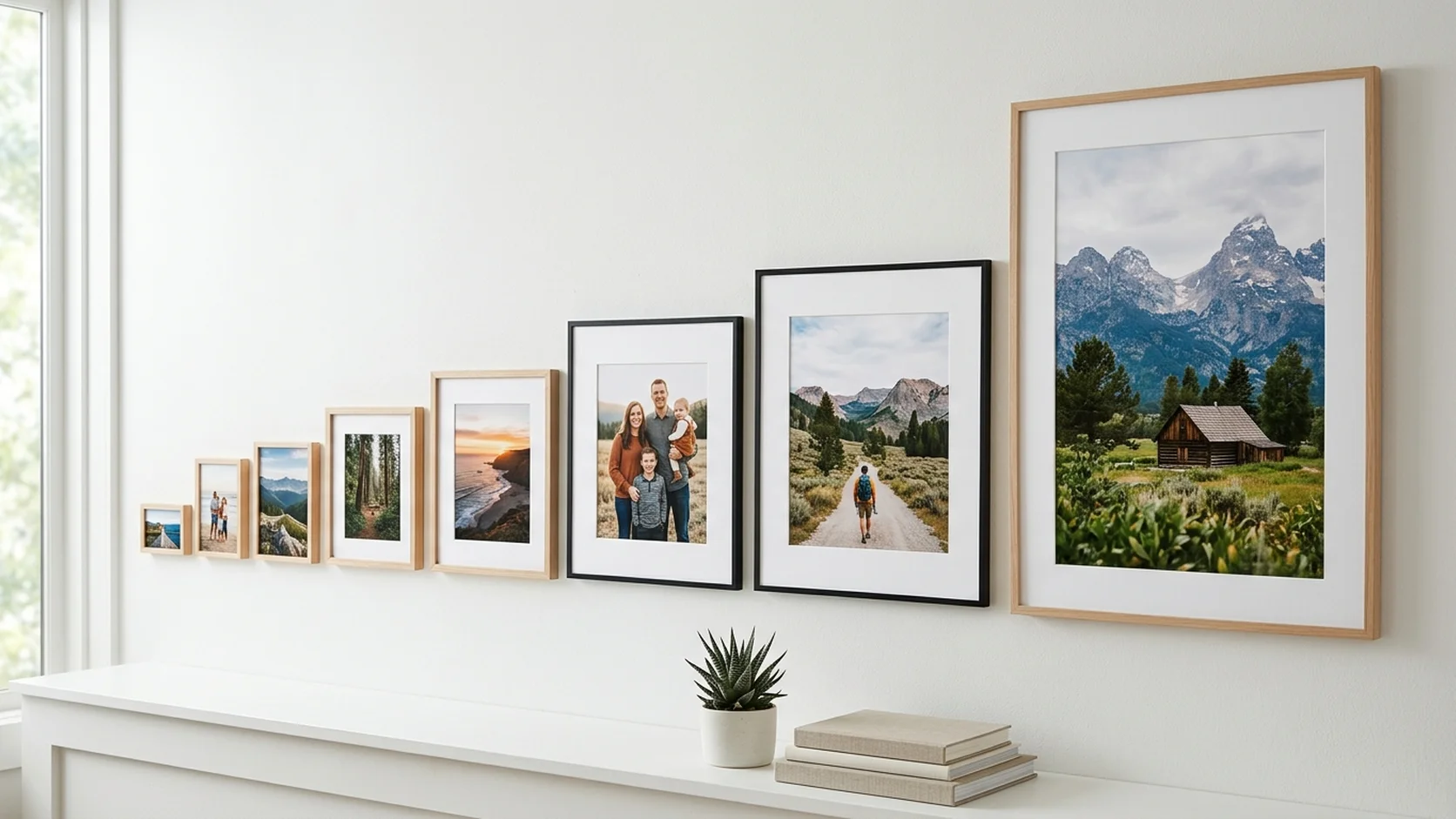
Complete US Photo Print Size Chart
| Print Size (inches) | Aspect Ratio | Min. Resolution (pixels) | Common Use |
|---|---|---|---|
| 4x6 | 2:3 | 1200 x 1800 | Everyday prints, wallets, albums, fridge magnets |
| 5x5 | 1:1 | 1500 x 1500 | Instagram-style square prints, mini displays |
| 5x7 | 5:7 | 1500 x 2100 | Greeting cards, small frames, invitations |
| 8x10 | 4:5 | 2400 x 3000 | Standard frames, portraits, desk displays, gifts |
| 8.5x11 | ~3:4 | 2550 x 3300 | Letter-size prints, documents, home printing |
| 11x14 | 11:14 | 3300 x 4200 | Small wall art, gallery groupings, matted frames |
| 12x18 | 2:3 | 3600 x 5400 | Large prints with no cropping from DSLR photos |
| 16x20 | 4:5 | 4800 x 6000 | Medium wall art, bedroom, office, poster alternative |
| 20x30 | 2:3 | 6000 x 9000 | Large wall art, living rooms, statement pieces |
| 24x36 | 2:3 | 7200 x 10800 | Poster-size wall art, above sofas, feature walls |

The Most Popular Sizes Explained
4x6: The Standard Print
The 4x6 is the most printed photo size in the United States. It matches the 2:3 aspect ratio of most DSLR cameras and many smartphone cameras natively, which means minimal to no cropping when you print. This is the size you use for photo albums, everyday prints, and anything that goes in a standard small frame or on the fridge. It is inexpensive, universally available, and fits the most common display formats. If you are printing photos for the first time and want a safe starting point, 4x6 is the answer.
5x7: The Upgraded Standard
The 5x7 is the traditional size for greeting cards, invitations, and small framed portraits. It has a 5:7 aspect ratio, which is slightly taller and narrower than a 4x6. This means your photo will be cropped slightly on the sides when printing at this size. The 5x7 looks noticeably more substantial than a 4x6 in a frame and works well for portraits, thank-you cards, and gift photos. It fits standard 5x7 frames available at any home goods store.
8x10: The Classic Portrait Size
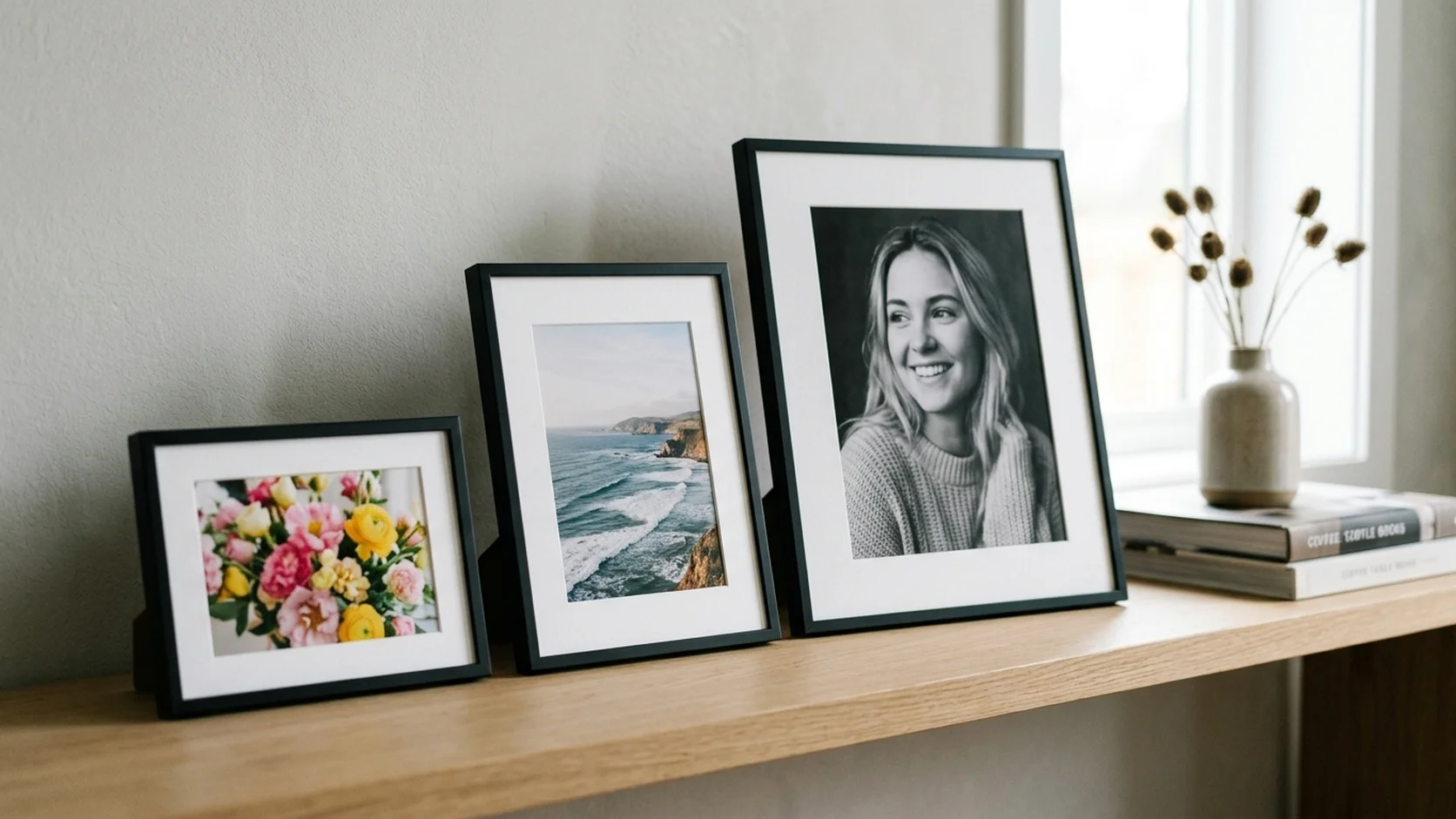
The 8x10 is the most popular size for framed portraits in the US. It has a 4:5 aspect ratio, which means it crops more from the sides of a standard camera photo than a 4x6 does. School portraits, family portraits, wedding photos, and formal shots are traditionally printed at 8x10 because the size strikes a balance between visibility and portability. It is large enough to see detail clearly but compact enough for a desk, shelf, or small wall space. Most framed photo prints at this size look elegant and professional.
11x14: The Step Into Wall Art
The 11x14 is where photo prints start to function as genuine wall art rather than tabletop displays. It has enough visual presence to hold a small wall on its own and works beautifully in gallery wall groupings with other sizes. The aspect ratio is close to 4:5, similar to 8x10 but with significantly more surface area. Matted in a 16x20 frame, an 11x14 print looks like something from a professional gallery.
16x20: The Medium Wall Art Standard
The 16x20 is the most popular medium-format wall art size. It is large enough to command attention on a bedroom or office wall without overwhelming the space. The 4:5 aspect ratio matches 8x10 exactly, so photos that look good at 8x10 scale perfectly to 16x20 with no additional cropping. This is the sweet spot for people who want wall art but are not ready to commit to a 24x36 statement piece. A 16x20 canvas print or acrylic print transforms any room.
20x30 and 24x36: Large Format and Poster Size
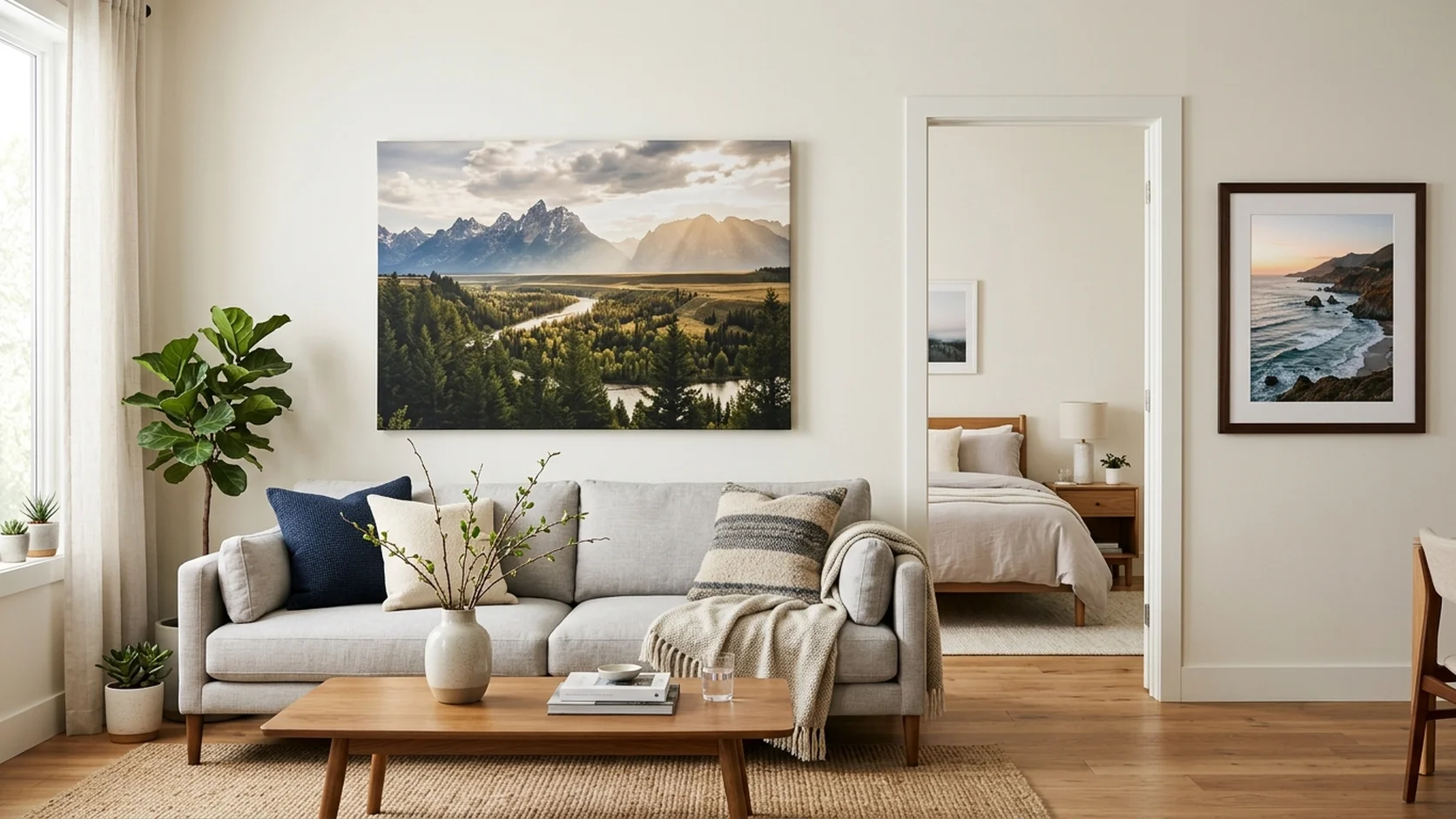
These sizes are for serious wall art. A 20x30 fills the space above a desk or console beautifully. A 24x36 is the standard poster size and the go-to for living room feature walls, above sofas, and statement displays. Both share the 2:3 aspect ratio with 4x6 and 12x18, which means DSLR photos and many smartphone photos print at these sizes with no cropping at all. A custom poster print at 24x36 delivers maximum visual impact at a budget-friendly price.
Aspect Ratios: Why Your Photo Gets Cropped
The most confusing part of choosing a print size is discovering that your photo does not fit the dimensions you selected. This happens because different print sizes have different aspect ratios, and your camera's aspect ratio may not match. Understanding this prevents the most common printing frustration: faces cut off at the edges.
Common Camera Aspect Ratios
2:3 (Most DSLRs, many phones): Prints perfectly at 4x6, 8x12, 12x18, 20x30, 24x36
3:4 (Most smartphones, Micro Four Thirds): Prints perfectly at 6x8, 9x12, 12x16
4:5 (Matches 8x10 and 16x20): Requires slight crop from 2:3 or 3:4 sources
1:1 (Square, Instagram default): Prints perfectly at 5x5, 8x8, 10x10, 12x12
16:9 (Panoramic, some phone modes): Best for wide-format prints, canvas panoramas
When your camera ratio does not match your print ratio, the print system crops the excess. For example, a 2:3 phone photo printed at 8x10 (4:5 ratio) loses a strip from the longer side. This is usually fine for landscapes, but for portraits it can crop off the top of a head or the side of a face. The fix: check the preview before ordering, and if critical content sits near the edges, choose a print size that matches your camera ratio exactly.
Choosing the Right Size for Your Purpose
| Purpose | Recommended Size | Why This Size |
|---|---|---|
| Photo album pages | 4x6 | Standard album slot size, no cropping from most cameras |
| Desk or shelf display | 5x7 or 8x10 | Large enough to see detail, fits standard desk frames |
| Gift for someone | 8x10 framed | Classic gift size, feels substantial, frames widely available |
| Gallery wall component | 8x10 to 11x14 | Multiple sizes create dynamic visual interest |
| Bedroom or office wall art | 16x20 | Large enough for impact, not overwhelming for smaller rooms |
| Living room feature wall | 24x36 or 30x40 | Commands the room, visible from across the space |
| Social media or Instagram prints | 5x5 or 8x8 | Square format matches 1:1 social media crops perfectly |
From Prints to Wall Art: When to Go Bigger
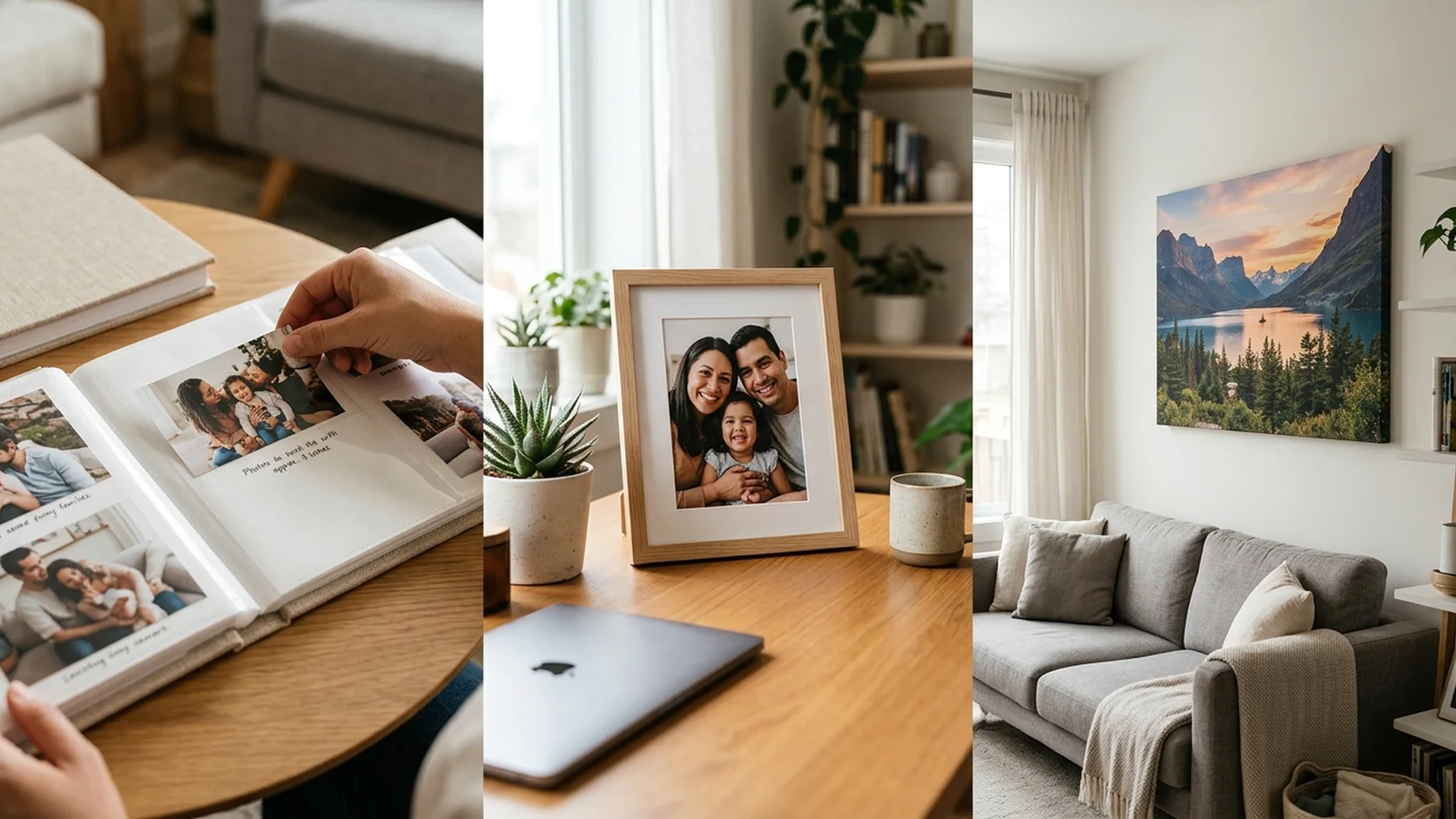
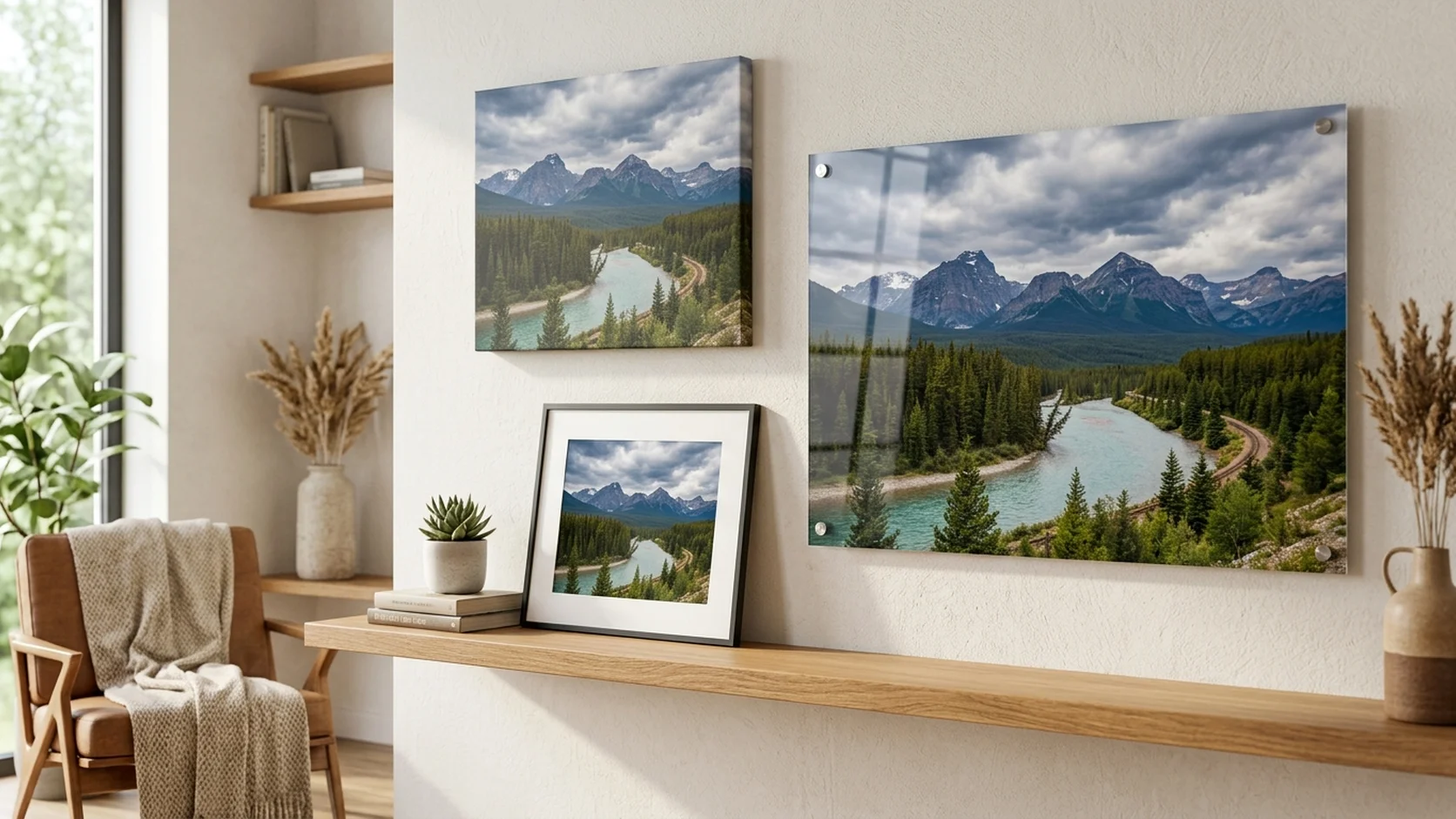
Standard photo prints (4x6 through 11x14) are designed for frames, albums, and small displays. Once you move past 11x14, you enter wall art territory where the print medium matters as much as the size. A 16x20 or larger photo printed on a canvas has a completely different presence than the same image on photo paper in a frame. The canvas texture adds warmth, the gallery wrap eliminates the need for a frame, and the depth of the stretcher bar gives the piece a three-dimensional quality that flat prints cannot match.
For the most vivid colors and modern aesthetic, acrylic prints deliver a gallery-quality result that makes any photo look like professional art. For an industrial or contemporary feel, metal prints offer sharp contrast and excellent durability. For a complete comparison of these materials, see our canvas vs metal vs acrylic comparison guide. And for detailed canvas sizing advice, our canvas print size guide covers room-by-room recommendations.
If you want to combine multiple photos at larger sizes, a collage canvas brings several images together in one frame, and MixPix photo tiles let you build a gallery wall you can rearrange anytime. For more on arranging multi-print displays, see our guide on how to make a gallery wall.
Conclusion
Choosing the right photo print size comes down to three questions: where will the print live, how far away will people view it, and does the aspect ratio match your camera? For albums and everyday prints, 4x6 is the universal standard. For framed portraits and gifts, 8x10 remains the classic choice. For wall art that transforms a room, 16x20 and above on canvas, acrylic, or metal deliver the kind of impact that standard prints simply cannot match. Use the size chart and purpose table in this guide to match your photo to its perfect format, and give your best images the size they deserve.
Frequently Asked Questions
The 4x6 is the most commonly printed photo size in the United States. It matches the 2:3 aspect ratio of most cameras, requires no cropping, and fits standard small frames and album slots.
Standard US photo print sizes include 4x6, 5x7, and 8x10. The 4x6 is the everyday standard, the 5x7 is used for cards and small frames, and the 8x10 is the classic portrait and gift size.
Cropping happens when your camera's aspect ratio does not match the print size. For example, a 2:3 camera photo printed at 8x10 (4:5 ratio) loses a strip from one side. Choose a print size that matches your camera ratio, or check the preview to ensure important content is not cut off.
At 300 DPI (optimal), a 4x6 needs 1200x1800 pixels, an 8x10 needs 2400x3000, and a 16x20 needs 4800x6000. Most modern smartphones produce files large enough for prints up to 16x20 or even 24x36 at the slightly lower but still excellent 150 DPI.
For sizes above 11x14, canvas, acrylic, and metal prints deliver a more impactful result than standard photo paper. They require no separate frame, have a more premium look, and are designed for wall display rather than tabletop or album use.
