Standard Picture Frame Sizes: Complete US Guide (4×6 to 24×36)
 by Ashley Carter– 7 years of experience in photo gifts and home deco
You've found the perfect photo. Maybe it's a sunset from your last beach trip, a candid shot of your kids laughing, or a family portrait that finally got everyone smiling at the same time. Now you want to frame it and hang it on your wall. But the moment you start shopping for frames, you run into a wall of numbers: 4×6, 5×7, 8×10, 11×14, 16×20, 18×24, 24×36. What do all these photo frame sizes actually mean, and which one is right for your picture?
Choosing the wrong picture frame sizes is one of the most common decorating mistakes people make. A frame that's too small makes your photo look cramped. One that's too large drowns it in empty matting. And if you don't understand how matting for picture frames works, you might end up with a beautiful frame that doesn't actually fit your print. The good news: standard frame sizes in the US follow a predictable system, and once you understand it, picking the right frame becomes surprisingly simple.
This guide walks you through every standard picture frame size available in the US market, from wallet-sized 4×6 frames all the way up to poster-sized 24×36 frames. You'll learn which sizes work best for different rooms, how matting changes the look and fit of your photos, and how to match your frame size to your print size without any guesswork.
In this article, you'll discover:
-
What are the most common standard picture frame sizes in the US, and when should you use each one?
-
How does matting for picture frames change the way your photo looks and fits?
-
Which photo frame sizes work best for different rooms like living rooms, hallways, and offices?
-
How do you match your photo's aspect ratio to the right frame size?
-
What's the difference between standard frame sizes and custom frames, and when do you need each?
-
How do you choose the perfect frame size for your photo in just a few simple steps?
-
Which large frame sizes (18×24, 24×36) are best for poster frames and statement wall art?
At a Glance: Standard picture frame sizes in the US range from 4×6 inches (ideal for snapshots) to 24×36 inches (perfect for posters and large wall art). The most popular sizes are 5×7, 8×10, and 11×14 for personal photos, while 16×20, 18×24, and 24×36 dominate wall art and poster framing. Matting for picture frames adds a professional border and lets you use a larger frame with a smaller print. Understanding these standard sizes saves you time, money, and the frustration of mismatched prints and frames.
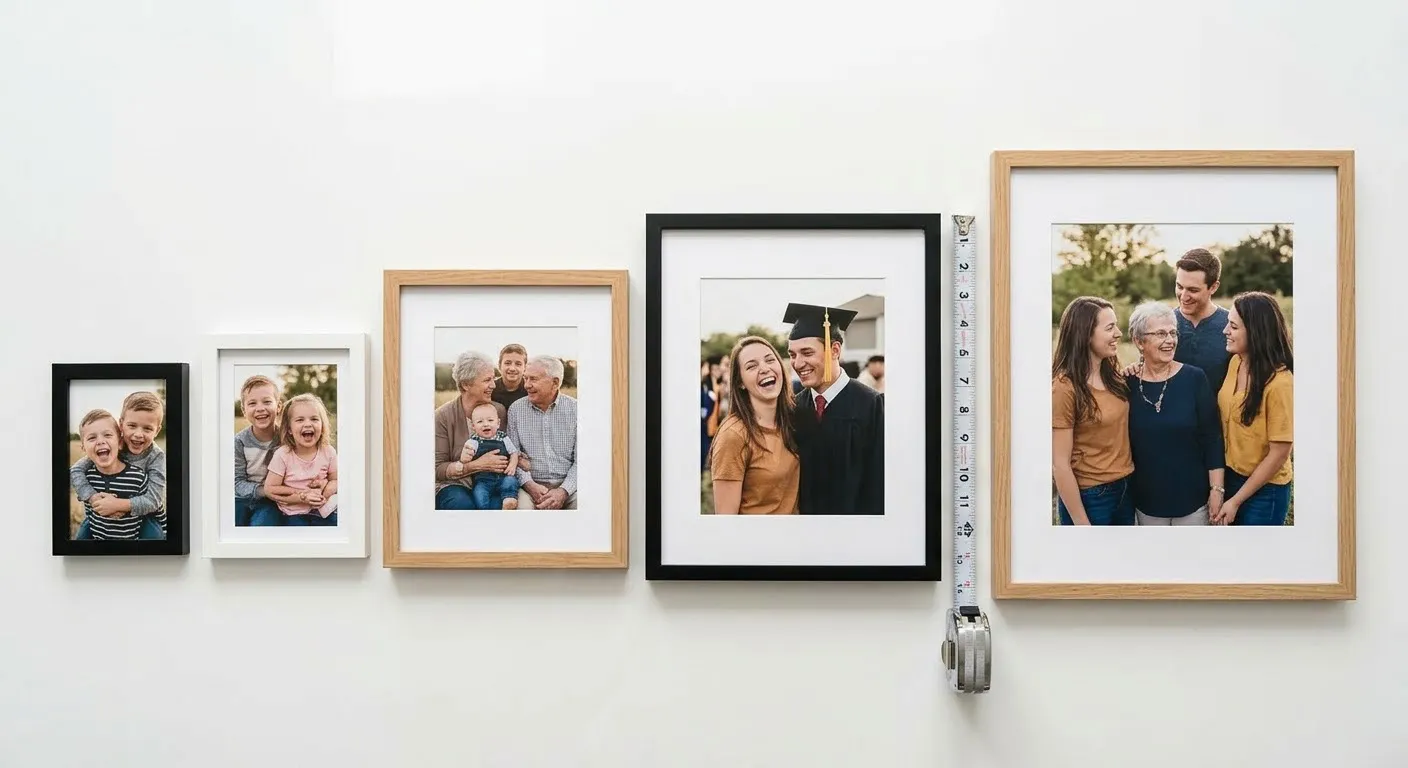
Every Standard Picture Frame Size Explained: From 4×6 to 24×36
Understanding standard frame sizes starts with knowing what each number means. When you see "8×10," the first number is always the width and the second is the height (in inches). These dimensions refer to the inside of the frame, meaning the visible area where your photo or mat sits. The outer dimensions of the frame will always be slightly larger, depending on the frame's molding width.
The US market has settled on a set of standard picture frame sizes that align with common photo print sizes and standard paper dimensions. This makes it easy to find frames at any store, from Target to Michaels, and to order prints that fit without trimming. Here's a breakdown of every major size you'll encounter.
Small Picture Frame Sizes: 4×6, 5×7, and 8×10
The 4×6 frame is the classic snapshot size. It matches the standard 4×6 photo print that's been the default at photo labs for decades. These frames are perfect for desktops, nightstands, and small shelves. They're also the go-to size for multi-photo frames and collage walls where you want a lot of images in a tight space.
The 5×7 picture frame is a step up that gives your photo a little more presence. It's a popular choice for portrait-oriented photos, especially headshots and school pictures. Many people use 5×7 frames on mantels and bookshelves where a 4×6 feels too small but an 8×10 would be too dominant.
The 8×10 frame is arguably the most versatile of all photo frame sizes. It's large enough to be a standalone piece on a wall or table, yet small enough to group with other frames. An 8×10 frame works beautifully for wedding portraits, family photos, and any image where you want to see fine detail. If you're only going to buy one frame size, this is the one most people reach for.

<a href="/coupon-code/" class="button -action -right -toBeCloned -clonedButton" style="display: none;">Get Up to EXTRA 20% Off</a><img src="https://download.cdn-shop.com/media/web_images/All%20Blogs%20-%20E/CDUS%20banner%2020%25%20off.jpg" alt="Get Up To EXTRA 20% Off - Get a coupon code" style="width: 100%; max-width: 800px; display: block; margin: 20px auto;">
</a>
Medium Picture Frame Sizes: 8.5×11, 11×14, and 11×17
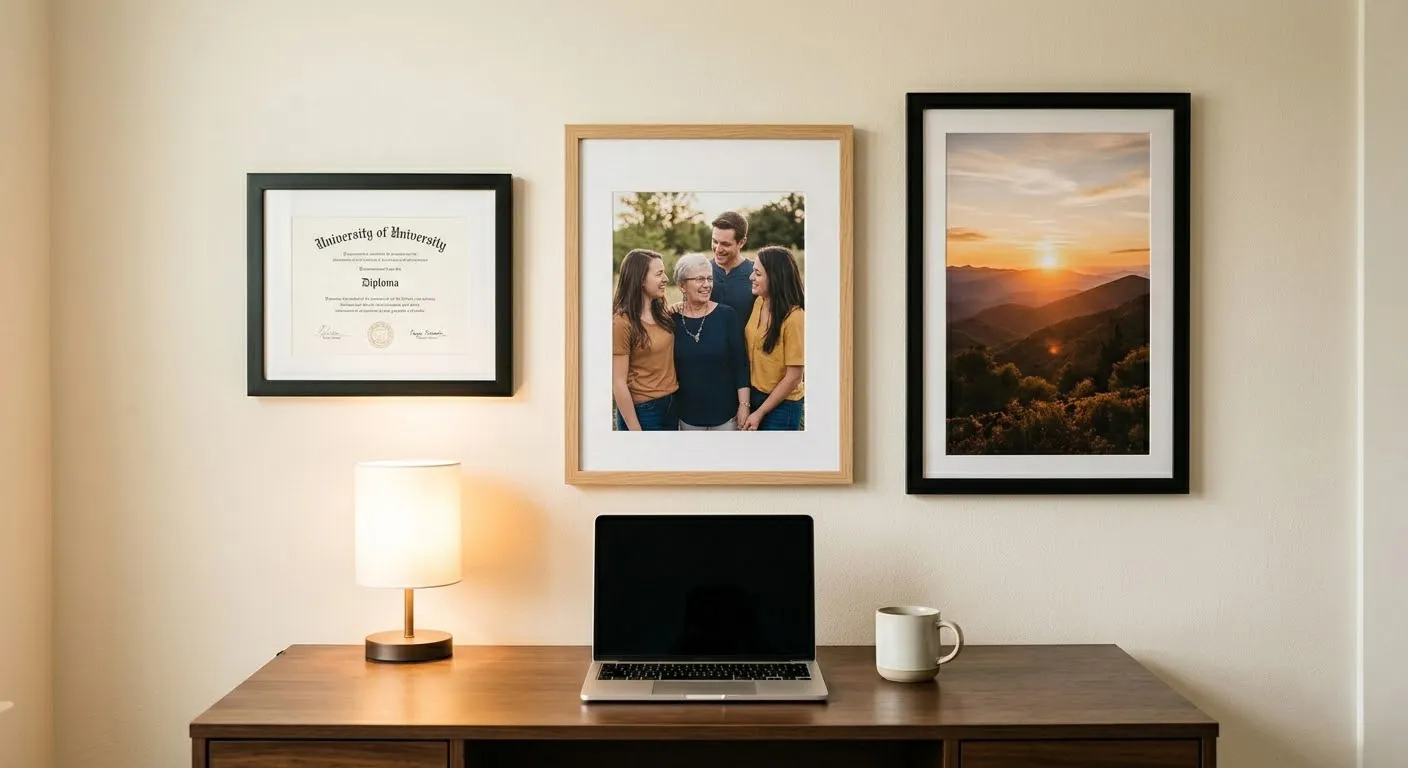
The 8.5×11 frame matches standard US letter paper, making it the natural choice for framing certificates, diplomas, and printed documents. If you've searched for an 8.5 x 11 frame, you've probably noticed they're widely available in both black and white finishes. An 8.5x11 black frame is especially popular for office settings and professional displays.
The 11×14 frame is a favorite for portrait photography and fine art prints. It provides enough surface area to make a real visual impact on a wall without requiring a massive amount of space. Many photographers sell prints in this size because it strikes the perfect balance between affordability and presence. With matting for picture frames, an 11×14 frame can beautifully display an 8×10 photo with a clean white border.
The 11×17 picture frame (also called tabloid size) is less common in home decor but extremely useful for framing larger prints, movie posters, and promotional materials. An 11x17 picture frame gives you almost twice the display area of an 8.5×11, making it a great middle ground between standard photo sizes and full poster frames.
Large and Poster Frame Sizes: 16×20, 18×24, and 24×36
When you want a photo that commands attention from across the room, you're looking at large frame sizes. The 16×20 frame is the entry point to "statement art" territory. It's popular for gallery-wrapped canvas prints, engagement photos, and any image you want to serve as a room's focal point. A 16×20 frame with a mat can display an 11×14 print with elegant borders.
The 18 x 24 frame is a versatile large format that works for both photos and posters. This size is common for art prints, travel photography, and decorative pieces in living rooms and dining areas. It's large enough to fill wall space above a sofa or sideboard without overwhelming the room.
The 24×36 poster frame is the standard for movie posters, concert prints, and large-format photography. A 24x36 poster frame is what you'll find in most dorm rooms, entertainment spaces, and home theaters. This size delivers serious visual impact. If you're framing a landscape photo or a piece of art that deserves to be seen from every corner of the room, this is your size.
Standard Picture Frame Sizes Comparison: Quick Reference Table
Having all the numbers in one place makes shopping much easier. This table covers every common frame size, its best uses, and the recommended photo print size (with and without matting).
| Frame Size (inches) | Best For | Photo Size Without Mat | Photo Size With Mat |
|---|---|---|---|
| 4×6 | Snapshots, desktops, shelves | 4×6 | 3.5×5 |
| 5×7 | Portraits, mantels, bookshelves | 5×7 | 4×6 |
| 8×10 | Versatile: wall, table, gifts | 8×10 | 5×7 |
| 8.5×11 | Certificates, diplomas, documents | 8.5×11 | 8×10 (tight) |
| 11×14 | Portrait photography, fine art | 11×14 | 8×10 |
| 11×17 | Large prints, small posters | 11×17 | 11×14 |
| 12×16 | European standard, art prints | 12×16 | 8×12 or 9×12 |
| 12×18 | Panoramic photos, wide prints | 12×18 | 8×12 |
| 16×20 | Statement art, gallery walls | 16×20 | 11×14 |
| 16×24 | Large photos, wide landscapes | 16×24 | 12×18 |
| 18×24 | Art prints, travel photography | 18×24 | 12×16 or 13×19 |
| 24×36 | Movie posters, large wall art | 24×36 | 20×30 |
This table covers the most widely available standard frame sizes in the US. Specialty sizes like 12x16 frames and 12x18 frames are slightly less common but still available at most frame shops and online retailers.
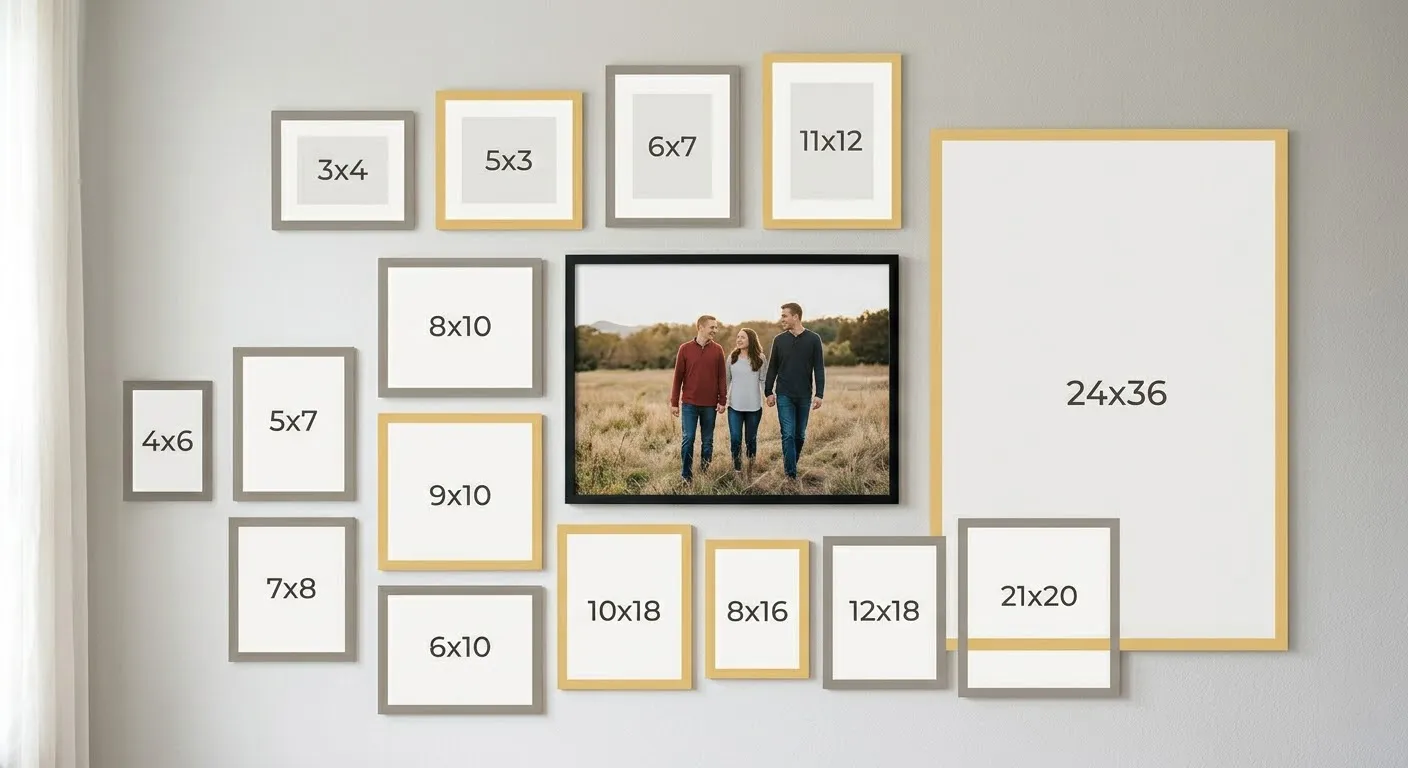
How Matting for Picture Frames Changes Everything
Matting (also called a mat board or photo mat) is the border of thick, usually white or off-white cardboard that sits between your photo and the frame. It's one of the most underrated tools in framing, and understanding how it works will completely change the way you think about picture frame sizes.
A mat serves three purposes. First, it creates visual breathing room around your photo, drawing the eye inward and making the image feel more intentional. Second, it protects your photo by keeping the glass from touching the print surface, which prevents sticking and moisture damage over time. Third, it lets you use a larger frame with a smaller print, giving you more flexibility with standard frame sizes.
Choosing the Right Mat Size for Your Frame
The general rule for matting is to leave 2 to 3 inches of mat visible on each side of the photo. This means a 5×7 photo in an 8×10 frame will have about 1.5 inches of mat on each side, which looks clean and proportional. An 8×10 photo in an 11×14 frame provides the same effect at a larger scale.
For larger frames, wider matting looks more dramatic and gallery-like. An 8×10 photo in a 16×20 frame with 4 inches of mat on each side creates a museum-quality presentation. This is a technique that photographers like Ansel Adams used to give their prints a sense of importance and space. The mat draws your eye to the photograph without any visual clutter.
Here's a quick reference for the most popular mat and frame combinations:
| Photo Size | Frame Size with Mat | Mat Width (per side) | Look & Feel |
|---|---|---|---|
| 4×6 | 5×7 | 0.5 inch | Minimal, modern |
| 4×6 | 8×10 | 2 inches | Classic, balanced |
| 5×7 | 8×10 | 1.5 inches | Clean, proportional |
| 5×7 | 11×14 | 3 inches | Gallery-style |
| 8×10 | 11×14 | 1.5 inches | Standard professional |
| 8×10 | 16×20 | 4 inches | Museum-quality |
| 11×14 | 16×20 | 2.5 inches | Elegant, spacious |
| 16×20 | 24×36 | 4–8 inches | Dramatic statement |
Mat Color and Material Tips
White and off-white mats are the most popular because they complement virtually any photo and frame combination. Black mats create a bold, contemporary look that works especially well with black-and-white photography. Cream and ivory mats add warmth and pair beautifully with sepia-toned or vintage images.
The matte size you choose also affects how your photo is perceived. A wider mat makes a smaller photo feel more important, while a narrow mat keeps the focus tight on the image. If you're unsure, start with a standard 2-inch mat border. It works with nearly every standard picture frame size and photo combination.
If you want to skip the complexity of matting altogether, consider framed photo prints that come professionally framed and ready to hang. Canvas Discount offers framed prints with mat options built in, so you don't have to measure or cut anything yourself.
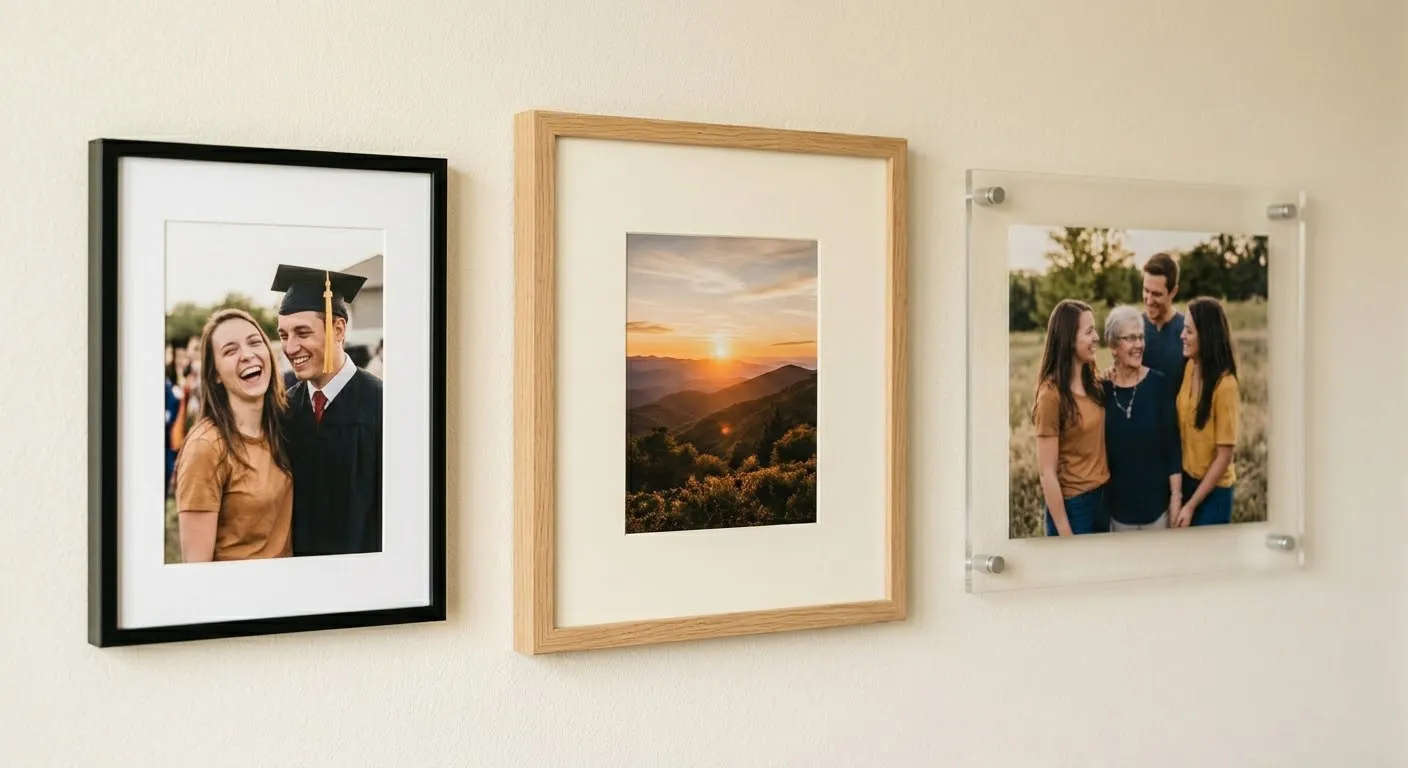
Which Photo Frame Sizes Work Best in Every Room
Picking the right frame size isn't just about the photo. It's about the room where it will hang. A 4×6 frame that looks perfect on a nightstand would disappear on a large living room wall. A 24×36 poster frame that makes a statement in a media room might overwhelm a small bathroom. Here's how to match picture frame sizes to specific spaces in your home.
Living Room and Family Room
Living rooms call for medium to large frames. The most popular sizes here are 16×20, 18×24, and 24×36 for wall-mounted pieces. For a gallery wall, mix sizes like 8×10, 11×14, and 5×7 to create visual interest. If you're looking for something that makes a bold impression without the hassle of framing, canvas prints in these sizes come stretched and ready to hang with no frame needed.
A single large piece above the sofa should be roughly two-thirds the width of the furniture below it. For a 72-inch sofa, that means a piece around 48 inches wide, or a grouping of frames that spans that distance.
Bedroom and Nursery
Bedrooms tend to favor more intimate frame sizes. An 8×10 or 11×14 frame on a nightstand or dresser adds a personal touch without cluttering the space. Above the bed, a 16×20 or 18×24 frame (or a pair of matching frames) creates a balanced focal point.
For nurseries, consider a collage canvas print that combines multiple baby photos into one piece. It saves wall space while displaying all those precious first-year moments. You might also enjoy reading about the best canvas prints for tight budgets if you're decorating a nursery on a budget.
Hallway and Staircase
Hallways and staircases are ideal for gallery walls with mixed frame sizes. The key is consistency in frame style (all black, all white, or all wood) while varying the picture sizes. Common frame sizes for hallway galleries include 4×6, 5×7, 8×10, and 11×14 arranged in a salon-style cluster.
Home Office
An 8.5 x 11 frame is essential for diplomas and certificates. Pair it with a few 5×7 or 8×10 frames for personal photos. Keep the color palette professional: 8.5x11 black frames or dark wood tones work best in a workspace setting.
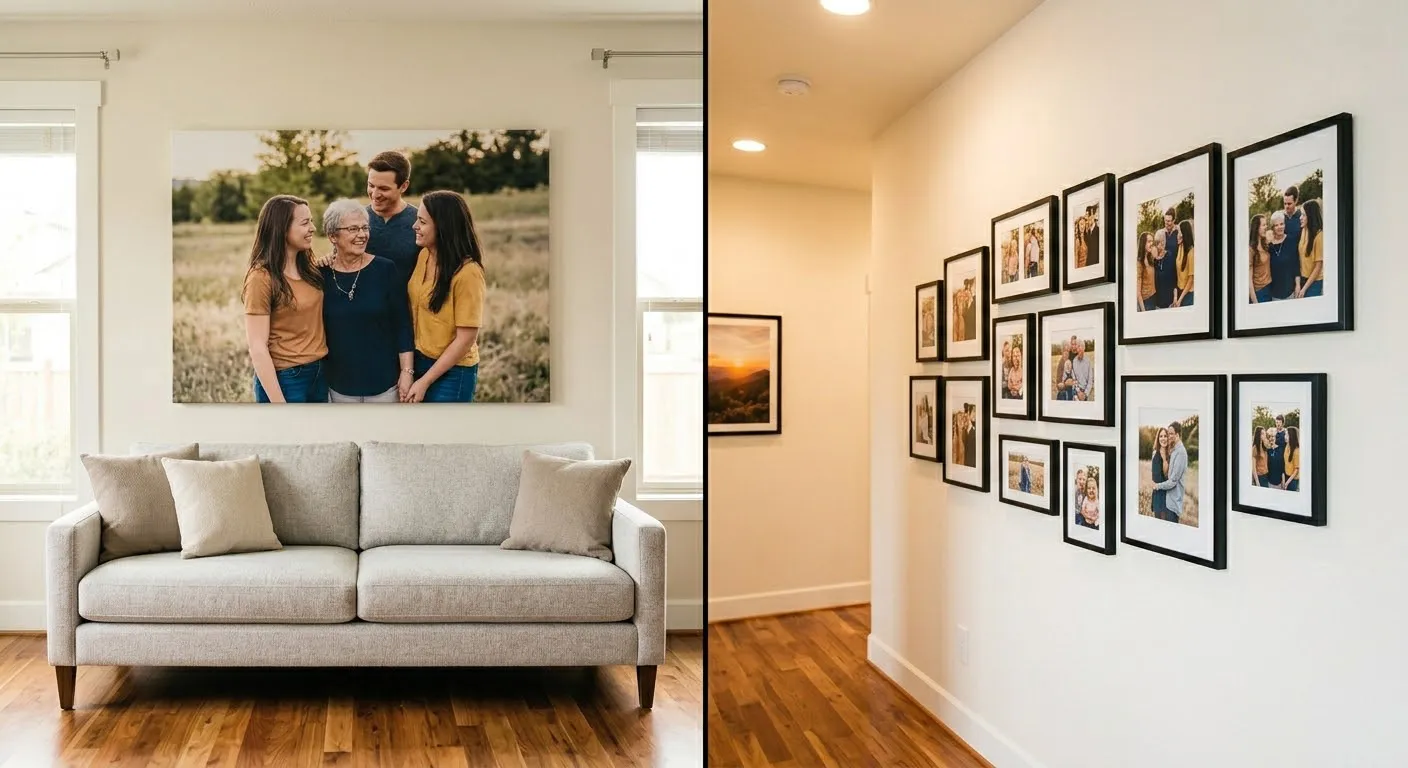
Photo Aspect Ratios and How They Match Frame Sizes
One of the trickiest parts of choosing picture frame sizes is understanding aspect ratios. Your camera captures photos in a specific ratio (the relationship between width and height), and not every ratio fits every frame perfectly. Ignoring this leads to awkward cropping or empty space inside the frame.
Most smartphone cameras shoot in a 4:3 ratio, while DSLR cameras often default to 3:2. Social media photos might be 1:1 (square) or 16:9 (widescreen). Each ratio matches certain standard frame sizes better than others.
Aspect Ratio to Frame Size Matching
| Aspect Ratio | Camera Type | Best Frame Sizes | Notes |
|---|---|---|---|
| 3:2 | DSLR, mirrorless | 4×6, 8×12, 12×18, 16×24, 24×36 | Most common for photography |
| 4:3 | Smartphones, compact cameras | 6×8, 8×10 (slight crop), 12×16 | Slight cropping needed for some frames |
| 5:4 | Medium format, some prints | 8×10, 16×20 | Classic portrait ratio |
| 1:1 | Instagram, square format | 8×8, 10×10, 12×12, 14×14 | Growing in popularity |
| 16:9 | Video stills, panoramic | 12×18 (approx.), custom sizes | Often requires custom framing |
If your photo's aspect ratio doesn't match the frame size exactly, you have two options: crop the photo to fit, or use matting for picture frames to fill the gap. Matting is the gentler option because it preserves your entire image while creating an elegant border.
For square photos (the 14x14 size is increasingly popular thanks to Instagram), look for square frames or use a rectangular frame with custom matting that creates equal borders on all four sides.
How to Choose the Right Picture Frame Size in 5 Simple Steps
Picking the perfect frame doesn't require a design degree. Follow these five steps, and you'll get it right every time.
Step 1: Measure Your Photo or Print
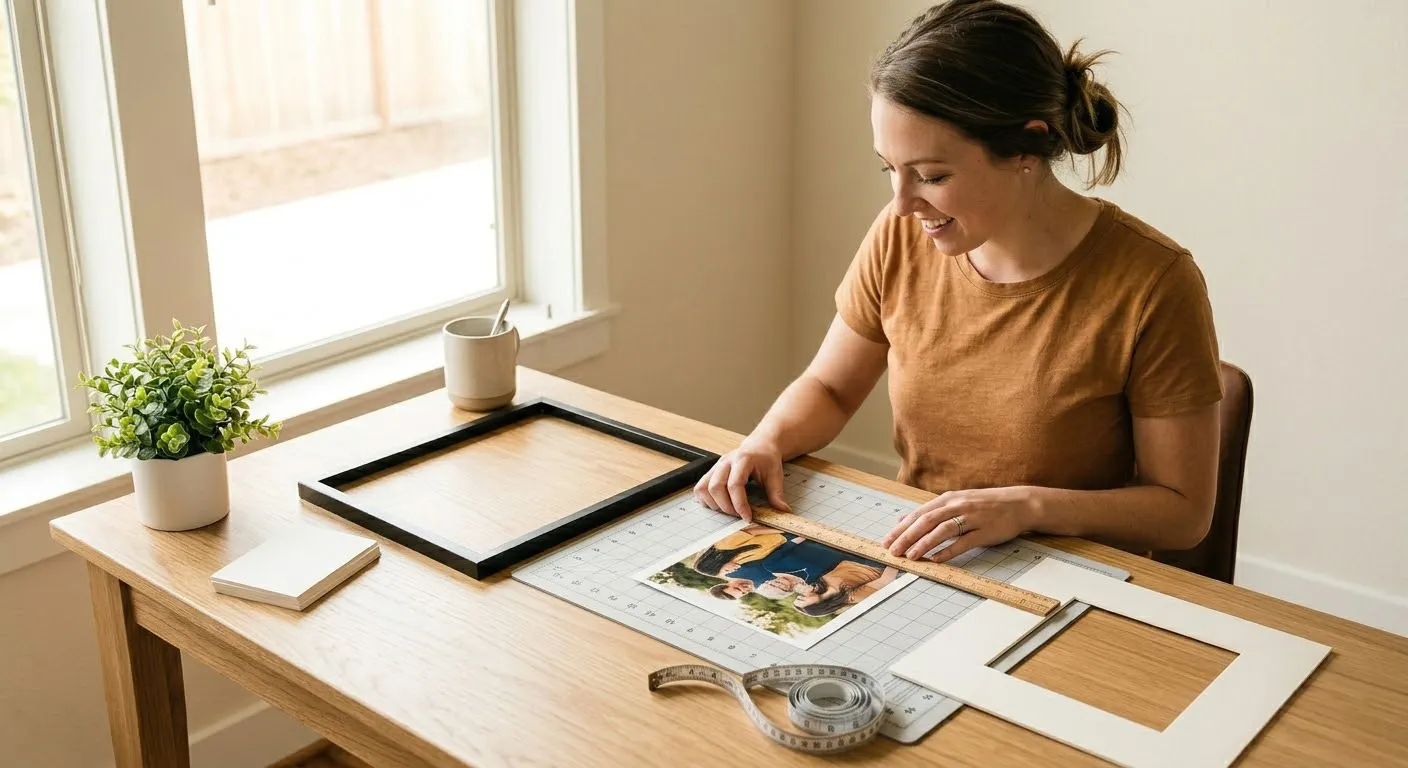
Start by measuring the actual dimensions of your printed photo. Don't guess or assume. Lay the photo on a flat surface and measure width and height in inches. If you haven't printed the photo yet, check the file's resolution and aspect ratio to determine which standard photo sizes it will print best at.
Tip: For digital photos, multiply the pixel dimensions by the print resolution (usually 300 DPI) to find the maximum print size. A 3000×2400 pixel image prints beautifully at 10×8 inches.
Step 2: Decide Whether You Want Matting
Matting for picture frames adds a professional, gallery-quality look. If you want matting, you'll need a frame that's larger than your photo. Refer to the matting table above to find the right frame-to-photo combination. If you prefer a clean, modern look without matting, simply match your photo size to the frame size.
Step 3: Consider the Wall Space
Measure the wall area where the frame will hang. A good rule of thumb: the framed piece should fill 50 to 75 percent of the available wall space. For example, if you have a 30-inch-wide wall section, your frame (or frame grouping) should be 15 to 22 inches wide.
Tip: Cut a piece of newspaper or kraft paper to the frame size and tape it to the wall before buying. This gives you a realistic preview of how the frame will look in the space.
Step 4: Match the Frame to the Room's Purpose
A bedroom calls for warm, personal photos in smaller frames. A living room can handle large statement pieces. An office benefits from professional framing in standard sizes like 8.5×11 for documents. Think about the emotional tone you want the room to have, and choose frame sizes that support it.
If you're creating a gallery wall with multiple frames, canvas wall displays offer a cohesive multi-panel look that eliminates the guesswork of mixing and matching individual frames.
Step 5: Order Your Print to Match
Once you've chosen your frame size, order your print in the exact dimensions you need. Canvas Discount, rated 4.8 out of 5 stars by over 125,000 reviewers, offers prints in all standard photo sizes. Whether you need a 4×6 snapshot or a 24×36 poster-sized print, you can upload your photo and have it printed on premium materials with Made in Germany quality standards. Over 500,000 satisfied customers have trusted Canvas Discount for their photo printing needs.
Standard Frame Sizes vs. Custom Frames: When Do You Need Each?
Standard picture frame sizes cover the vast majority of framing needs. They're affordable, widely available, and come in every style from minimalist to ornate. But there are situations where custom picture frames or custom framing are the better choice.
When Standard Sizes Work Perfectly
Standard frame sizes are ideal when your photo matches a common print size (4×6, 5×7, 8×10, 11×14, 16×20, 24×36). They're also the right call when you're buying multiple frames for a gallery wall and want consistent sizing. Standard frames are budget-friendly and available for same-day pickup at most craft and home stores.
When You Need Custom Framing
Custom frames become necessary when your print has non-standard dimensions, when you're framing a three-dimensional object (like a jersey or medal), or when you want a specific frame style that isn't available in standard sizes. Custom framing near me searches are common for people framing heirloom pieces, oversized art, or irregular items.
Keep in mind that custom framing typically costs 3 to 10 times more than standard frames. If your goal is simply to display a beautiful photo, you can often achieve a stunning result with standard frame sizes and creative matting.
For photos that deserve a truly premium presentation without the cost of custom framing, acrylic photo prints offer a frameless, modern alternative. The photo is printed directly behind crystal-clear acrylic glass, creating a vibrant, gallery-worthy piece that needs no frame at all. You can also explore where to buy canvas prints in the US for more frameless display options.
| Feature | Standard Frames | Custom Frames |
|---|---|---|
| Price Range | $5–$60 | $50–$500+ |
| Availability | Immediate (stores, online) | 1–3 weeks turnaround |
| Size Options | Fixed standard sizes | Any dimension |
| Mat Options | Pre-cut standard mats | Custom-cut to any size |
| Best For | Photos, prints, documents | Heirlooms, odd sizes, 3D objects |
| Frame Styles | Wide variety | Unlimited |
Conclusion
Choosing the right picture frame sizes doesn't have to be complicated. The US market offers a clear set of standard frame sizes, from the compact 4×6 all the way to the dramatic 24×36, and each one serves a specific purpose. Small frames like 5×7 and 8×10 bring warmth to shelves and nightstands. Medium frames like 11×14 and 11×17 give portraits and prints the attention they deserve. Large poster frames in 18×24 and 24×36 transform blank walls into gallery-worthy displays.
Remember that matting for picture frames is your secret weapon. It lets you use standard frame sizes with flexibility, turning a simple 8×10 print into an elegant 16×20 presentation. Whether you're building a gallery wall, framing a diploma, or hanging a single statement piece, the right frame size makes all the difference. Canvas Discount makes it easy to get perfectly sized prints delivered to your door, backed by over 500,000 happy customers and a 4.8-star rating. Your photos deserve to be seen. Pick the right frame, and let them shine.
Frequently Asked Questions About Picture Frame Sizes
-
The 8×10 frame is the most popular standard picture frame size in the US. It's versatile enough for wall display, tabletop use, and gift giving. It also pairs perfectly with 5×7 photos when you add matting for picture frames, making it a two-in-one solution.
-
For an 8×10 photo with a standard mat, use an 11×14 frame. This gives you approximately 1.5 inches of mat on each side, which creates a clean, professional look. For a wider, more dramatic mat border, step up to a 16×20 frame.
-
Not always. Standard picture frame sizes and standard photo sizes overlap in many cases (4×6, 5×7, 8×10), but some frame sizes like 11×14 and 16×20 are designed to hold matted photos rather than matching a direct print size. Always check whether your frame includes a mat before ordering your print.
-
The most common poster frame sizes in the US are 18×24 and 24×36 inches. The 24x36 poster frame fits standard movie posters and large art prints. The 18 x 24 frame is popular for smaller posters, art prints, and travel photography.
-
Matting is optional but highly recommended for photos displayed behind glass. It prevents the glass from touching the photo surface (which can cause sticking and damage over time), and it adds a polished, gallery-quality look. Matting for picture frames also lets you use a larger frame with a smaller print for added visual impact.
-
Gallery walls look best with a mix of 3 to 5 different frame sizes. A popular combination is 4×6, 5×7, 8×10, and 11×14 frames in matching finishes. Keep the frame style consistent (all black, all white, or all wood) while varying the picture sizes for visual interest.